
Langfield Farm, Mankinholes: Open doors to spread the Calder Valley livestock message
Educating the public about livestock and how it has always been linked with industry and history in the Calder valley is why one West Riding farming family is becoming part of Open Farm Sunday for the first time next weekend, Sunday 8 June.
It’s a day when farms all around the UK offer opportunities to experience farming and for the Kenworthy family it’s all pretty much about sheep, wool and the story of their area.
“We’re going to talk about the days when this community was full of mills and sheep farms,” says Bruce Kenworthy who has farmed at Langfield Farm in the historic village of Mankinoles near to the iconic Stoodley Pike all his life.
“I’m a sheep fanatic. Many people don’t understand why the different breeds exist. Many don’t even know basic things such as carpets, blankets and clothing all starting from sheep. And Open Farm Sunday means they can come, see, talk and get so close they can touch the wool.
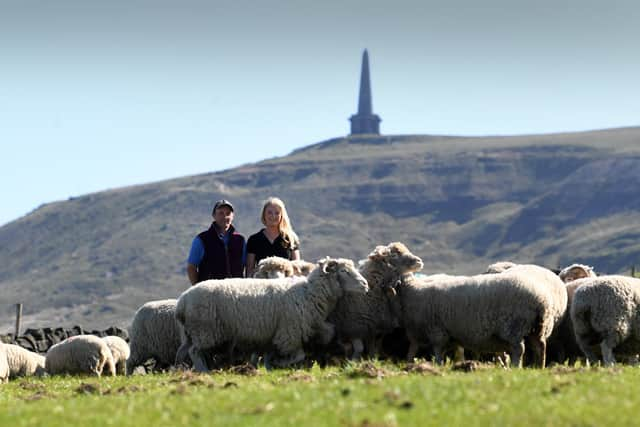

Bruce is married to Janine who is a nurse at the local Overgate Hospice and he farmed alongside his dad Ralph, who passed away six years ago, but it is his three daughters who all have an involvement with the farm, sheep and wool today. The eldest two, Jenny and Esther will both be around on the day, while Laura is currently studying for a fashion marketing degree.
Jenny says they hope it will do some good in getting their farming message across.
“Dad came up with the idea and we all thought it was great. We’ve had a new shed built which is just right to host it. We see it as our opportunity to start making our mark. The more we can encourage or educate others about farming is the most important thing.
Bruce has been instrumental in the revival of Todmorden Show and is used to talking with people.
“We always have walkers up here and I don’t mind at all explaining what’s happening. The shearing shed is next to the road and I let people come in and have a look, so that bit’s not new. The only thing we don’t know is how many might come and what people might expect. We’re not arable farmers with big tractors and massive trailers where we can give people a ride around.
“Our main attraction is the unique position of our farm. We’re on this hill that goes from upland to moorland and we have a variety of breeds. Some farms have 500 of the same breed and not as much variety in the wool.
“We had a lady from the Guild of Spinners and Weavers who picked up some fleeces from us last year and she was specific about the wool she needed. We can show the difference between why a Blackface fleece is different to a Derbyshire Gritstone fleece and what the mills that were once all around here were looking for, such as the Gritstone wool for carpets and blankets that the mills produced, whereas the Scotch Halfbred with its long staple, is what spinners and weavers are looking for.
“We have 150 Blackface ewes that run on the common; 150 Derbyshire Gritstones that run on our tenanted Yorkshire Water land; and we’ve stepped up our halfbreds to 150, putting the Border Leicester tup on to the Blackies and using in-bye land that we rent, plus we have our pedigree Dorset flock of 120 ewes.
Bruce says it was his dad who brought Dorsets to the Pennines and West Yorkshire.
“Dad shepherded and found this unique breed that lambs three times in two years and grazes everything. We’ve stuck with the Dorset Horn ever since. We tried the Poll Dorset but it didn’t seem to wear as well. The Horns just survived and fitted. They leave everything like a golf course fairway. We’ve had them for over 40 years.
Bruce says it’s all about production at Langfield - for other flocks, for going into the food chain, and for fleeces that generally don’t make that much these days. Bruce also says his dad had his own opinion over what was best to breed – tups or ewes.
“My dad said, of poor quality tups, ‘that’s a good wether spoilt’. Across our whole flock we keep 180-200 lambs a year as replacements. We’re sheep breeders not sheep keepers, there’s a difference.
“Generally, we breed our own and our surplus goes for meat. The Dorsets we sell for breeding and we’re looking to breed some more halfbred ewes to sell more as breeding stock as there is a growing demand.
“We provide a mix of everything and have grown quite a good market for lightweight lambs through contacts with local butchers, which all goes back to when granddad had a meat round.
“We have three commercial flocks and one pedigree. We were originally a mixed farm like most, but we started going more into sheep in the 1980s when agriculture started to get more specialised.
“We have always been more sheep men, and now women, here at Langfield, because our land is largely very hilly. We farm between 800ft and up to 1200-1300ft above sea level and have grazing rights on Langfield Common near Stoodley Pike, then 330 acres off Yorkshire Water around the reservoir. We only own a small acreage of in-bye and rent over 100 acres on short term lets.
Bruce says his granddad moved to Mankinoles in the late 1920s / early 1930s, from Stott Hall, the farm in the middle of the M62.
“We were never one of those big farms that could make a living purely from farming. We had hens, sold eggs; had pigs and sheep, sold meat; and cows, sold milk, and that meant we were always used to having other sources of income and could get by because of the area having the mills that used to be around, the industry and the population. Now we’ve ended up the last farm on this side of the valley and all we have in addition to the sheep is our South Devon herd which is diminishing.
Bruce has always maintained a love of wildlife and creates and maintains habitats for ground nesting birds but feels that hill men such as he and many more have been badly let down by the government, especially over the knocking back of the SFI schemes recently.
“The sudden drop in the BPS really hit us hard. When we heard the BPS was to be replaced with environmental schemes we could see that we could live with that.
“We’ve been in a longstanding HLS scheme and have two SFI agreements but my income is down 20 per cent and due to less sheep being allowed on the moors we now have a third less stock than 20-plus years ago. It just sems that hill men and women are always last in line, but we’ll try to keep a smile on our faces.
Jenny says they’re all looking forward to Open Farm Sunday.
“Between us girls, we all share the wool wrapping, while dad gets on with the shearing.”
You must pre-book if you’d like to attend Open Farm Sunday at Langfield Farm https://www.trybooking.com/uk/EPTZ