
Mission to attract more pulse growers into the sector
Yorkshire has long been a centre for the pea and bean sector, with enterprises such as Hartley’s having grown pulses around Knottingley and Tadcaster since 1954, while the pea-producing Swaythorpe Growers partnership comprises more than 70 family farms across a wide area of East and North Yorkshire.

Pulses, which are viewed as having a key role to play in food security, the country’s protein production and addressing environmental concerns, are often cultivated in the region as rotational break crops.
However, growers are facing shifting market dynamics, due to the availability of cheap imports, as well as policy challenges.
Earlier this year, the Processors and Growers Research Association said although market values for pulse had been static since the autumn, the Defra declared cropped area for pulses last year had been below 200,000ha - the lowest since 2019 and a drop of over 73,000 hectares over two years.

In response to concerns over attracting new pulse growers and retaining existing ones, an agricultural carbon-cutting initiative, Nitrogen Efficient Plants for Climate Smart Arable Cropping Systems (NCS), being shaped by numerous Yorkshire farms has published a benchmarking guide to help maximise harvests.
Developed by researchers as part of the NCS project, the guide summarises the development of well-performing crops monitored through the Pea and Bean Yield Enhancement Networks (YEN) scheme. The guide aims to support both new and experienced pea and bean growers by enabling them to compare crop performance against development observed through the YEN programme.
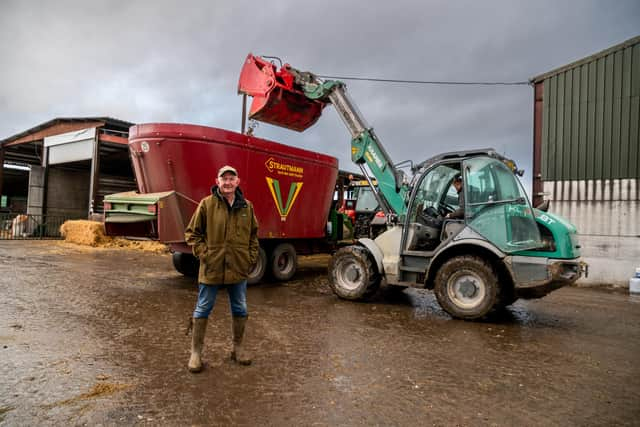
‘Pulse pioneer’ farmers Richard Barker, of North Lingy Moor Farm, Richmond and Adam Hayward, of Cold Harbour Farm, Bishop Burton, have contributed data for the Innovate UK and Defra NCS Project, which has led to the guide.
Mr Hayward runs a mixed farming enterprise with primary outputs of winter wheat for seed production, spring barley for malting, oilseed rape, beans and vining peas.
He said: “Our involvement in the NCS project hopefully will bring more beans into our rotation in the future. We also hope to learn how to grow locally produced protein more successfully.”
Mr Barker, who runs a 350-acre mixed farm supplying Aberdeen Angus X cattle into Dovecote Park and grows wheat, barley, winter oats, spring beans, herbal leys and next year forage maize and cover crops, said he had been direct drilling for four years following a period of reduced cultivations. He said he was looking forward to comparing results from the project with others.
The guide has been designed to help pulse growers assess crop development, optimise management decisions and improve crop performance. The NCS project aims to bring about a reduction of 3.4Mt CO₂e per annum through increasing pulse and legume cropping in arable rotations to 20 per cent across the UK and replacing 50 per cent of imported soya meal used in livestock feed rations with home-grown legumes. Researcher Erin Matlock said: “There’s no single formula for growing high-performing pulse crops, but these benchmarks give growers and agronomists a practical way to compare crop progress against the development patterns typically seen in successful pea and bean crops. By doing so, they can identify where seasonal conditions or management decisions may have influenced performance, while also highlighting opportunities to refine management in future seasons.” Erin Matlock, PGRO research agronomist, said: “There’s no single formula for growing high-performing pulse crops, but these benchmarks give growers and agronomists a practical way to compare crop progress against the development patterns typically seen in successful pea and bean crops. By doing so, they can identify where seasonal conditions or management decisions may have influenced performance, while also highlighting opportunities to refine management in future seasons.” “We hope it supports experienced growers and also encourages new pulse growers to give peas and beans a try by removing some of the mystery around how they usually develop over the season.” Free copies of the guide will be available at Cereals from participating project partners, including PGRO, ADAS and BOFIN. A digital version will also be available to download from the NCS project website www.ncsproject.co.uk