
£100,000 of funding for new conservation group aiming to protect Wensleydale and Swaledale
The newly launched Wensleydale and Swaledale Environmental Farmers (SWEF) Group has been awarded £100,000 from The National Lottery Heritage Fund to fund the development of the group and its catchment-scale conservation efforts.

The cooperative’s farms cover 84,000 hectares, giving SWEF the potential to deliver its central aims of biodiversity restoration, clean water and CO2 net zero on a landscape scale.
Mark Willoughby, tenant farmer and chair of SWEF, said: “Thanks to National Lottery players, we are delighted to receive this award and recognition that farmers play a central role in creating and maintaining our iconic Dales landscapes.
"It’s essential environmental improvement goes hand in hand with food production and with the loss of £10m in subsidies from the area, farmers will need to find alternative revenue streams. Emerging natural capital markets are a potential new source of income, but they are difficult for individuals to navigate alone. SWEF’s cooperative model provides an assured trading platform that reduces risk and operates at a scale that offers much bigger opportunities.”
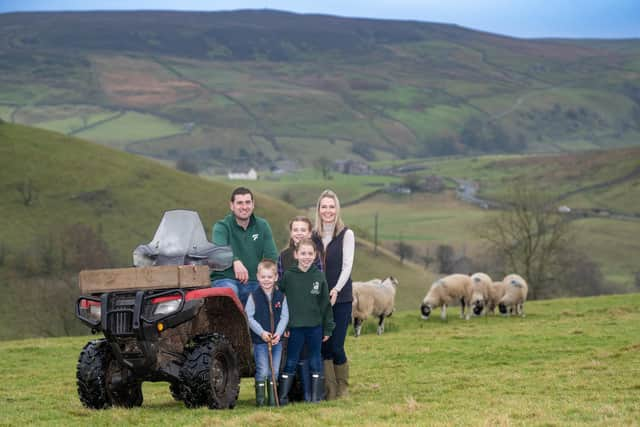

The Heritage Fund grant will fund a project officer to administer the group and the launching of a catchment-scale conservation plan based on ecological assessments of its members’ land holdings. This will enable SWEF to establish a wide range of farmer-led initiatives aimed at protecting and improving important habitats and populations of threatened wildlife, such as curlew, golden plover, hen harrier, merlin, red squirrel and Atlantic salmon.
It will also incorporate projects to repair stone walls, hay barns and sheep folds and improve water quality in the Ure and Swale river catchments, and reduce flooding through its Water Restoration Fund.
Mr Willoughby said: “I strongly believe that a conservation plan, designed by SWEF farmers, local estates, and land managers, can be more effective at delivering environmental outcomes and better value for money than a top-down approach. We have the knowledge and expertise to maintain and enhance our rich environmental and cultural heritage.”
As part of the culture and community aspect of SWEF’s project supported by the Heritage Fund, a series of ‘living history’ films will record the stories of farmers from the area. Much of the local heritage is held in the oral traditions of the two dales. The living histories project will record these traditions for posterity and chronicle the changes in farming life from the different world of their grandparents to today’s reality where many small family farmers have to take on other jobs to make ends meet.
Swaledale farmer and SWEF board member Linda Rukin said: “I would urge all farmers who have so far expressed an interest in SWEF to join as full members, not only to benefit from accessing natural capital markets, but also to share resources and gain a stronger voice to ensure the continuance of our cultural heritage and communities. SWEF offers farming families an opportunity to help secure a sustainable future.”
Once its conservation plan is in place, SWEF aims to secure funding for restoration projects through a blend of public and private finance including sponsorship, Biodiversity Net Gain (BNG) and corporate Environment Social Governance (ESG) investment. The cooperative’s partnership with the UK’s leading wildlife research charity Game & Wildlife Conservation Trust (GWCT) guarantees both farmers and investors verifiable delivery. The GWCT’s subsidiary Natural Capital Advisory (NCA) will carry out the environmental monitoring, guaranteeing the highest level of assurance and offering natural capital investors a single point of contact.
GWCT chief executive Teresa Dent said: “SWEF and its sister cooperatives Peakland Environmental Farmers (PEF) and the Environmental Farmers Group (EFG) form a ground-breaking farmer-led nature recovery movement. Combined they now represent 687 farmers covering 354,436 hectares or 875,830 acres.
“With 72 per cent of UK land in farming it is vital to engage and support the private land managers or working conservationists who run it. Nature reserves are important but not sufficient on their own. Bringing farmers on board and paying fairly for environmental goods they can supply through a blend of private and public funding is the only way the Government will be able to hit its legally binding targets for nature recovery alongside its food security goals.”