
Restoration of Yorkshire’s moors has accelerated exponentially in recent years
It’s three decades since the importance of Yorkshire’s blanket bogs started to become widely appreciated alongside the extent of the damage they had suffered. Although peatland restoration work was already underway in the Peak District, South Pennines and North Pennines by 2008, there was “a big gap” across northern Yorkshire.

Fifteen years on and the region’s response to the impact of post-war agricultural policy, Yorkshire Peat Partnership, which recently marked its crystal anniversary, has revealed a crescendo of restoration as a result of its teamwork with landowners, agents, gamekeepers, farmers and tenants. One eye-catching result is the partnership's work to date on the project across swathes of the North York Moors, Yorkshire Dales, Forest of Bowland and Nidderdale National Landscape will prevent almost 13 million tonnes of carbon emissions by 2050.
A report highlighting an increasingly impresssive list of achievements underlines none of the work could have taken place without our major funders supporting both the capital work but also the hugely important core funds that enable the partnership to function, and in particular Yorkshire Wildlife Trust for providing all the essential back-up services.
Since its launch in 2009, the partnership has secured £6.5 million to cover core costs such as staff as secured £30 million to carry out direct peatland restoration. By last March, the partnership had brought 46,952ha of peatland into restoration management. The area represents 50 per cent of the estimated 94,220ha of peatland in the partnership’s operational area, much of which is damaged. Some 27 per cent of England’s blanket bog is in North Yorkshire.
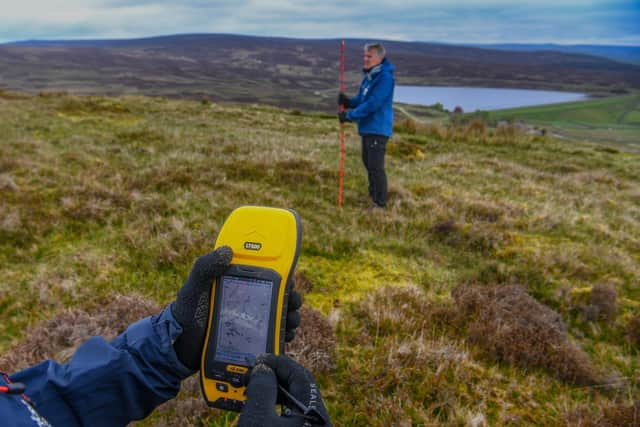

Founder of the partnership, Dr Tim Thom, said he begun Yorkshire Peat Partnership with a target to raise the profile of Yorkshire’s upland peatlands and begin the slow process of restoring them to fully functioning blanket bogs. He said: “I don’t think that even then I believed that we would have 50 per cent under restoration within 15 years. It is a remarkable collaborative achievement. I used to describe peatlands as the Cinderella habitat, a unique environment working hard to store carbon, reduce flood risk and keep our water clean yet abused and ignored by society. Well, our peatland Cinderella is now the star of the ball and treated with the respect it deserves thanks to Yorkshire Peat Partnership.”
The list of achievements is impressive. Surveys of 70,825ha of peatland has been completed by foot and restoration plans for 67,623ha. Some 3.8 million plug plants have been planted, including two million sphagnum plugs. Almost 3,000km of gulleys and drainage ditches has been blocked, by installing 253,000 sediment dams, to slow the flow of water on the fells. What’s more impressive still is that restoration is snowballing. over the first ten years of the partnership 2,025 gullies were blocked. Last year alone saw 346 gullies blocked. While 212,096 plugs were planted in 2020 by last year that had risen to 1,371,918. The partnership’s aspirations have grown alongside the team and its capabilities, increasing from a handful of staff in 2009 to almost 30 in 2024.
The initiative’s first five years saw 2,100 ha of peatland worked on annually. Last season saw 7,300ha of restoration work. It’s difficult to picture the scale of the change, but that’s about 12,370 football pitches being restored more than a decade ago. However, the report warns of potential brakes to restoration work, stating while the urgency of restoration has increased, the number of people able to carry it out has remained static.
To address this shortfall, it has launched a course is open to leaners from across the UK to give them the skills and know-how to implement effective restoration best practice. Additionally, the partnership will begin running an introductory course this year, aimed at those who need to understand the basics of the sector before committing to self-development for it.
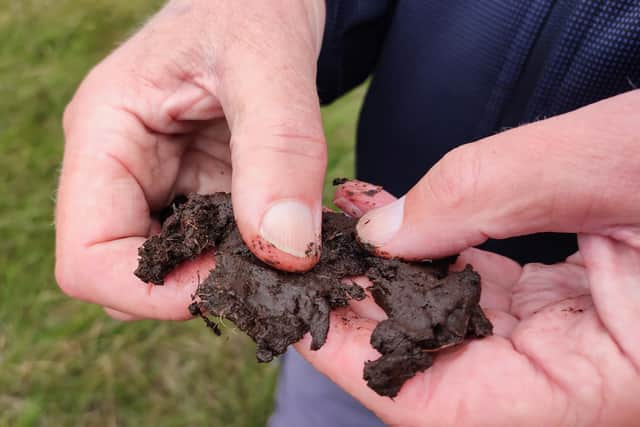
Rosie Snowden, the trust’s peat programme manager, said: “The rate and quality of our restoration has accelerated exponentially in the past few years. We also need to acknowledge we couldn’t have achieved nearly so much without the support of our partners and funders or the co-operation and participation of the landowners, their agents, gamekeepers, farmers and tenants on whose land we work.”
Dr Rob Stoneman, vice chair of the IUCN UK Peatland Programme added: “It’s great the policy space is finally catching up to the aspiration and potential of Yorkshire Peat Partnership. Let’s hope this new Government cannot only keep up but exceed this momentum.”