
Riders chew over great hay shortage
Concerned about keeping their horses fed, equestrians found themselves searching far and wide earlier this year for hay suppliers and discovering rationing signs on haylage.

Haylage was in shorter supply than hay, partly due to many equestrians making the switch in a bid to stretch hay stocks.
The Hay Availability and Pricing Survey conducted by Animalweb earlier this year, captured the fallout from last year’s harvest.

Based on 2,136 responses from across the UK, it identified a highly fragmented forage market, severely strained by poor preceding growing seasons and volatile weather.
Suppliers regularly ran out of stock between January and March. That survey captured the fallout from the 2025 harvest.
The British Horse Society has issued a warning that this year’s prolonged dry conditions have put further pressure on grass growth, and while this varies around the country, some producers are reporting yields below a normal year with limited second cuts.
In July, East Yorkshire saw just 0.8mm of rain, while North Yorkshire recorded 17.4°C, 2.0°C above average, according to Met Office Data.
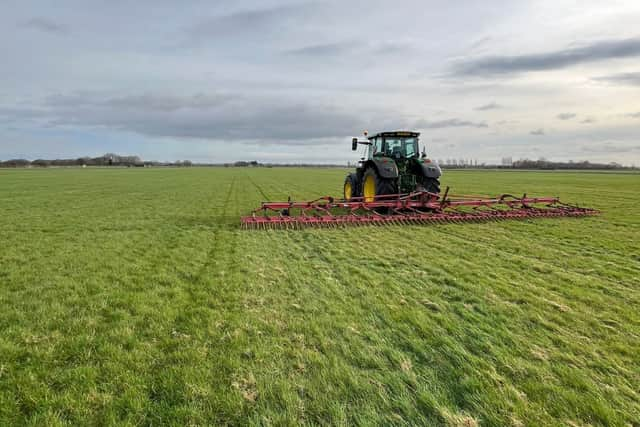
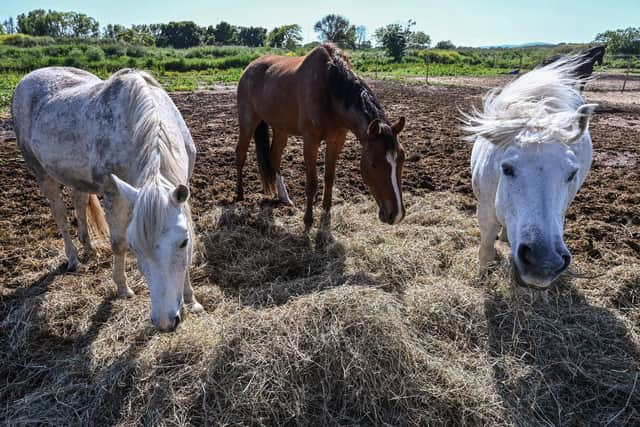
While only 3.5mm of rain fell across the month in South Yorkshire, a fraction of the long-term average, poor grazing conditions mean many horse owners are already turning to hay and haylage to supplement pasture, months earlier than they would expect to.
This year’s harvest was stronger than in 2025, but the two back-to-back years of low yields could have a compounding effect, resulting in critically low stocks of forage.
M&T Haylage, which is based in High Melton, near Doncaster, produced 9,300 bales of hay, haylage and straw this year, compared with 11,000 in 2024 - a drop of about 15 per cent.
This year’s harvest looked to be off to a strong start with good rainfall in spring and significantly higher first-cut volumes than in 2025.
Farmers said when making haylage this season they had been faced with the additional challenge of having enough moisture in a bale for it to ferment properly.
Overall, yields are better than last year, but still below average. And with second and third cuts, which are usually reliable top-ups before winter, being particularly poor, it seems inevitable that some supplies will run out, as they did last winter.
Michael Woolhouse, director at M&T Haylage, said: “First cut yields are double last year as there was a good amount of rainfall in early May this year.
"The struggle has been with the second cut as the weather has been dry - approximately 20 per cent down on typical. Third cuts are non-existent.
“Deep-rooted crops like alfalfa have done slightly better yield-wise. The product itself finds moisture easier than a typical grass.”
Earlier this week, price of big bale hay stood a £106 a tonne, down some 11 per cent on the same time last year, according to the British Hay and Straw Merchants' Association. While it represents a significant rise on the £73 a tonne price before July last year, between April and July this year the price remained at close to £160 a tonne.
M&T Haylage said it had noted “a tightening of supply” over the last six weeks, “well ahead of the point in the calendar when we would usually see this happening”. Mr Woolhouse added: “It will be worse across the UK as yields were down last year, meaning supply is running low but demand is at an all-time high. Heading into Spring 2027, it will likely be the most difficult.”
Even the recent wet weather, which has triggered rapid pasture regrowth, brings additional concerns, according to equine nutritionist Briony Witherow.
She said: “In areas where prolonged dry conditions have been followed by reasonable rainfall, we’ve seen a rapid flush of new grass growth. For horses with Equine Metabolic Syndrome, or those with a history of laminitis, owners may therefore need to restrict grazing and provide a suitable alternative forage to help manage grass intake.
"Choose the right forage, not simply ‘the best’ forage. Aim for clean, hygienically sound forage that suits your horse’s individual needs — more nutrient-dense isn’t necessarily better, particularly for good doers or horses that require careful management of energy intake.”
Ahead of the winter, the British Horse Society is advising owners to invest in hay scales to avoid wasted hay and potential over-feeding and to consider hay replacements, such as chopped chaff, soaked sugar beet, grass nuts and fibre feeds.