
Royston, South Yorkshire: From heavy industry to wildlife haven
Just over three miles from Barnsley town centre and four miles from junction 38 of the M1, Royston is surrounded by South Yorkshire countryside, but exudes its industrial heritage.
At its western gateway, aside from the near ubiquitous modern housing development which frame villages, there's a profusion of bungalows and detached properties. The leafy suburban environment soon gives way for the terraced properties which dominate Royston.
There are few reminders of the Domesday Book village's rural beginnings, barring the medieval gritsone Kirk Cross at Pinfold Lane the 17th centry farmhouse on the south side of High Street or the largely 15th century St John the Baptist Church nearby. Outside the church stands the village's war memorial, featuring some 149 names.
One name not on the memorial is that of the village's best known First World War hero, Albert Shepherd, a private with the 12th Service Battalion, King's Royal Rifle Corps, who was awarded the Victoria Cross for saving the lives of his company. When his company was held up by a machine gun at point blank range he volunteered to rush the gun, and, though ordered not to, rushed forward and threw a Mills bomb, killing two gunners and capturing the gun. A street in the heart of the village is named after him.

The village’s centre is notably busy, so much so that the council has sought to curb congestion, particularly around the schools on Vicarage Lane.
Off the main thoroughfare there's a large Aldi supermarket, which opened six years ago as part of the 30acre Royston Gateway mixed use development between the A505 and the established Royston business estate.
Facing the store is the site of the former 9,000sq ft Alexandra Working Men's Club, which was among several such outlets in Royston.
In February plans to demolish the Klondike working men’s club in Church Street, to make way for five bungalows, were announced.
With changing drinking habits and dwindling membership of the clubs, they are among many in the Barnsley area which have closed their doors in recent years.
Nevertheless, the Royston Railway Sports Club, on the village's eastern fringe, remains a vibrant community hub and a "beloved destination for locals and visitors alike", according to one online write-up. It adds: "Although the club is not overly large, it compensates with its intimate setting, which fosters a strong sense of community and engagement among visitors."
The continuance of the community spirit in the village is exemplified by the launch of The Royston Good Food Pantry at Manor Court Community Centre, which aims to help people to access quality food no matter their budget.
The working men's clubs played a key community role during the Miners Strike, which came just five years before the Royston Drift Mine closed.
Sunk on the estate of Serlby Hall’s George Monckton-Arundell, 6th Viscount Galway, Momckton Colliery and after it the drift mine,dominated the village for much of the 20th century and was developed to include six shafts.
At its peak in the 1940s, Monckton Colliery employed some 3,035 below ground, 805 above the surface. Records show more than 130 men and boys were killed in the pit, many due to roof falls.
In 1903, a wagon weighman's assistant aged just 14 died after jumping off the locomotive and a decade later a 16-year-old pony driver suffered fatal crushing injuries, which was also the cause of death for a 77-year-old worker in 1933.
When the coke works to the village's east shut in 2014 it marked the end of 140 years of heavy industry on the site.
Its legacy is said to include the local accent. According to a Sheffield University study, life-long residents of the village are said to lilt the vowels 'o' and 'a', giving words such as goat and face a twang which is thought to have derived from Black Country miners who moved to the village during the Victorian era.
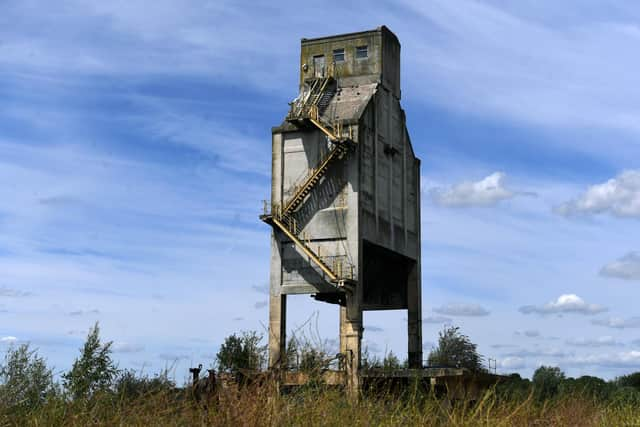
Another legacy of the industry is the 163-acre Rabbit Ings Country Park, once a spoil heap for Monckton Colliery and then the Royston Drift Mine, with some of the massive structures remaining.
The park takes its name from a rabbit design, carved by children from nearby schools into the hillside, which has become a local landmark.
Criss-crossed by paths and cycle routes, area of sports pitches, woodlands and wetlands has become a haven for wildlife including newts, snakes and herons.
Although the site was only opened as a country park in 2011 it has become home to all five species of British owls. The Land Trust, which runs the site, says it has attracted ornithologists from across the country.
There's no shortage of green space. In addition to the country park, Royston boasts another park featuring bowling greens, a pavilion, a children’s play area and multi-use games area, skate park, bandstand a sports pavilion in the centre of the village.
Along with a range of independent retailers, facilities in the village include a leisure centre and a library, which has recently undergone a makeover.
It features a local history wall, including a sign from the old Royston railway signal box. While the village's development was triggered by the creation of the Barnsley Canal in the 1790s, it was fuelled by the opening of a railway station about 50 years later.
The four-track line through the village provided residents with direct links to Leeds and Sheffield until it was closed to passengers in the 1960s as part of the Beeching cuts. Earlier this year, many residents hopes were dashed as plans to reopen the freight-only railway line to passengers was shelved after years of campaiging.