
Shearer shortage fears amid migrant labour rules
The boss of farmers’ cooperative British Wool has warned concerns over a shortage of sheep shearers are set to come into sharp relief next year due to a planned change to migrant labour rules.

Just weeks after the Government granted a temporary visa concession to pave the way for 75 Australian and New Zealander shearers to return to UK for the shearing season, British Wool chief executive Andrew Hogley has sounded the alarm over the future of the industry.
As domesticated sheep do not moult, the industry argues that not shearing is not an option and ending the visa concession could harm animal welfare and reduce the availability of wool. Shearing is needed, the industry argues, to avert overheating in summer months and becoming infested by pests.
Last month the Home Office underlined that all concessionary arrangements were temporary and designed to give sectors in the UK space to build a resilient workforce.
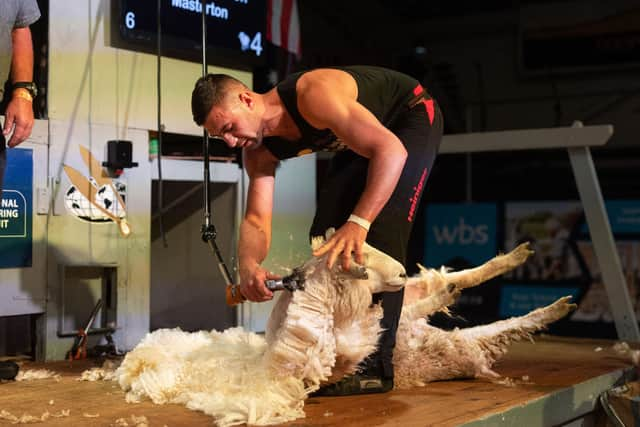

Officials state the sector has been supported for 14 years to create a sustainable workforce in the UK and that they expected the sector to complete its transition to using domestic labour. In response, over the last five years British Wool has trained about 4,000 people on its subsidised shearing courses, which cost attendees £230 for two days.
Mr Hogley said: “We subsidise the courses by about £150,000 a year to upskill our members, but it is crucial for animal welfare. Lots of people learn to do 20, 30, 40, 50 in a sheep in a day and can shear their flock within a week.
"The contractors can knock out 350 sheep in a day, every day. It’s not just the speed, it’s the quality that goes with it. If you lose a teet off a ewe, it doesn’t matter what the wool is worth the ewe can no longer be used to suckle lambs the following year.”
Matt Smith, who recently competed in the world shearing championships in New Zealand and holds the Nine Hour Full Wool Ewe World Shearing Record, shearing a total of 731 sheep, said the demands of the job were a mix of multiple angles of strength and fitness, but the lifestyle that went with it was not for everybody.
He said: “It allows you as a young person to get away from the farm for a period time, travel the world and make good money in other countries.”
The National Sheep Association has warned delayed shearing could hit hoggets, which it believes would be given the lowest priority for shearing if there is a shortage of shearers.
As such, Mr Hogley said the shearer shortage would impact large-scale sheep farms where they need to bring in contractors, of which the pool is limited due to the physical demands and willingness of people to travel across the country and internationally to carry out their job.
He said: “What the Home Office fails to grasp is that to maintain the level you have got to be doing it 12 months a year and that you can do that at best for three months a year in the UK. We need our top shearers to travel around and see the best sheep farming systems in the world and bring that knowledge back. There’s a quid pro quo for that.
"To get another 150 UK shearers who are prepared to have that lifestyle – that’s the challenge.”