
'Significant harm' - Council to defend its decision to stop 600 homes being built on open countryside
Stockton Council has stated its case as it defends its decision to reject a 600-home plan for Yarm, saying the proposal would urbanise open countryside.
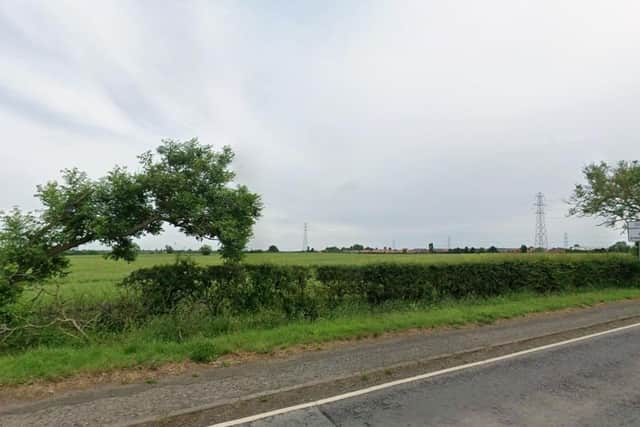
Councillors on the decision-making planning committee refused planning permission for Taylor Wimpey’s £133m outline plan for up to 600 homes on land east of Holdenfields Farm, Green Lane, Yarm in March, against planning officers’ recommendations to approve it.
The controversial scheme had attracted almost 600 objections and sparked a petition opposing housing developments in Yarm, now with over 3,400 signatures.
The case will go to a Planning Inspectorate public inquiry after the developer appealed against the planning committee’s decision.

Taylor Wimpey contends “the appeal site is a deliverable proposition, and is located in a strong market area meaning it can come forward in the short term making a material contribution to housing land supply in the borough” in a statement via consultants ELG Planning, submitted to the council’s planning portal.
It argues the council does not have five years’ worth of housing land and its Local Plan which sets out planning priorities is out of date, so the delivery of the homes, in an area facing an affordable homes crisis, “should be given substantial weight”.
It contends planning permission should be granted unless there is a strong reason to refuse it to protect areas or assets, or the harms would outweigh the benefits.
It says Yarm is “an appropriate settlement”, the site is a “sustainable location” and the amount of homes is “relatively modest”.
It also argues the development would be in-keeping with the area’s character and “would not have an unacceptable impact on the character and distinctiveness of Yarm”.
Now the council has put forward the statement of its case via real estate consultancy Lambert Smith Hampton. It states: “At present, the council’s position is that it intends to defend the reason for refusal in full.
“The council’s position is that the adverse impacts of the proposal, taken together, would significantly and demonstrably outweigh the benefits… Accordingly, the appeal should be dismissed.”
It argues the Local Plan, which sets out planning priorities for the area, attracted significant weight: “The appeal proposal conflicts fundamentally with the plan-led spatial strategy by proposing a substantial urban extension onto unallocated countryside land beyond the defined settlement boundary of Yarm.
“The appeal site lies outside the defined limits to development for Yarm and is not allocated for residential development… The council’s position is that the proposal would result in significant urbanisation of open countryside land forming part of the rural setting of Yarm, causing harm to landscape character and settlement distinctiveness.”
It says the development would “give rise to significant environmental and infrastructure harms” and “cumulative adverse impacts”, affect ecology, erode the countryside and put pressure on the road network along with other developments: “The council’s position is that the proposal would cause significant harm to the character and distinctiveness of Yarm, the rural setting of the settlement, local landscape character and the transition between the urban edge and open countryside.”
It says the amount of housing supply in the borough is in dispute, with the developer saying the area has up to four years’ worth of housing and the council saying it can present evidence that a “significantly greater level of supply exists”.
It adds: “The council acknowledges that the proposal would deliver benefits including the provision of market and affordable housing, economic activity during construction, areas of public open space and proposed biodiversity enhancement measures.
"The council acknowledges that the delivery of up to 600 dwellings, including affordable housing, attracts substantial weight in favour of the proposal.
“The council’s position, however, is that these benefits are outweighed by the identified harms arising from the proposal.”
It says it will rely on expert witnesses on planning, housing land supply, landscape, visual impact, ecology, biodiversity, highways and transport.