
The special moss which is breathing new life into the Peak District and South Pennines
Volunteers braved the elements this winter to plant a special moss to restore moorland across the Peak District and South Pennines.
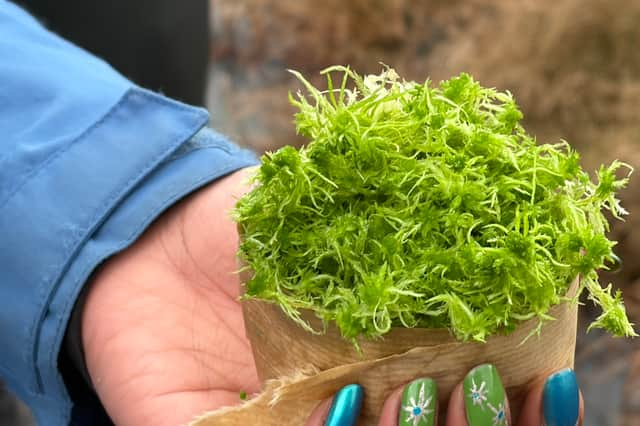
Over 20,000 plugs of sphagnum moss were planted by 61 volunteers over 431 hours this winter, in the fog and rain of November to March.
Together with the efforts from staff and contractors, the total number of plugs reached over 1.7 million.
Sphagnum moss is a key species in building healthy blanket bogs, forming the living carpet that makes up the colourful Peak District and Pennine moorland.
It can hold up to 20 times its own weight in water, creating a wetter environment on the moor, providing essential nutrients and eventually helping to create peat.
Tom Harrisson, delivery manager at Moors for the Future Partnership said: “Sphagnum performs all kinds of important societal functions.
“These include storing and releasing water slowly so that it reduces flood risk to homes further downstream, storing carbon, reducing wildfire risk, and providing a home for specialised wildlife that live and breed on the moors.”
He said sphagnum even provides us with high quality drinking water: “70 per cent of our water in the UK comes from upland sources and our uplands are dominated by moorland and peatland.

“We depend on these landscapes. By restoring it we are ensuring there is good quality drinking water available throughout the whole year.”
Mr Harrisson said a lot of the moorland in this country is badly degraded, and in the Peak District the primary source of this degradation is from atmospheric pollution.
He said since the industrial revolution, factories in the “industrial heartland” of Sheffield and Manchester have given off sulphur dioxide that fell as acid rain over the Peak District.
“That's what's damaged the living layer of the moor, including all of the sphagnum moss that was there that formed it in the first place.
“We're just trying to put back something that's missing, and put right a problem that we caused.”
He added there has been “decades of damage”, today’s industry is not as polluting, and industry is no longer the biggest threat to the state of moorland.
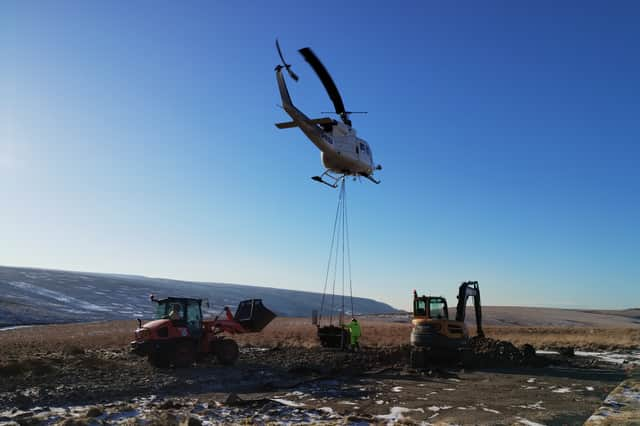
Ground nesting birds also depend on the moors, with the South Pennines designed as a special protected area because of its importance as their habitat.
Mr Harrisson said: “A lot of them are quite rare and specialised animals that depend on having moorland that is in good health to nest and raise their chicks on lots of insects.
“If it's not wet enough then there's not enough insects for them to eat.”
With ground-nesting birds breeding over the spring and summer, the winter season's moorland restoration work has now come to an end.
Moors for the Future is taking the opportunity to reflect on the changes made to 14 sites of important moorland.
This year (2025-26) Moors for the Future planted 1,740,300 plugs of sphagnum moss.
This is its third biggest planting year to date, behind 2024-25 and 2023-24 with around 2.4 million plugs each.
As well as the sphagnum success, Moors for the Future arranged 74 volunteers to carry out 2,118 hours of environmental surveys and science monitoring.
It also engaged with 2,023 members of the public, 648 school and university students, and young people in 2025-26.
The purpose of this community engagement was to raise awareness of the importance of peatlands and the benefits they bring when in healthy condition.
The organisation said peatlands enable drinking water storage, carbon sequestration, provide wildlife habitats and reduce the risk of wildfire and flooding.