
The Yorkshire farmer looking after almost 50 miles of hedgerows
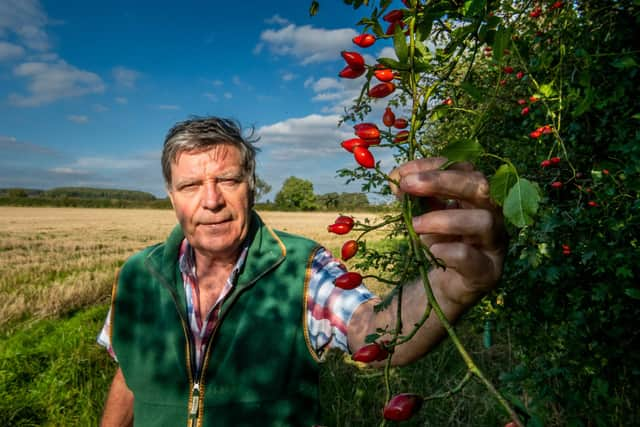
John Fenton knows a thing or two about hedgerows. There are 48 miles of them on his farm near Driffield. Chris Berry spoke to him.

Hedgelaying looks well set for a bright future through the government’s Sustainable Farming Incentive scheme relating to hedgerow management and that is music to the ears of wildlife and conservation enthusiast John Fenton of Elmswell Farms near Driffield where he will play host to the National Hedgelaying Championships later this month.
Elmswell has 48 miles of hedgerow on farmland that runs to 1250 acres and John, who is also lead judge for and former recipient of the Yorkshire Agricultural Society’s Tye Trophy award for conservation, says that Elmswell’s hedges are all managed very sympathetically for wildlife, but that they have other very important roles to play in terms of field, soil and water management.
“They are a natural corridor between all the woodland,” says John. “But they also act as a restraint for any running water trailing across fields and we don’t want any dirty water going into the chalk stream because silt settles and then oxygen will not get to the brown trout eggs that are being laid and other invertebrates will also be harmed, so it is very important that hedgerows act to stabilise the soil in those areas.

“Hedgerows can and do get very leggy over time. When you’re looking at laying hedges today you’ve always to make a point of relaying those that have no bottom in them because they are very windy places and as such are less attractive to wildlife and insect life.
“A hedgerow bottom needs to be full and wide, which brings about amazing wildlife, and hedgerows generally really need to be at least two metres wide, indeed the wider you can get, allowing for even greater habitat.
John is passionate about wildlife and is delighted that hedgelaying as an occupation looks likely to be enhanced by the SFI arrangements with greater opportunities for those who wish to pursue a career working in the countryside.
“Hedgerows are such an integral part of the rural and wildlife environment. They always have been and looking after them from a wildlife perspective is the principal driver so far as I’m concerned.
“We try to look after our hedgerows just as we would our cereal crops. We try to give them all the support where we can to encourage all wildlife from birds, butterflies, insects, bees, wasps, everything.
“Hedgerows also provide a significant benefit to soil through the habitat of earthworms. If you dig up the ground next to healthy, well looked after hedgerows you will always find them teeming with earthworms because so much vegetation drops down from healthy hedgerows, assisting the soil.
John is keen to stress the importance of hedgerow management.
“You can’t just hammer them with a flail every year and expect them to deliver. We relay all of our hedges probably once every 20 years. That means we are relaying nearly three miles of hedgerow a year and some are not relayed, some we completely coppice right down because the old hedges may have got a bit long in the tooth and if you’re not seeing a lot of growth at the bottom you need to do something more.
John is delighted to be welcoming back the National Hedgelaying Championships to East Yorkshire and sees the championships as an ideal opportunity for others to see the best in hedgelaying and to inspire others to take up hedgelaying as an occupation.
“I came across the National Hedgelaying Championships’ chairman in Cumbria two or three years ago, while at another event, and suggested they might like to come to East Yorkshire as we hadn’t had them here for an awfully long time. They came, saw what we had to offer and we’ve gone from there. At last year’s championships there were around 2500-3000 spectators, and we will have tradestands here too. I understand there are a few hotels in the area that are already booked out for the weekend.
“The beauty of what we offer here at Elmswell is uniformity across 1000 metres as there will be 100 competitors all laying 10 metres of hedgerow. The hedgerows they will be laying are relatively young at 14-15 years old, but it is the length of hedging that’s required for that uniformity. It will look fantastic with 100 hedgelayers on that length all at once.
“We are honoured to be hosting such a prestigious event. Some years ago it was held at Highgrove. King Charles is president of the Hedgelaying Society.
Every county has a different hedgelaying technique and John says the Yorkshire style is to put stakes in and a bar across the top.
“Those competing are coming from as far as Cornwall and Devon where their variation of hedgelaying is quite different, and so that provides its own challenges.
“Judges and indeed anyone who has hedgerows are looking for consistency. Our hedgerows at Elmswell are between 15-20 feet tall with a lot of material in them that they will be able to lay. They are mostly made up of hawthorn and mixtures of other plants such as dog roses, guelder roses, apple trees and in our case quite a lot of crab apple trees.
John says Elmswell won’t be going anywhere near their hedgerows with a flail trimmer in the next two weeks, on the 1000 metres to be used.
“They had a venue lined up a few years ago, but unfortunately someone thought they would assist the job by going and trimming them just beforehand, which wasn’t particularly helpful, and the organisers had to find another venue.
John says this isn’t some way of getting 1000 metres of hedgerow looked after by the best hedgelayers in the UK for nothing either.
“We are just at the end of our HLS agreement and haven’t started a new agreement and so we currently don’t have a grant for the hedgelaying which will be conducted in two weeks’ time, which we are paying for ourselves. We are paying the going rate.
The National Hedgelaying Championships takes place at Elmswell Farms on Saturday 26 October 9am-4pm.