
Thurgoland, South Yorkshire: Former wire mill village with magnificent views
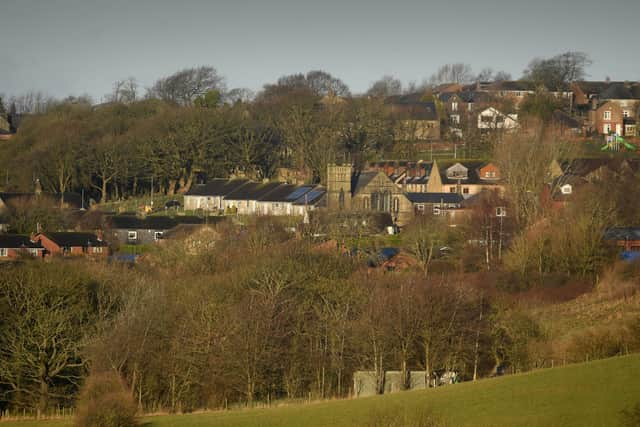
High on a hill on the Sheffield to Huddersfield Road, commanding a bend in the River Don, stands the curiously named village of Thurgoland.
At about 250 metres above sea level, there’s magnificent views from its main thoroughfare, Halifax Road and Rag Lane, of the River Don valley, a ridge overlooking the River Dearne catchment, towards the Peak District National Park and as far as the Yorkshire Wolds.
With a wide network of local paths suitable for all abilities as well as a branch of the Trans Pennine Trail long distance footpath and a cycleway through the parish, it’s the type of place that’s increasingly attracting holiday-makers.
In the summer of 2023, rescue dog Misty disappeared from Thurgoland while on a family holiday.

After being spotted across South Yorkshire over two weeks, the golden retriever spaniel cross was caught after causing "mayhem" by running on to the M1 near Birdwell.
Thurgoland has stood like a sentry over the valley since before the Doomsday Book survey of 1066, when it was named Thurgesland after a Saxon farmer.
It’s the type of rural Yorkshire hill you could imagine Compo, Foggy and Clegg sliding down in a bathtub.
Fans of Last of the Summer Wine, which was mainly filmed in Holmfirth, were sorry to see The Monkey, a pub a short walk from the village on Hollin Moor Lane, which appeared in several episodes of the long-running show, demolished following a fire seven years ago.
It’s said a real monkey was kept on a leash at the pub during the 1960s.
While the vistas include an expanse of farmland, Thurgoland’s community has long industrial associations, having been a centre for wire-drawing since the 17th century.
Along with the jobs at the upstream Wortley Forge, many of Thurgolands residents in years gone by have been involved in mining and industry, specifically in a metalworking process that reduces the diameter of a wire while increasing its length to create cast steel wire for sewing machine needles, fish-hooks, springs and a variety of other products.
Supporting Barnsley’s iron industry, Thurgoland parish boasted several wire mills, powered by water, off Old Mill Lane, and a steam powered one on Cote Lane.
There’s evidence of the historic use of water power, such the River Don weir, the head and tail goits and a mill dam, as well as a complex of buildings transformed to be homes. The Old Wire Mill is thought to date from 1624.
Some of the stone-built housing for the mill workers survives around the village’s southern entrance, along Cote Lane, in a confusion alongside a small contemporary development, imposing detached properties and farmland. Among the village’s eclectic mix of architectural styles is a recently completed self-build Passivhaus. After the building was nominated for a national award, its owner, retired architect Susi Clark, said: “People still have the image of it as a mining area and they are surprised when they see how beautiful the countryside is.”
Rising high above Cote Lane is the former Thurgoland Methodist Church, which was built in 1816 as a Wesleyan chapel and has since been repurposed for housing. The top of the lane marks the start of the heart of the village, with a crossroads featuring a corner shop premises, named the ‘Old Coop Superstore’ as well as The Green Dragon Inn, which the Campaign for Real Ale describes as a “cosy stone built local” comprising two rooms served by a single bar. In October plans to keep pub open until the early hours of the morning at weekends were approved, despite attracting concerns from residents about possible noise nuisance, with one saying disturbances from the inn were already “intolerable”, resulting in their parents not being able to enjoy their garden.
However, three months on and the centre of the village is far from noisy or busy, and it’s something of a surprise to find traffic lights in such a setting. It’s just a hop, skip and a jump along Halifax Road and you find a primary school for about 200 pupils, which Ofsted rated good in all areas three years ago, and back among trees, facing Holy Trinity Church, a grade II listed mid-Victorian building with a bellcote above the gable. A century and a half on and the building still serves as one of the community’s hubs, opposite local institutions such as Thurgoland Bowling Club, which is able to field some eight teams for Barnsley and Deane and Don league matches.
Also off Roper Lane is The Horse and Jockey pub, a village hall used for activities ranging from Irish dancing to Tai Chi, and a recreational ground. It was here in 1926 that four acres of land were passed for use for the recreational and educational activities of the community, with its trustees originally including Coal Board officials and miners. A lottery with a cash prize and tickets, in which “almost everybody in the villages participated” was established to fund the building of the village hall in the 1970s.
The village comes to an end to its north at Thurgoland Hall Lane, with dozens of well maintained allotments in amongst arable fields leading to Eastfield Farm, which Thomas Brooks, a Labour MP who led a successful campaign to repeal the Witchcraft Act 1735, was born.
However, the title Thurgoland’s most illustrious resident, could be reserved for Eugene Esmonde,who was born in the village in 1909, the son of the village GP. In 1942, Esmonde earned a Victoria Cross leading an RAF squadron against German ships trying to return to their home bases at Wilhelmshaven and Kiel through the English Channel. Admiral Bertram Ramsay later wrote: "In my opinion the gallant sortie of these six Swordfish aircraft constitutes one of the finest exhibitions of self-sacrifice and devotion to duty the war had ever witnessed."
aASAS