
Turning back time proves a winner for Yorkshire rivers health
While Yorkshire Water has pledged to invest some £1.5bn into improving the region’s rivers and coastal waters before 2030, a little known charity is achieving some remarkable results with a tiny fraction of that budget by turning back time.

Jonathan Grey, a professor of aquatic ecology at Lancaster University, said his research focused mainly on Yorkshire rivers had revealed eradicating human changes to waterways could significantly improve their health and boost populations of wildlife.
Prof Grey now devotes the lion’s share of his time to the Wild Trout Trust charity, which uses the freshwater fish as a sentinel species in the same way the WWF does with giant pandas.
Likening “waterway woes to a death by a thousand cuts”, Prof Grey said while watercourses were frequently in the headlines over nutrient pollution, they were also being threatened by issues such as water quantity and how climate change affects the distribution of water.
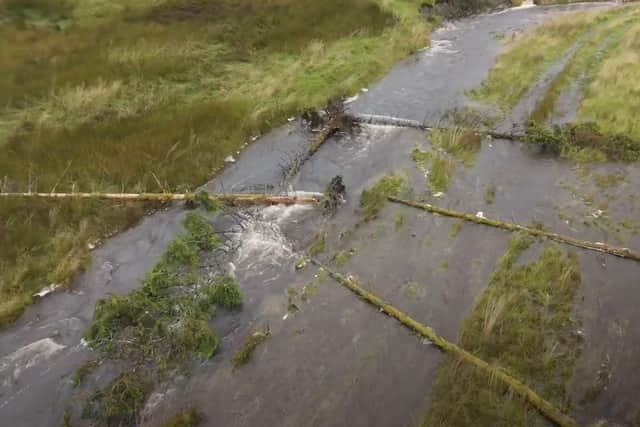

The charity has undertaken numerous projects to improve the physical habitat of waterways which have been modified by humans for such purposes as harnessing power for mills and making land more suitable for agriculture. He says rivers, such as the River Wharfe in the Yorkshire Dales, could be up to 90 per cent constrained by barriers added by society.
Prof Grey said: “What we’re really looking for in our river systems is a habitat mosaic, physical diversity, with areas of slow, deeper water, faster running sections, meandering sections, clean gravels, overhanging trees, shade and shaggy vegetation.
“We have lost touch with what our rivers should look like. It’s perhaps not surprising that even 150 years ago our view of the waterway’s naturalness was slowly being eroded away, so a lot of our famous painters chose waterways as subjects but they are generally of modified landscapes.”
He said as straighter channels were steeper than meandering ones, they created more erosive power, stripping smaller sediment and leaving large boulders as opposed to areas where decomposition can happen.
Prof Grey said: “We’ve got the legacy of many walls, weirs and dams in our rivers and in many instances the function of those dams is no longer required.”
He said the removal of a 19m wide 1.4m high weir on the banks of the River Aire, near Coniston Cold, which had been found to serve “no purpose but to block the transport of sediment along the river and impede fish migration”, had brought the river back to its natural proportion.
The project, which cost less than £8,000, involved the removal of notch boards to lower the upstream water-level, the removal of metal and timbers and concrete broken into manageable chunks, leaving the channel as a uniform cross-section to regrade and redistribute sediment from upstream naturally.
He said: "A lot of the talk about rivers at the moment is about how they should be connected to their floodplain to reduce the risks of flooding. If we can better connect them to their floodplains – the clue is in the name – we should be thinking more about the fields on either side of a river as being the river bed borrowed from the river for the majority of the time, but occasionally we need to let the river actually use that bit of the bed.”
To reverse the straightening of the waterways, the charity looks to retain trees that fall into rivers and streams, slowing the flow and aiding the development of bends. Prof Grey said: “Many of our riverbanks have been denuded of trees for so long there isn’t a seedbank so we do have toi use some augmented planting."
On Eshton Beck, which flows along the River Aire, the trust has put in about 4.5km of buffer fencing to manage grazing, allowing natural riparian vegetation to bounce back rapidly, and has planted around 5,000 trees to create more shade to help species such as salmon and trout.
Using “electric fishing”, a non-destructive method for fish sampling and management, for his research, Prof Grey has found where watercourses have been left populations remain stable, but in becks where the trust had improved the habitat, taken out boulders and introduced trees and logs in the river up to ten times the amount of trout are produced on an annual basis.
He added individuals could make significant differences to the health of rivers by actions such as controlling invasive species such as Himalayan balsam, which when it dies back leaves banks bare and more susceptible to erosion.”