
'Unacceptable impact' - Holiday park scheme on agricultural land scuppered by safety concerns
Planning permission has been refused for a holiday park consisting of 67 caravans proposed for agricultural land near Guisborough.
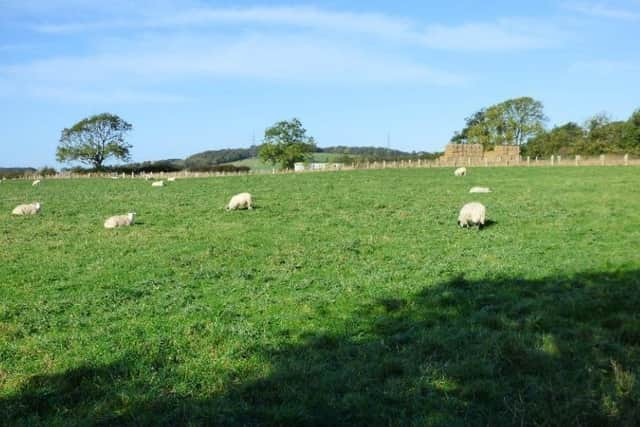
The park would have been built on a 10.25 acre site currently used for sheep grazing to the south of the A171 Middlesbrough Road and west of East Upsall Farm.
A total of 21 objections were received by Redcar and Cleveland Council which said it would spoil the countryside views.
There was also concern over excess traffic being added to the busy A171, access in and out of the site and resulting safety, as well as criticism that it did not comply with planning policy requirements and was “unnecessary” development.

Guisborough Town Council in its representation to the local planning authority said cumulative harm would result from there already being another caravan site nearby – Wyke Lodges – and also cited a potential increase in traffic in objecting.
A statement by the applicant Norman Woodall said 45 two bed static caravans were envisaged and 22 three bed static caravans, which would be “spaced generously”, along with 106 car parking spaces.
A reception/manager’s office would also include a small shop for people to use.
It suggested some caravans would have the option of raised decking.
The intention also was that the majority would be subject to leaseholds, owned by individuals who would pay an annual ground rent.
Access to the site would be from the A171 Middlesbrough Road via a new purpose built access road with a new junction.
The council’s development engineers said the creation of junctions, particularly on dual carriageways, should be limited and avoided wherever possible.
They recommended a safety audit, adding that the A171 was an unlit dual carriageway with a 70mph limit and there was also no safe walk to the Cross Keys pub, which would be a probable local destination, which may result in people walking either on the carriageway or in the verge which was an “unacceptable highway safety issue”.
The engineers said 20 “amenity destinations” had been referred to within a transport assessment supplied by the applicant, although it remained unclear how these areas could be safely accessed via sustainable means given the lack of existing infrastructure and the limited proposed infrastructure as part of the application.
Despite several meetings and discussions with the applicant and revised information being submitted during the lifetime of the application, they maintained their objection to it.
A report from a council officer said the “tourism development” did support some aims of the council and complied with aspects of planning policy.
It also said given the “limited amount” of tourism accommodation in the area, the separation between the application site and the existing Wyke Lodges development and the area of remaining countryside, the proposal was not considered to result in cumulative harm to the character of the area from a concentration of similar development.
Meanwhile, the scale of the development, along with the materials and detailed designed features included in the application would respect the character of the site and surroundings.
But highway impacts proved a sticking point with the report stating: “The dual carriageway does not have appropriate sustainable transport infrastructure to facilitate the proposed use at this point of the dual carriageway arrangement and the applicant has not offered substantive changes to that arrangement.
“Without infrastructure and mitigation on the A171 to support an intensification in use, an unacceptable impact on highway safety exists.
“While discussions have taken place, no suitable scheme has been put forward to address the highways concerns.
“Based on the information presented, the application creates an unacceptable impact on highways safety.”
It said the highways safety element meant the application was contrary to relevant local planning guidance.
The council’s ecology consultant had also reviewed the application and it was deemed there was a lack of information to make an adequate assessment of potential adverse impacts and it had not been demonstrated that the proposal would respect or enhance the landscape, biodiversity or geological features.