
Vet outlines pathway to high-performance hens
Greater emphasis must be placed on quality pullet development to produce hens capable of achieving high performance in cage-free systems, a North Yorkshire poultry vet is set to tell a major agriculture conference.

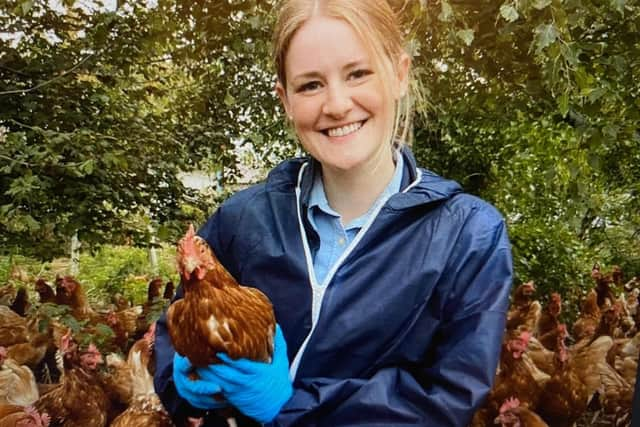
Charlotte Cole, who works with hundreds of millions of layers, layer pullets and broilers across the region annually, will outline five recommendations the Nuffield Farming Conference in Leeds later this month as the egg industry faces increasing pressure to improve productivity and welfare whilst reducing environmental and financial costs.
Her findings will be among numerous Nuffield Scholarship studies which will be presented at the Royal Armouries Museum, which have the common them of aiming to strengthen the farming industry and rural communities.

The charity awards bursaries of £9,000 to people who work in farming, food, horticulture, rural and associated industries or are in a position to influence these industries to “give a unique opportunity to stand back from your day-to-day occupation and to research a subject of interest to you”.
The vet’s study has been published against a backdrop of ongoing pressure to ban enriched cages as the UK produces 83 per cent of eggs in cage-free systems, which are more costly and complex to manage than caged systems.
The paper states: “Pressure to eliminate enriched cages continues to grow, yet replacing this production would require more than three billion additional cage-free eggs annually. Whilst some demand can be met through housing conversion and building, improving flock performance will be essential to maintain supply efficiently.”
Ms Cole found significant performance differences exist between and within countries, with Germany producing 27 per cent more eggs per bird than the UK in 2024 and UK free-range flocks averaging 378 eggs per bird, compared with over 570 in top-performing flocks. Improving persistency of lay, disease resilience and feather cover, presents an opportunity to increase egg output from existing housing capacity, whilst improving welfare and sustainability.
Ms Cole said a consistent theme in her study was the importance of early-life development. She found growth quality and flock evenness influence future productivity, health and longevity.
The report states: “The first weeks of life play a critical role in the developing gastrointestinal tract, immune system and microbiome, with long-term consequences for disease resilience and performance. Behavioural traits associated with feather pecking, fearfulness and ranging are also influenced by the rearing environment during the first ten weeks of life.”
Ms Cole’s recommendations include prioritising growth quality and flock uniformity rather than transfer weight and maximising early feed intake, gut development and disease resilience.
She will also recommend poultry farmers provide substrate and environmental complexity from day one to support behavioural, microbiome and skeletal development, optimise lighting, feeder and environmental management throughout rear, while transparency across the supply chain needs improving so pullet development is managed as a continuous process.
The first 10 weeks, shapes the next 100
Five key recommendations emerged from this Nuffield Scholarship.