
'Woefully out of date' - Life peer demands urgent reform of farm tenancies
Farm tenancy agreements are “not fit for purpose” says a North Yorkshire based life peer in the House of Lords.

Baroness McIntosh of Pickering, the Thirsk and Malton MP from 2010 to 2015, has long campaigned for the region’s farmers and this week told the Yorkshire Post she will be tabling written questions to the government about reforms to farm tenancy agreements and asking when they will be made.
It comes after she chaired a Conference on Agricultural Policy last week, where the debate turned to tenant farmers.
She says tenant farmers need to be able to have sufficient land to upscale food production and more security within tenancy agreements to build and grow their farming businesses.

Baroness Pickering said: “Farm tenancies are not fit for purpose and need to be addressed as a matter of priority.
“They are woefully out of date. They don’t give tenants enough rights and the ball is always in the landlord’s court.
“They need to be for a longer tenure and things will not change until farm tenancy agreements are reformed.”
She also questioned the role of local democracy when planning objections by residents and even local councillors and authorities are being overruled by government inspectors.

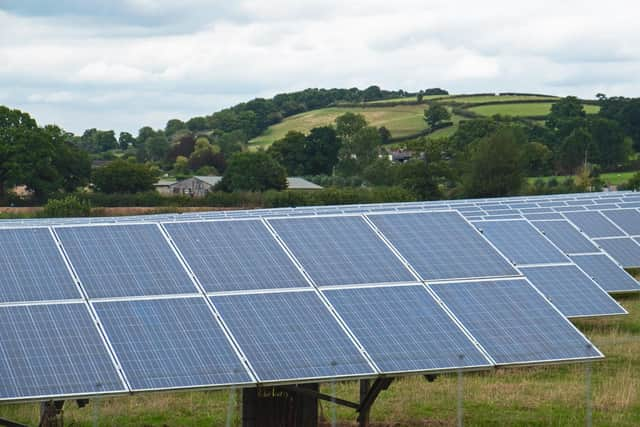
She said the Sturdy family of Eden Farm in Old Malton, who lost a battle which went to the High Court to prevent their landlord taking back farmland for solar development, had been “shabbily treated”.
Baroness Pickering also referred to plans for a solar farm at Scotton, near Knaresborough, being recommended for approval by planning officers from North Yorkshire Council (NYC) despite 244 objections lodged by residents, a petition collecting more than 600 signatures, concerns from NYC’s own landscape and conservation officers and Historic England.
“Where is the democracy and devolution if these are being taken out of local control?”
She also sits on the Committee for Environment and Climate Change in the House of Lords and will be raising issues within that sphere to discuss the role of farmers in tackling climate change issues and UK food security issues.
Between 2014 and 2024, lamb production fell by nearly 27 per cent, vegetable production has decreased by 20 per cent, pig meat products have decreased by 7.2 per cent and there has also been a sizeable decrease in the production of oil seed rape.
Ten per cent of productive farm land is being taken out of production for clean energy alone, added the peer.
She said: “The shift to clean energy on prime agricultural land and to nature recovery farming, away from food production, is very ill-advised.
“Shocks to the economy like Brexit, Covid and the hostilities in Ukraine and the Middle East show how we need to produce more of our food at home and with a higher rate of self-sufficiency.”