
Yorkshire-based initiative's remarkable results battling the biodiversity crisis
A North Yorkshire-based initiative responding to the biodiversity crisis is achieving some remarkable results. Stuart Minting reports.

The founders of a company dedicated to increasing biodiversity by working with other businesses to offset their carbon footprint and hosting environmental days are celebrating planting their 100,000th tree.
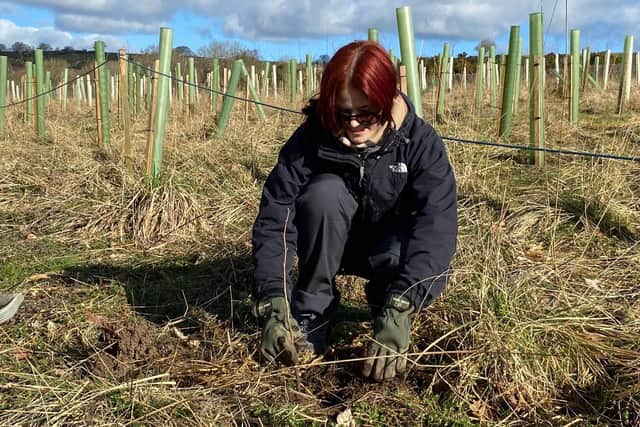
Staff from Horsforth-based packaging firm Hazel 4D taking part in a sustainability day at Make It Wild’s Nidderdale National Landscape site near Summerhouses marked the milestone while planting out a segment of a hazel woods, meaning part of the woodland can be annually coppiced without killing any of the trees.
It’s an energy-sapping and time-consuming task, the gentle folding of rootballs into dug holes, so even for experienced planters it takes about an hour to plant a dozen.
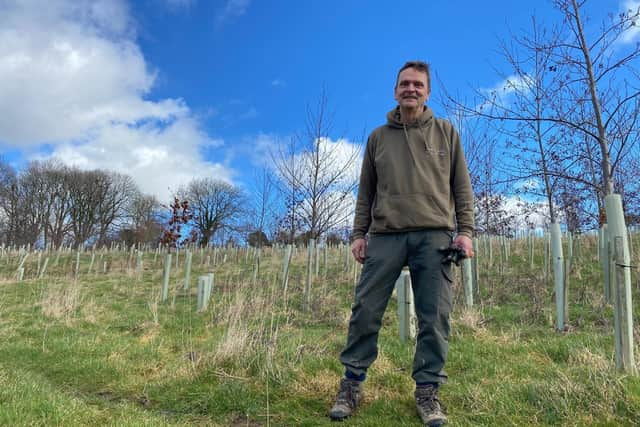

“You don’t want any air gap between the roots and the soil”, says Christopher as he notes the prevailing wind direction before thumping a stake into the ground beside the sapling.
Each young tree is secured with a plastic guard to protect them from deer and small mammals such as voles, which Christopher says decimate plantations that don’t use them.
However, in some of Make It Wild’s plantations they have protected the trees with deer fencing and rabbit netting and created “super hedges”, where fruit and blossom trees are densely planted in an enclosure, which Christopher says have developed into rich habitats, particularly for small birds.
After selling his laser eye treatment firm, Christopher and his consultant surgeon wife Helen decided to plough the proceeds into nature restoration as he was so concerned about the human impact on wild spaces and species.
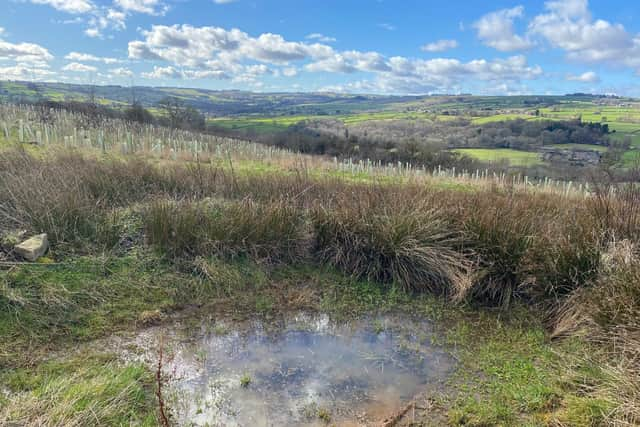
He said Make It Wild was trying to support as many habitats as possible, such as creating ponds, another primary aim was to encourage others to share their enthusiasm for nature, which had led to some significant changes in the resident wildlife at the 111-acre Bank Woods site since buying it in 2017.
Christopher said the country saw a million ponds filled in across farmland in the 20th century because they got in the way of big machines and noted that farmers were even given grants to take hedges out and dry peat.
He said: “We have done a series of surveys on moths since. When we did the first we found 40 species and with the trees having grown we are now at 265 different species of moth trapped in one night.
”We put a variety of bird boxes in and have increased the population of barn owls by not grazing the land and allowing the grasses between the trees to grow you get a big volume of small rodents which the barn owls need to feed their young.
"We now have pied flycatchers migrating here, feeding from the flies off a zebra in sub-Saharan Africa at one time of the year and raising fledglings here.
"We put bird boxes up because there isn’t enough of the ancient woodland left. There aren’t enough nooks and crannies.”
He said each of Make It Wild’s plantations in Nidderdale, Wensleydale and the North York Moors went through a thorough planning process involving several bodies to ensure the right trees were being planted in the right place.
Christopher said: "We should have our ground-nesting birds living much more in the lowlands and river plains, but so many of them have been drained that birds such as the curlew, redshank and the lapwing have all tried to nest in the uplands which isn’t the right habitat.
"If you put trees in the middle of a curlew nesting side they won’t come back because you provide predator shadow, a hiding place for weasels, foxes and stoats and a perch for the raptors.”
While planting hazel was the aim of the day, Make It Wild’s primary focus is on planting broad-leafed native species which the charity hopes will become the ancient woodlands of the future.
Pointing towards a small herd of belted Galloway cows and Exmoor ponies on a nearby hillside, Christopher describes them as “our conservation grazing team”.
He said: “Because of the way they graze and the pressure from their hooves they will press in seeds and their manure will carry seed so suddenly you get an abundance of wild flora that hadn’t been there when it was sheep grazed.
"When botanists came they found 70 species of wild flower and that was so impressive Harrogate council designated it as a Site of Nature Conservation Interest."
One of the Hazel 4K volunteers, Katie Graham, the firm’s sustainability lead, said working in the countryside for the day had been an enjoyable experience.
She said: “It’s important that we do our bit and what Make It Wild is doing is great. It’s really nice to be able to support them.”