
Yorkshire farmer taking part in project to cut impact of sheep farming on the environment
While many in agricultue feel the industry, and livestock farming in particular, has been unfairly treated by carbon emissions methodologies, a Wensleydale farmer is setting out to establish the levels of methane being emitted by sheep living off a natural forage diet.

The Forage for CH4nge project - funded by Innovate UK - is bringing together farmers and scientists to better understand how traditional breeds and different pastures can help reduce the environmental impact of sheep farming.
Led by local Wensleydale farmer Adrian Thornton-Berry, in collaboration with the Game & Wildlife Conservation Trust, UK Agri-Tech Centre, Scotland’s Rural College, the National Sheep Association and the Yorkshire Agricultural Society, it is exploring how methane emissions differ between native Swaledale sheep and half-bred Texel-cross sheep when both types graze on different forages in the upland landscape.
The study used 120 sheep - 60 of each breed - split into three groups of 40 and grazed on either improved (treated, seeded and/or fertilised), species rich (natural and untreated for 30 years) or regenerating moorland forage.
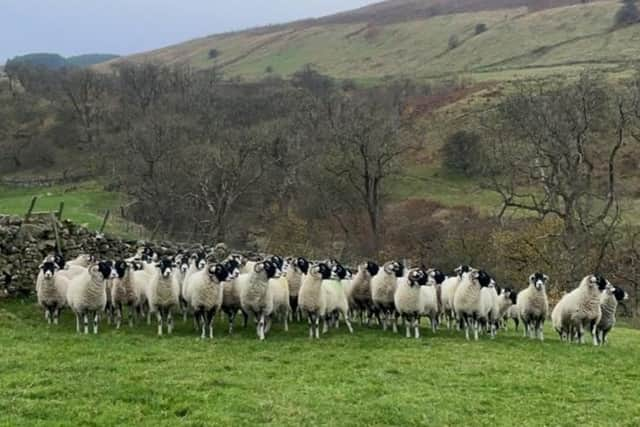

The sheep were brought in twice, two weeks apart, and methane emissions for individual sheep measured inside mobile Portable Accumulation Chambers (PAC) on Mr Thornton-Barry’s farm in Swinithwaite.
Each sheep was placed in one of 12 pods onboard the PAC trailer for 50 minutes while being carefully monitored, and its methane emission measured.
Other measurements such as weight and body condition score were collected before testing and stock handling kept stress levels to a minimum. After testing the sheep returned to their fields to graze.
Full results of the PAC tests, and vegetation surveys carried out in June, are expected early next year.
Ellie Raynor, GWCT Ecologist, said the ultimate aim of the tests was to find a way to support upland farmers and help them improve productivity and financial resilience at the same time.
She said by using breeds adapted to the local landscape, and exploiting the most appropriate grazing resources, farmers can both reduce input costs and increase profitability, while making a positive environmental impact through minimising methane emissions and helping to improve biodiversity.
Mr Thornton-Berry said if it could be shown the native sheep are better on a certain native forage, that would help farming sensitive areas better in the future.
He said: “Essentially, Forage for CH4nge is all about working with farmers to build a sustainable future for Britain's uplands, where we farm in a way that is more sustainable, profitable and better for both the habitat and climate change.”
Agriculture contributes 12 per cent of the UK’s greenhouse gas emissions with 50 per cent of this from livestock. Methane is a potent GHG, therefore a key priority for the sector to focus mitigations on.
Michael Priestley, Policy Manager for the National Sheep Association, said: “While many in the industry feel that farming, and livestock farming in particular, is unfairly treated by carbon emissions methodologies, putting sheep under this kind of scrutiny will yield important information to inform breeding and management decisions.”
Forage for CH4nge aims to help define mitigation strategies for upland sheep farmers that increase efficiency and reduce methane emissions.
The development of a method for comparing emissions from sheep breeds grazing in various natural habitats, will also help provide a new framework to measure carbon footprint and help define sustainable and resilient future farm systems.