
Yorkshire farmers counting the rising cost of climate change - Stuart Minting
It took some 152 days after Yorkshire Water declared a hosepipe ban across the region for there to be sufficient water reserves to lift the restrictions.

It remains to be seen how much of an impact the driest spring the region has seen since the year of the Featherstone Miners' Massacre and completion of the Manchester Ship Canal will have on the rural economy.
However, the financial forecasts are frightening.
A reduction of revenues nationwide for arable farmers of £828m would translate as a very big hit to Yorkshire’s agricultural sector, which is heavily weighted towards impacted crops including wheat and barley.

The predicted cut in revenues comes hot on the heels of heavy losses last year due to winter deluges, exacerbated by climate change, as farmers were left unable to drill and manage crops on waterlogged fields.
Meanwhile, 2020 saw the worst harvest on record following similarly extreme winter rainfall.
The hosepipe restrictions saved around 3.1 billion litres of water, the equivalent of 33 days of Sheffield’s average use.
Yorkshire Water heralded its response, saying its drought management plan, efforts to fix 15,000 leaks, drought permits to abstract from rivers or hold water back in reservoirs, and a system of moving water round the region, had alleviated the situation.
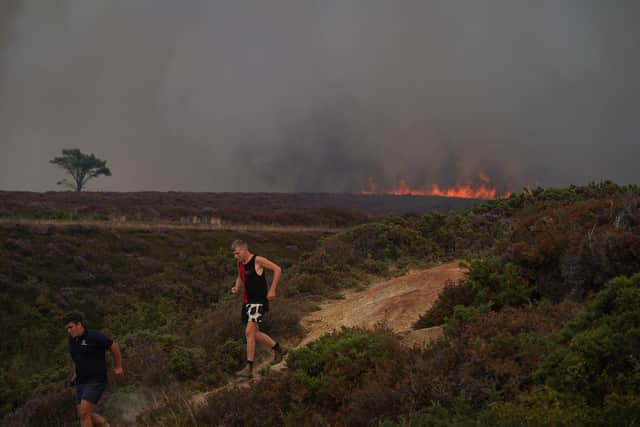
At the other end of the spectrum, this August saw one North York Moors cattle farmer describe the area as appearing like “hell on earth”, as a wildfire raged out of control.
Such unprecedented events, it is apparent, are going to increase in frequency.
The economic, as well as the envirionmental and social, costs of not taking radical steps to counter the effects of climate change is already eye-watering.
Even as the situation improves, the National Drought Group has said there still needs to be a typical rainfall until the end of March to avoid drought in some areas next year.
Last month, the Environment Agency warned England would experience worse levels of drought next year if this winter is drier than normal, with widespread impacts felt by consumers, farmers, businesses, and nature.
The agency’s director of water said: "The public have been brilliant in using a little less water this summer and following the restrictions in some parts of the country.
"I would urge people to continue to be as efficient as possible with their water use this winter - even if it is raining outside. Our wildlife, our rivers and our public water supplies depend on it."
However, with around 19 per cent of water lost to leaks, the call is riddled with difficulties.
Nevertheless, investing where possible in building water resiliency would be tough to argue against given the apparent pace of climate change.