
New taskforce set up to tackle special educational needs crisis
A new taskforce has been launched to improve how children and young people with special education needs and disabilities (Send) are supported.
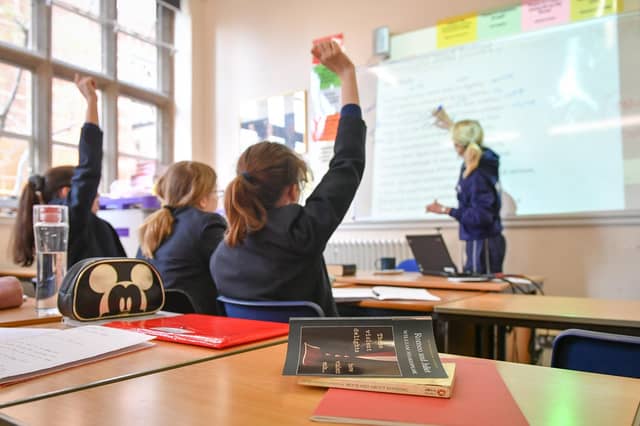


The IPPR Inclusion Taskforce will bring together leading experts in education, health and local government to set out a positive new vision for reforms.
This comes ahead of a white paper expected in autumn to set out the government’s proposals.
There are fears that Sir Keir Starmer could be facing a repeat of the welfare rebellion, with backbench MPs already raising concerns about the removal of education, health and care (EHC) plans.
Education Secretary Bridget Phillipson said this is a “complex and sensitive area”, before adding: “What I can say very clearly is that we will strengthen and put in place better support for children.”
The IPPR taskforce, chaired by Geoff Barton, former general secretary of the Association of School and College Leaders, will set out principles to guide the Government’s reform.
"Too many families face a daily struggle to get the right support for their children,” he said.
“This taskforce will bring fresh thinking and a clear focus on delivering the change that’s urgently needed to make our education system work for every child."
“After 15 years leading a state school and then a national education union, I know how complex and challenging the Send system can be - for families, for schools, and most of all for the children it is supposed to support.
“Too often, getting the right help takes too long, feels too hard, and leaves young people feeling left out. We must do better on their behalf.”
One in five children are now identified with Send, the equivalent to six children in every classroom, while support for those with the most complex needs has doubled since 2014.
Both North Yorkshire Council and the East Riding have told The Yorkshire Post how this has caused significant funding pressures.
North Yorkshire Council leader Coun Carl Les revealed that transporting one child with complex needs to school was costing £1.2m a year.
“That is the sort of scale of cost that we can be facing for an individual child, and there are more of those children coming into the system,” he said.
While in the East Riding of Yorkshire, the council receives the lowest amount of per pupil Send funding in the country.
Coun Victoria Aitken, cabinet member for children, families and education said: “The way Send funding is calculated is outdated and doesn’t represent the current demands and needs of children and their families.”
If the East Riding of Yorkshire received the average national funding per pupil, the council would have £17.4m extra each year for Send provision.
“The effect of lower funding in children’s services contributes significantly to the wider council budget, and if we received appropriate funding for high needs, our overall council position would be significantly more manageable,” Coun Aitken added.
Critics say the current system continues to lead to poor outcomes for children, and is adversarial for families and bureaucratic for teachers.
A Department for Education spokesperson said: “The evidence is clear that the Send system has been on its knees for years – with too many children not having their needs met and parents forced to fight for support.
“It will take time, but through our Plan for Change, this government is determined to spread opportunity, restore the confidence of families up and down the country and deliver the improvement they are crying out for.”