
Yorkshire mum campaigns for calculators to be allowed in Maths exams

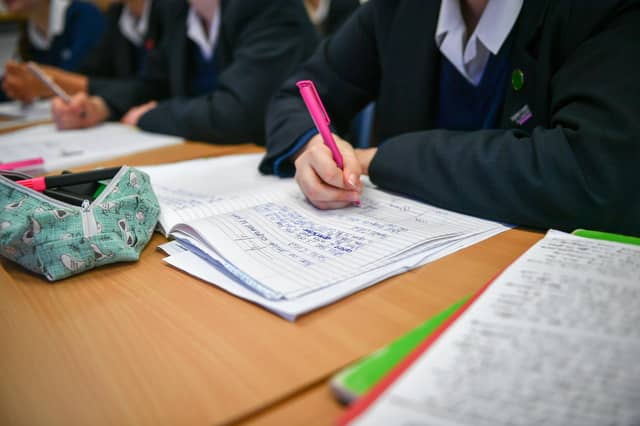

A North Yorkshire mum is campaigning for changes to maths exams to support young people with a rare learning disability.
Lucy McGill’s daughter Ava, 11, has dyscalculia, which means she struggles with understanding and processing numbers.
The condition is estimated to affect between three and seven per cent of children.
According to Ms McGill, non-calculator elements of maths examinations should be removed to make them fairer for children with dyscalculia.
Currently, most students taking maths assessments sit a non-calculator paper to assess their mental arithmetic skills.
Ms McGill, who is self-employed and lives near Leyburn, has taken her campaign to her local MP - former Prime Minister Rishi Sunak, who has himself previously said all children should study Maths until the age of 18.
She said: “Ava comes home feeling like she's bad at maths, even though she understands it, and it's heartbreaking, because it's the format of the test that's failing her, not her ability.
“I’m asking for simple, low-cost measures. Mr Sunak agreed to raise it with the Department for Education, so there’s a real opportunity for change.”
Most exam boards offer extra time on papers for students with learning disabilities, with the standard time being an extra 25 per cent.
But according to Ms McGill, this is unsuitable for many with dyscalculia. Instead she wants GCSEs to follow the international GCSE standard, where several exam boards don’t have a non-calculator paper.
She said: “People with a learning disability of maths do not want extra time.
“In independent schools, they allow calculators and formula sheets as standard.
“Right now, she’s judged on recall, not reasoning, and that isn’t fair.”
A letter from the Department for Education to Ms McGill said: “For the end of KS2 maths test, while various access arrangements such as extra time can be granted, access to a calculator or method book cannot be given as these arrangements would mean we are not accurately measuring whether the child has attained the mathematical knowledge the test measures.”