
'Anxiety and stress left me unable to function but now I've swapped the rat race for a love of bikes that began in Yorkshire'
Crippling anxiety left former journalist and communications director Nick Sharpe at breaking point. Now he’s launched a mobile bike business, inspired by a love of cycling that began in Yorkshire. Laura Reid reports.

Something needed to change. It had to. He’d tried therapy. Multiple times, in fact, over his long career in journalism and communications. Yet here he was, with anxiety so crippling that he couldn’t even catch a train or go to the supermarket without crying.
It was December 2023 and two decades of living a pressure-cooker existence had eventually triggered a devastating mental breakdown for Yorkshireman Nick Sharpe. His role as Director of Communications for the voice of Scotland's renewable energy industry was a whirlwind of being interrogated by politicians, grilled in TV and radio interviews, and meeting the demands of powerful corporations making multi-million-pound investments.
Prior to that he’d spent 15 years as a national newspaper journalist – a job which saw him despatched to an unfolding shooting massacre and take a helicopter flight into an erupting volcano. He’d struggled, time and again, with his mental health. One week, he was on top of the world, conquering his goals, confident and happy - though admittedly propped up by caffeine. The next he’d crash, sobbing, anxious and terrified to leave the comfort of his own home.
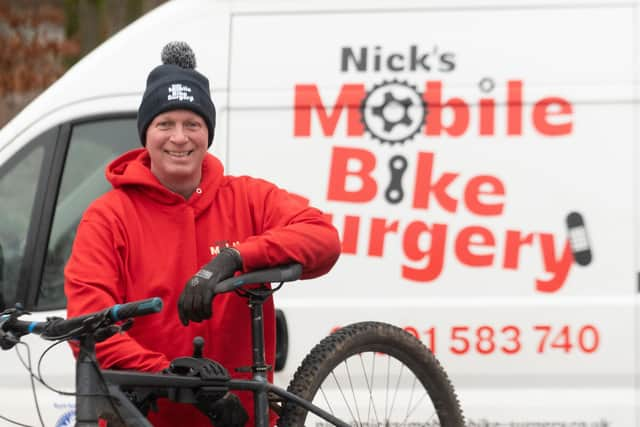

In 2024, after years of therapy and medication, the now 46-year-old decided enough was enough. A complete lifestyle change was what he needed. He quit the rat race, found another gear as a mobile bike repair mechanic and now he’s speaking out about his mental health, and urging others to "spend a bit of time thinking about your own brain”. “I've battled with my mental health since I was in my early twenties,” says Nick, originally from Letwell, near Rotherham. “But it took many therapy sessions to realise that it was my addiction to the adrenaline caused by stress which was the problem.”
"I wanted to get back to ‘normal’ more than anything, but I’ve had to create a new normal just to continue as a functioning member of society and look after my family,” he continues. "Making the dramatic career change that I made wasn't easy, and for the first few months the stress was really quite difficult to deal with for someone with my history. But things have become much easier and I'm more in control of my life than I've ever been, which I think is what I have been needing all along.”
Nick, who is now living in Renfrewshire, Scotland with wife Amy and teenage twin boys Tom and Alistair, got his first job at a local newspaper in South Wales after studying journalism at the University of Sheffield. “My mental health story started there really,” he reflects. “I loved it, I absolutely loved being a journalist, the excitement of being at the heart of it all, and going out and finding a story, following it through and seeing it in the paper the next day. I got a total buzz out of doing that.
"I was drinking way too much caffeine, and four or five cans of coke every morning. I’d start at 7am and have 11 deadlines by 11am and I was filling the paper. Every page had my byline, it was fantastic. But one night about a year in, I found myself in the park near my house at midnight crying and thinking something was really wrong. Looking back now, I’d totally overdone it and pushed myself to creative stress to the point where I couldn’t function.”
He took a couple of weeks away from the job, and within a matter of months, was feeling much better. But it was a cycle that went on for years. His early days as a news hack for The Scottish Sun newspaper are among the highlights of his career, Nick says. He was comfortably in his element, travelling around and meeting people. But there was also the stress of meeting demanding daily deadlines, heightened somewhat when Nick progressed to become the title’s chief reporter.
His years there were certainly memorable. He recalls being scrambled to cover the Cumbria shooting spree by taxi driver Derrick Bird. “I remember arriving in the middle of it when there were still bodies lying at the side of the road and he was still out shooting people. People were told to stay indoors, lock their doors, and we were running towards danger. It was a real adventure. As a journalist, you can’t really separate the tragedy and adventure. To be part of that massive story was quite a thing.”
Seeing dead bodies was a regular occurrence, he notes. He was often one of the first at the scene of a major incident. “I remember covering a house fire in which an 18-year-old died,” Nick says. “I had to knock on his family’s door a street away to ask how they felt when the fire had not even been put out.
“The aftermath of death was an almost daily occurrence. You go through all the emotions the emergency services go through, but the big difference is that they get lots of training and support, whereas as a journalist you were pretty much left to figure everything out for yourself.
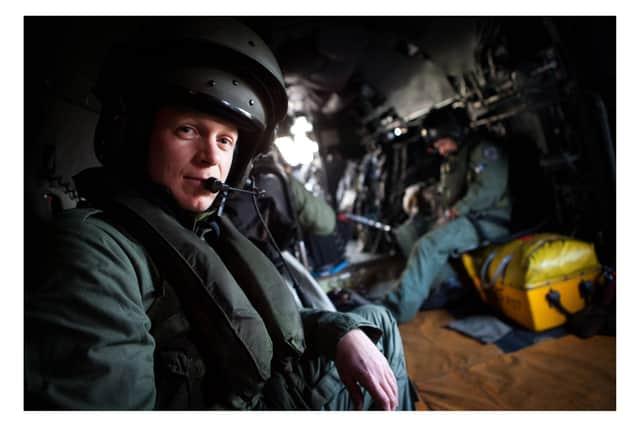
“You often ran towards trouble while most people would be running away. I was on the last flight out of Europe to Iceland before the spectacular 2010 volcano eruption closed airspace across most of the continent. We took a monster truck up the glacier to below the volcano, and then we flew in a helicopter pretty much into the ash cloud. There were rocks the size of cars, on fire, flying past the helicopter window. I wrote that it was like gazing into the jaws of hell.”
He adds: “I often had to confront people who were not pleased to see me. I remember being held at knifepoint in a flat in Greenock and having to talk my way out, and being pushed and shoved by a politician while asking him some difficult questions in Glasgow.
“I was proud of standing up for readers who had suffered injustice and holding people in positions of power to account but being violently beaten covering a story about a fraudster actually hastened my decision to leave journalism.”
A move to public relations followed for Nick, and he soon found himself working for Scottish Renewables, later becoming Director of Communications. “It was a similar story to newspapers really. I started off loving it and ended up stressed out of my box,” he says.
“I was always taking on more responsibilities,” Nick explains, “including doing television interviews and appearing in front of Scottish Parliament committee hearings being grilled by MSPs. People would think I was knocking it out of the park, but I remember sometimes being almost paralysed with nerves and even gagging over the toilet before big moments. I was like a swan – appearing graceful on the surface but frantically paddling away under the water.
“The renewable energy sector was under intense scrutiny and I was the mouthpiece for the industry in Scotland. I’d meet government ministers and was involved in conversations we were having with Prime Ministers and First Ministers. The industry changed from smaller operators dotted around Scotland to massive international corporations coming in to build multi-billion-pound offshore windfarms.”
Then, the Covid pandemic hit. Like many, Nick found himself stuck in the house, juggling a demanding job and home-schooling the kids. “I always enjoyed being out on the road and meeting people and that went away. That was the best part of the job gone,” he says. It was a tipping point, he believes now, and one that contributed to his breakdown in 2023.
Nick took a period of absence from work and despite the support of his employer, struggled to return to his job. "I was terrified about going back to work. If I saw a wind turbine, I went into fight or flight mode. It was that intense….(When I did go back), every day I was waking up at half past four, laying in bed, feeling terrified, then getting the train to Glasgow with sweaty palms. There were episodes where I’d come out of the train station and my legs were so wobbly, they wouldn’t hold me up. Going into the office was like the most terrifying thing you can ever imagine.”
Nick claims he realises now that he spent more than 20 years “fuelling myself on adrenaline, panic and caffeine”. “I was stressed for decades but was too busy to notice the damage I was doing to myself until it was too late,” he says.
When he left his role, Nick began to really think about what had made him happy in life. Being out on the road, meeting people and tinkering with bikes. “I looked into doing Tesco delivery driving, but had an epiphany moment when I remembered reading about a guy who once ran a mobile bike repair service.”
He set up Nick’s Mobile Bike Surgery last June - covering the greater Glasgow and Clyde area, and says he has never been happier. “At first, the voice in my head was screaming this is a stupid idea, it’s not going to work, what are you playing at?,” he admits. “Now mentally, touch wood, I feel in a sustainably better place.”
He’s been cycling since his younger years in Yorkshire, a rural childhood where playing on a local farm and exploring the countryside, on foot or bike, was the norm. As a teenager, he was gifted a bike maintenance manual one Christmas and has been tinkering ever since.
"During lockdown, when there wasn’t much to do, I’d put a post on the village Facebook group offering to help fix folks’ bikes for free. It was so popular, I almost ran it as another job, fixing about 40 bikes in nine months. I just loved going round the village chatting to people.”
He’s loving being back out on the road again, hearing people tell their stories with no pressure to write it to a deadline. One day he’s fixing bikes at a country estate, the next he’s up a tower block mending a puncture.
"They say that sometimes things need to get worse to force you to make the change that's needed," he reflects. “In my case, that meant the stress of my job increasing to a point where I just couldn't take it any more...Yes, I’ve taken a gigantic pay cut, but happiness – and my mental health – is just more important.”