
David Watson obituary: The pioneering Yorkshire heart surgeon who lived to 104
David Watson, who has died at 104, was a pioneering heart surgeon in Yorkshire who became instrumental in setting up the national charity now known as Heart Research UK.

It was in 1967, at a time when cardiac surgery carried serious risks, the mortality rate was high and little research was being done in the UK, that Mr Watson founded the National Heart Research Fund.
As a surgeon at Leeds General Infirmary, he had tired of telling heart patients there was nothing he could do to help them. He wanted to be able to do more.
“Heart surgery was so dangerous at that time that the outcome was not good at all,” he recalled. “It was devastating for the families of the patients and also for the surgeons.”
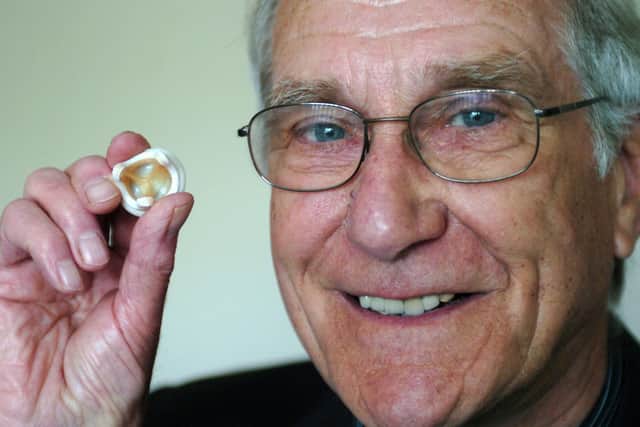

After the charity was started with an appeal published in the Yorkshire Evening Post, Mr Watson went on to establish the country’s first heart research unit at the former Killingbeck Hospital in Leeds.
In 1979 his charity funded six of the first eight successful UK heart transplants carried out by Sir Terence English at Papworth Hospital, Cambridge.
This eventually led to heart transplants becoming available on the NHS.
In the 1970s Mr Watson also helped in the advancement and development of heart valves. He and his team invented the Killingbeck Valve, an artificial heart valve which remained in use for three decades.
An evolved derivative, the Aspire valve, was also made in Leeds.
When he retired in 1987, the mortality had fallen from around 50 per cent to just one per cent, but Mr Watson’s work was not done.
He devoted the rest of his life to the charity, remaining a trustee and chairman for many years and continuing as its president until his death.
In the 2012 New Year Honours, he was awarded an MBE for services to research and cardiothoracic surgery.
Speaking on his 100th birthday in 2022, he said: “I decided to found a new charity, specifically to try and reduce this risk of heart surgery.
"From a small beginning it has grown considerably and I’m very proud that at the present time they contribute something like £2m a year to research, development, education and treatment of heart disease.”
He credited his wife Maureen with helping him reach his centenary. They had three grown-up children, one of whom, Graham, also became a surgeon.