
Health Equals: Analysis shows life expectancy differences in Yorkshire
It is no secret that there is a major wealth divide in society. What might be more uncomfortable is how access to good housing and capital results in some people living much longer lives than others down the road.

New analysis by campaigning coalition Health Equals reveals a life expectancy gap across the UK, with people from some areas expected to potentially live up to 18 years less than others – that is the difference, for instance, between people in Marylebone in central London and parts of Grimsby, North East Lincolnshire.
The analysis brings together life expectancy estimates at a highly localised level for all four UK nations, showing that inequality is not just a north-south divide but that each postcode tells its own story of health.
The gap was calculated using small, neighbourhood-level data to give the most localised estimates of life expectancy available. Where you are born, work and reside can impact how long you live, say the campaigners.

In the urban Hyde Park area of Leeds, life expectancy is the lowest in Yorkshire at 72 years. Less than 10 miles across the city, in Harewood and neighbouring villages Collingham and Rigton, it is 87 – the highest in the region.
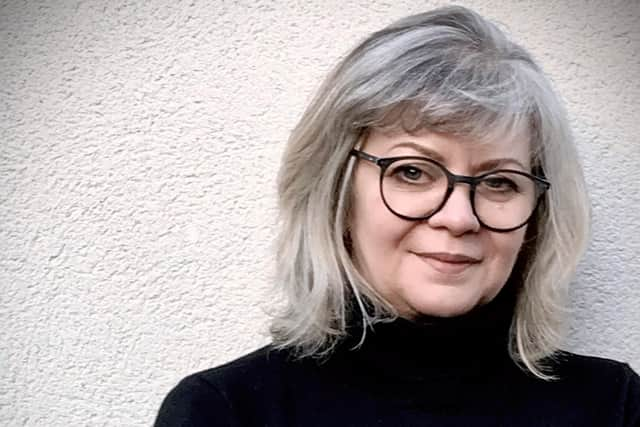
Helen Watkiss was born to a coal mining family on the Lupset estate in Wakefield and now works as a communications officer for Healthwatch Wakefield, so she had already taken an interest in life expectancy in her home city when she saw the Health Equals statistics.
Helen says: “I'm 61 now and I used the postcode checker (on the Health Equals website) because obviously you want to know – well, I do. The life expectancy on my postcode is another 15 years. Seventy-six might sound old, it certainly sounds probably old to young people, but when you're 61 already, it doesn't sound that old because it's only another 15 years. And somebody up the road… you can get on a bus, go on a journey like 10 minutes up the road, and their life expectancy is much better.
“It also shocked me that my life expectancy isn't that much more now than it was when I was born in Wakefield, for some people, so we’ve been moving backwards. It's not a good situation.”
Helen’s grandfather, Bill, died down the pit at 46 before she was born, and while her father, Peter, lived into his 80s, he had dementia. Her mother, Christine, also has dementia and although Helen does not necessarily connect local health inequalities to her illness, she says: “I do think is health disparities come into it when you can't access services or there aren't services there to support you.
"In Wakefield,” she says, except for charity organisations, “there's very little support for anybody who's got dementia.”
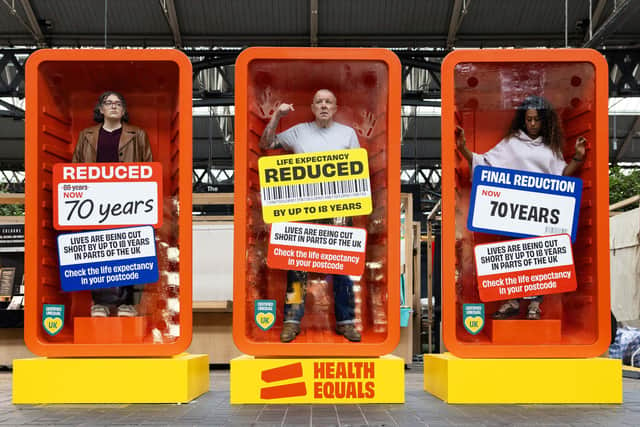
To mark the launch of the campaign – which has been mentioned in both Houses of Parliament - actor Will Mellor and Yorkshire’s Dr Amir Khan joined Health Equals at the ‘Shelf Life’ installation in Old Spitalfields Market, London. The eye-catching stunt featured oversized supermarket-style packaging with live actors inside, displaying reduced stickers based on life expectancy data.
The campaign says that good health starts with the basics we all need: a safe home, secure work, enough money to cover everyday costs, and supportive local communities. When these basics are missing – when homes are damp, work is insecure, or money is tight—it becomes harder for people to stay healthy and live well, and inequalities widen.
Health Equals is calling for a change in the law to: ensure that preventing ill health is given the same importance as treating it; require the Government to produce a joined-up plan across every relevant department, to tackle health inequalities and reduce premature mortality; and consider health in every major policy decision.
Dr Khan, an NHS GP, TV presenter and author, said: "This campaign is deeply personal to me. I don't just see the impact of health inequalities in my work as a GP, I've lived them too. Growing up working class in inner-city Bradford, I know what it feels like to have the odds stacked against you and how difficult life can be when you're focused on simply getting through each day.
"Today, I see these same challenges affecting many of my patients. I see people living in damp homes, struggling with financial insecurity or juggling multiple jobs, and I see the impact that can have on their health.
"We're very good at treating illness, but health starts long before someone walks into a GP surgery. It is shaped by things like our homes, jobs, education and local environment. Your postcode shouldn't determine your shelf life. But right now, in the UK, it does. That's why these figures should be considered a national crisis, and why we need governments to commit to meaningful action to tackle the root causes of poor health and health inequalities."
A Department of Health and Social Care spokesman said: “Someone’s postcode should never dictate how long they live, and this government is determined to tackle the stark inequalities that still exist.
“We’re already taking action, from allocating GP funding more fairly to delivering pioneering Neighbourhood Health Centres in the areas that need them most, alongside expanding health checks, mental health support and creating the first smoke free generation.
“But we will now go further in devolving power to local communities, putting decision-making into the hands of those who know their areas best, and driving lasting change across the country.”