
MPs vote down assisted dying plan after four-hour debate
An attempt to legalise assisted dying in England and Wales has been rejected by MPs.

Passionate speeches both in favour and against the Terminally Ill Adults (End of Life) Bill were heard during a more than four-hour debate in the House of Commons yesterday.
The Bill was voted down by a majority of 16, after 286 voted against while 270 voted in favour.
A small group of MPs cheered and pumped their fists while others could be seen hugging as the vote was read aloud.

The draft legislation had proposed allowing adults in England and Wales, with fewer than six months to live, to apply for an assisted death subject to the approval of two doctors and an expert panel.
Another MP could try to bring a similar Bill on the issue next year but they would have to start the whole process again from scratch as they would not be able to use rarely-employed provisions in the Parliament Acts to prevent the House of Lords from blocking it.
That option could have been available to Ms Edwards and her supporters if her legislation had cleared the Commons.
Labour MP Lauren Edwards, who re-introduced the Bill after it ran out of time earlier this year, had previously warned it could be another decade before the issue came before Parliament again if this legislation did not pass.
Ms Edwards said the result was “hugely disappointing” and “heartbreaking” for those terminally ill people and their loved ones who she said had been “given hope when the Commons voted for this Bill last year”.
She added: “Assisted Dying will come in this country, as it is already doing all across the world, but not soon enough.
“Parliament has dropped the ball today. It will be picked up again as it must be, because the law as it stands is simply too cruel and too unjust to be allowed to stand.”
Prime Minister Andy Burnham did not vote, having already confirmed he would abstain so as not to “unduly influence the debate”.
The Government was neutral on the Bill and MPs voted according to their consciences rather than along party lines.
Campaigners against it argued it contained inadequate safeguards and that it could result in some of society’s most vulnerable being at risk of coercion and choosing an assisted death because they feel like a burden.
Opposition to the Bill had been voiced by the leader of Catholics in England and Wales, Archbishop Richard Moth, who called it “wrong in principle” and “deeply flawed” as well as the Church of England’s Archbishop of Canterbury, Dame Sarah Mullally.
Medical colleges, including the Royal College of Psychiatrists (RCPsych), had also raised “serious concerns” about the Bill, saying there were “too many unanswered questions about the safeguarding of people with mental illness”.
Terminally ill MP Ashley Dalton, who voted against the Bill, warned it is “not a moment for celebration”, as they called on the Government to “sort out social and palliative care”.
Mr Burnham previously said he believes the funding of palliative care needs to be fixed before consideration can be given to legalising assisted dying but Bill sponsor Lauren Edwards had insisted both were possible alongside each other.
Marie Curie, Hospice UK and St Christopher’s Hospice charity are all neutral on the principle of assisted dying but have repeatedly warned access to and quality of end-of-life care is too patchy across the country and that the sector is severely lacking in funding and said “the need for more urgent and ambitious action to fix end-of-life care could not be clearer”.
Following the vote, Hospice UK’s Toby Porter said now is the time for Bill opponents and supporters to “channel their energy and passion into fixing” what he described as a “hospice funding crisis”.
He added: “The Prime Minister has recently stated the need to fix palliative care funding. His support is welcome, but his words must now be accompanied by meaningful action. ”
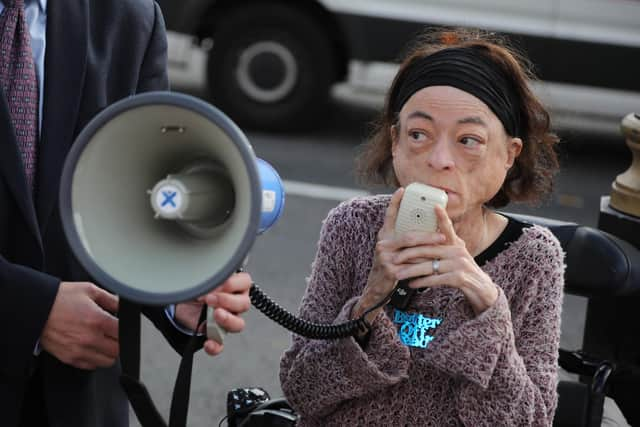
Demonstrators in opposition and in favour gathered outside Parliament yesterday to make their voices heard on the debate.
Kim Leadbeater said she would have to give “some deep consideration” as to whether she would personally try to bring back the assisted dying Bill to Parliament.
Ms Leadbeater, who steered the assisted dying Bill through the Commons in the last session, said: “I feel really sad, I feel really disappointed – not for me but for the many people who’ve campaigned on this issue long before I came along.”