
Sheffield trial aims to reverse lifetime risks of nerve damage with type 2 diabetes
“It’s helping other people as well as helping you.” That’s the message from Andrew Goodison, a 47-year-old from Sheffield, who is taking part in a trial aiming to reverse the lifetime risks of nerve damage in people living with type 2 diabetes.


“If it helps someone else, or helps our understanding of diabetes, it’s a good thing,” he says. “It’s generating more data to look at.”
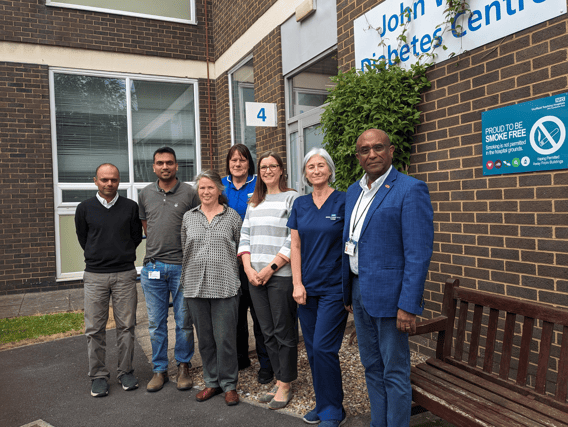
Andrew was diagnosed with diabetes around six years ago, and joined the Oceanic trial at Sheffield Teaching Hospitals NHS Foundation Trust in December 2024.
The trial aims to build on recent evidence that shows that intensive management of blood glucose (sugar) levels can prevent the progression of nerve damage in people with type 1 diabetes.
The research team now wants to see if intensive strategies to manage risk factors including high-blood glucose, cholesterol, blood pressure and obesity can halt or reverse diabetes-related nerve damage when identified at an early stage in people living with uncontrolled type 2 diabetes.
Around half of people with diabetes suffer with nerve damage caused by high blood glucose levels injuring nerves over time. This can result in loss of sensation (numbness) while also causing severe, disabling nerve pain in the feet and legs.
The condition leaves sufferers with the inability to perceive sensation, putting them at greater risk of inadvertent injuries, and foot ulcers that can become infected leading to amputations.
In the intensified care programme part of the trial, participants have frequent in-person contact with diabetes specialist nurses, dietitians, and doctors and are given lifestyle modifications and tailored support.
This is supported by newer technologies including wearable sensors that detect glucose levels in real time, activity tracking watches, and smart weighing scales that record weight loss progress through metrics such as body fat percentage and muscle mass. Data from these devices – which they will be asked to use throughout the study – will be available for them to view to reinforce lifestyle change.
Andrew says: “Before this I had a very unhealthy lifestyle. I am seeing data rather than waiting for the doctors to tell me data…that’s motivating.”
Sheffield is also hosting a trial into stem cell treatment for severe scleroderma, a rare and degenerative disease that causes hardening and tightening of the skin and connective tissues.
Last year, it announced it had become the only site in the UK to open the international trial, called UPSIDE - the first to test if a type of stem cell transplantation should be offered as a first-line treatment for patients with diffuse cutaneous systemic sclerosis - a severe and incurable form of scleroderma, where the immune system attacks healthy tissue in the body.
It typically limits mobility and causes skin hardening, inflammation and discoloration and its progressive nature often results in significant organ damage, particularly to the heart, kidneys and lungs, shortened survival and reduced quality of life.
Dr Mohammed Akil, Consultant Rheumatologist and UK Chief Investigator of the trial, said last year: “Previous studies have suggested that stem cell transplant may halt disease progression. This is the first time the approach will be tested in an early stage randomised clinical trial.”