
'Small innovations can have an enormous impact' - The lifelike cats and dogs helping to calm Leeds dementia patients in distress
For 37 years, Alison Raycraft has dedicated her professional life to caring for older patients, many of whom are navigating complex health needs or living with dementia.
“Caring for people who are older is a very specialised area,” explains Alison, Lead Nurse for Older People at Leeds Teaching Hospitals NHS Trust.
“It enables you to develop an array of skills while providing opportunities to make a real difference. I find it incredibly rewarding to interact with people in later life — they have so much character.”
That passion has recently taken an innovative turn, with Leeds hospitals introducing therapeutic dolls — lifelike cats and dogs — to help comfort and calm dementia patients experiencing distress. Some of the cats are robotic and other cats and dogs have heartbeats that rise and fall.
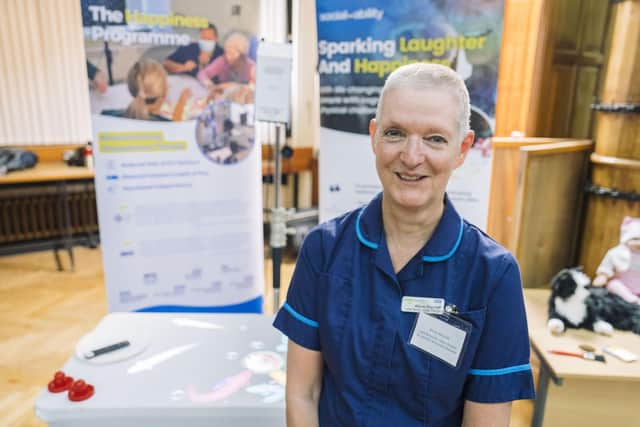

Alison, who led the initiative with specialist nurse, Rachel Conway, supported by the Dementia Steering Group, says: “We were aware of how robotic pets were already being used in other care settings and hospitals.
"Being in hospital can be a frightening experience for anyone, but for those with dementia, the unfamiliar surroundings, disruption of routine, and illness can worsen symptoms like memory loss, communication difficulty and agitation.”
Funded by the Leeds Hospital Charity and launched in August 2024, the robotic pets have already begun making an impact, albeit on a small scale.
The team has so far used them across Leeds General Infirmary and St James's Hospital, where over 5,000 people living with dementia are admitted each year.

“We’ve only given out seven so far,” explains 57-year-old Alison, from Pudsey. “But that’s intentional.
"Not everyone is suitable. It’s really important that we carry out a comprehensive assessment beforehand, so we don’t risk increasing a patient’s distress.
"There’s a process involved. We look at the person’s background, medical needs, emotional state, and cognitive function. It is about person-centred care, not just using a toy for distraction.”
Alison, who qualified as a nurse in 1991, adds: “It’s a small number so far using the furry companions, but it’s not about quantity, it’s about quality and ensuring every interaction has meaning and is tailored to the individual.”
Though research in UK acute hospital settings remains scarce, broader studies have shown promising results in care homes and community environments.
For example, a stratified cluster randomised controlled trial by the NHS and partners, before and during the COVID-19 pandemic, highlighted how affordable socially assistive robots improved emotional wellbeing and engagement in people with dementia.
Esther Wakeman, CEO of the Leeds Hospital Charity, which provides £3.5m in grants each year in the city’s hospitals, says the team raises funds for equipment, services, education and research, as well as for innovation such as the robotic cats and dogs.
Operating the pets is simple — the robotic cats for example respond to touch, purr, and move. Feedback from relatives has underlined how powerful the intervention can be.
“It’s not just that it calms their loved one — it creates a shared experience, a connection,” says Alison, who has worked at the NHS Trust since the start of her career.
“Some of the comments we’ve had from relatives include how their loved one appears soothed and calmer in their presence, one reported it appeared to improve their loved one’s sleep.”
For the nurse, who has spent nearly four decades focused on improving patient experiences, this project is a natural extension of a lifelong mission.
“I’ve always been passionate about helping people in later life and supporting the people who care about them. These small innovations — when used in the right way — can have an enormous impact.”
As the project continues to evolve, the team at LTHT is looking to expand its reach while continuing to monitor outcomes and assess suitability on a patient-by-patient basis.
More research and guidance are likely to emerge as similar projects across the UK are evaluated.
Until then, the robotic cats and dogs at Leeds remain a quiet but powerful presence in the wards — offering companionship and soothing distress.