
'State-of-the-art care': How patients are benefitting from health research in Yorkshire
Healthcare studies and trials in Yorkshire support the development of new treatments and innovations, boosting the economy and changing the lives of people with many conditions. Laura Reid looks at the region’s role in research as the National Institute for Health and Care Research marks its 20th anniversary.

It is well documented when it comes to the healthcare research that goes on here in Yorkshire and further afield: NHS organisations that are active in research deliver better care for their patients. That’s just one of the recognised benefits of research for the health service, impacting not only on the lives of those taking part in trials for new treatments and innovations, but also on other patients being looked after in hospitals where research takes place.
“Intuition would tell you it’s probably something to do with the fact that if you’ve got people interested in research, they’re interested in the latest developments and they probably bring in the latest ways of treating people much quicker into their hospitals,” muses Stuart Griffiths, Director of Research, Policy and Impact at the charity Yorkshire Cancer Research. “You’ve probably also got some extra resources for the hospital in terms of managing patients.”
Professor Meena Balasubramanian, Clinical Director of Research at Sheffield Children’s NHS Foundation Trust, makes a similar point.
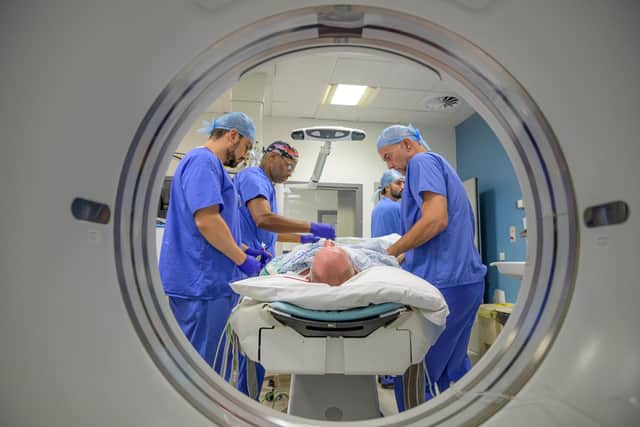

“Patients who visit a research active hospital, whose care is under a research active clinician who is abreast with the latest knowledge, literature and technology in the field - that’s where you’re going to have state-of-the-art care provided.”
This year, the National Institute for Health and Care Research (NIHR) is celebrating 20 years of supporting research across the UK, with more than one million people now taking part in NIHR-supported projects every year.
The institute is funded by the Department for Health and Social Care to “improve the health and wealth of the nation” and reports that for every £1 invested in NIHR research, society receives more than £13 of returns over 60 years. That money, it says, comes from direct health benefits, profits to UK firms that undertake research, and the wider economic and social benefits generated through investment.
Yorkshire, with its wide range of medical and scientific expertise, and a network of NIHR and other research infrastructure, plays a key role in healthcare developments.
Take Leeds, one of the region’s major cities, for example. In the financial year ending in 2025, more than 1,300 studies took place under Leeds Teaching Hospitals NHS Trust, with nearly 21,000 participants recruited into research at the trust, including 2,225 into commercially-sponsored trials.
“Patients are directly benefiting from being in research,” says Dr Ai Lyn Tan, Director of Research and Innovation at the trust. “They’re getting therapy that they may not have available to them on the current NHS pathway…The evidence generated from this research then could lead to treatment being approved for clinical use on the NHS. So therefore patients who may not be in these trials can also subsequently benefit.”
Breakthroughs and innovations can enable earlier diagnoses, more effective treatment and more efficient processes, all of which can improve patient care and health outcomes.
In a 2024 report on research in the NHS, Vin Diwakar, then National Director for Transformation, and Lindsey Hughes, Director of Research at NHS England, note other documented benefits too.
For patients, this includes research-active hospitals having lower mortality rates, whilst for the NHS itself, perks include benefiting from evidence on the success and cost-effectiveness of various innovations.
According to the NIHR, embedding research in healthcare is a key component in retaining and upskilling the workforce, increasing job satisfaction and productivity, and attracting new talent through the door.
“It’s really hard work in the NHS these days and I think people get an immense satisfaction out of research and making a real difference,” reflects Dr Nick Lyons, Chief Medical Officer (Development) at Sheffield Teaching Hospitals NHS Foundation Trust.
“It also helps us to make Sheffield (for example) an attractive place to work as a place to be involved in research. That means we get really good people here.”
There’s also a pressing need to help healthcare staff to further their research careers, says Professor Philip Conaghan, Director of the NIHR Leeds Biomedical Research Centre. “It’s a big deal especially in the UK as we’re now reaching a stage where an awful lot of the senior academics are reaching retirement age and there’s a real cliff coming.”
Health research also has an economic impact, attracting the likes of jobs and investment. The NHS generates income from conducting commercial clinical trials, whilst non-commercial research, funded by charities and the public sector, contributed £72.7 billion Gross Value Added to the UK economy between 2014 and 2024, according to a report for the Association of Medical Research Charities and global charitable foundation Wellcome last year.
Given all of the benefits, it’s perhaps unsurprising that there is so much focus on embedding research culture into the NHS. Many medical leaders are keen that this continues to develop further.
“I know there’s time and financial pressures always within the NHS,” acknowledges Dr Patrick Lillie, a Consultant in Infectious Disease at Hull and East Yorkshire Hospitals NHS Trust, who has an honorary contract at the Hull York Medical School. “But I think we do need to keep enough time and space to do research because it does improve outcomes and it does ultimately contribute to progress.”
Sally Bridges, Programme Manager for the NIHR Applied Research Collaboration Yorkshire and Humber agrees - and everyone in the sector has a role to play, she believes.
“Everybody in the health and social care system should be thinking what is my role in research? Whether that’s doing research, designing it, telling patients about it or using its findings.”
Comment: Page 12