
Two Yorkshire and Humber trusts included in NHS recovery plan for 'worst services'
Two Humber NHS trusts are among five that have been placed in a new NHS recovery programme to tackle the “worst services in the country”, the Health Secretary has announced.

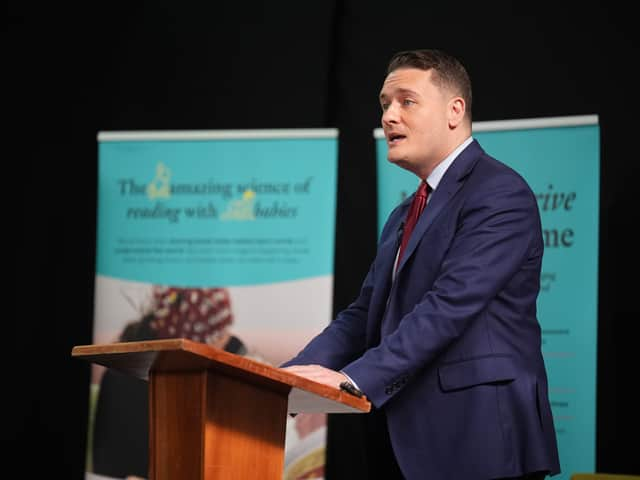
Wes Streeting said that “failure has been tolerated for too long” as he named the first hospital trusts to be placed under the NHS Intensive Recovery programme.
The five trusts included two from Yorkshire and the Humber, Hull University Teaching Hospitals NHS Trust and Northern Lincolnshire and Goole NHS Foundation Trust.
Mr Streeting said that despite improvement across the NHS overall – as shown with a rise in public satisfaction with the service in the latest British Social Attitudes Survey – some “challenged” trusts have continued to struggle.
These are often due to a range of persistent and historic issues that have never been properly addressed, the Department of Health and Social Care said.
The department said the new NHS Intensive Recovery programme has identified trusts at the bottom of the NHS league tables where patients face the longest waits for care, there are persistent financial problems and high leadership “churn”.
Mr Streeting will announce plans to “get these trusts up to standard again”, DHSC said.

Each organisation will receive a tailored improvement approach, including a change of leadership where necessary, NHS “veterans” with a history of success brought into underperforming areas, the merging or separating trusts and cash for crumbling estates.
According to the latest accident and emergency (A&E) statistics for February, only 54 per cent of patients in Northern Lincolnshire and Goole were admitted, transferred or discharged within the four-hour target timeframe.
This figure dropped to 46 per cent in Hull. While both were some of the lowest rates in England, in Yorkshire, York And Scarborough Teaching Hospitals NHS Foundation Trust had a lower proportion of patients attended to in February.
A spokesman for the NHS Humber Health Partnership - which includes both trusts - said: “We welcome the focus on supporting organisations facing long-standing structural and funding challenges that cannot be addressed by organisations alone, and which require a more system-wide approach.
“Since the summer, we have taken a more open and clinically led approach to surfacing and understanding the challenges across our services, which colleagues have been highlighting for several years.
“That work has led to the development of our first clinically led improvement plan, shaped by our experienced clinicians, which sets a clear direction for the next phase of work.
“The shift in national approach reflects that same focus on addressing deep-rooted issues in a more coordinated and targeted way.
“Our focus remains on delivering improvements for patients and supporting our teams to provide safe, high-quality care.”
Speaking at the University of East London this morning, Mr Streeting said: “Right now, a cluster of high-performing trusts are masking some chronic under-performance in other parts of the country.
“Failure has been tolerated for too long. Staff know it. Patients feel it. And I won’t stand for it.
“We won’t have succeeded in changing the NHS until we change it for the patients who are suffering the worst services in the country.
“In some places, so many years of poor service without improvement is feeding that sense of fatalism.
“They believe that after so long, it just can’t get better – in fact, they’ve never seen it get better.
“That’s why I’ve announced today a new intensive recovery programme.
“This will target the worst performing providers, sending in our best leaders or delivering the structural changes necessary to get them back on track.
“No more turning a blind eye to failure.”