
'You have no option but to push on and you feel like nobody understands the pain': BBC Radio Sheffield presenter Ellie Colton on living with endometriosis
When Ellie Colton was 14, she thought she was dying. But doctors told her it was “just bad periods”. It would be another decade of heavy bleeding, debilitating stomach cramps, fatigue and all-over-body pain before the BBC Radio Sheffield presenter would be diagnosed with endometriosis. And her story is far from unique.

It is estimated that the average time from first seeing a doctor to getting an official endometriosis diagnosis in the UK is about nine years and four months. Ellie explores why in a YouTube film made by BBC Ideas in partnership with UK Research and Innovation (UKRI).
“Not many people who work in the media speak out about personal issues but this is all consuming and I felt like I really wanted to,” the 27-year-old says.
She hopes the film will raise awareness of endometriosis, its symptoms and the impact it has on the physical and mental health of the roughly 1 in 10 women of reproductive age who suffer.
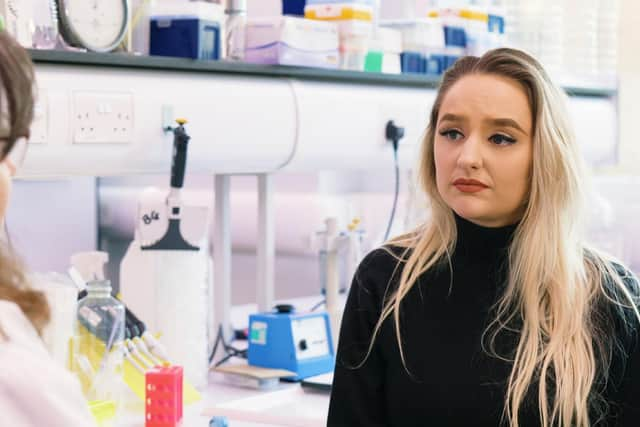

In the film, which was released around the same time as Emma Barnett's BBC documentary Fighting Endometriosis, Ellie meets a woman who had a perfectly health appendix removed as a result of her symptoms being misdiagnosed.
The contributor, Helen, who was diagnosed with endometriosis at 17, also speaks of how heavy bleeding left her “financially struggling” to keep up with the amount of sanitary products she needed, explaining “I took to just sitting in the bath because it was the easiest and cheapest option”.
Speaking of her own experience, Ellie tells The Yorkshire Post that she felt somewhat relieved when she was finally diagnosed after laparoscopic surgery four years ago.
It was a sense that she “wasn’t crazy”, that she was “believed” after years of symptoms including daily pain, and at one point, periods that lasted for three months at a time.
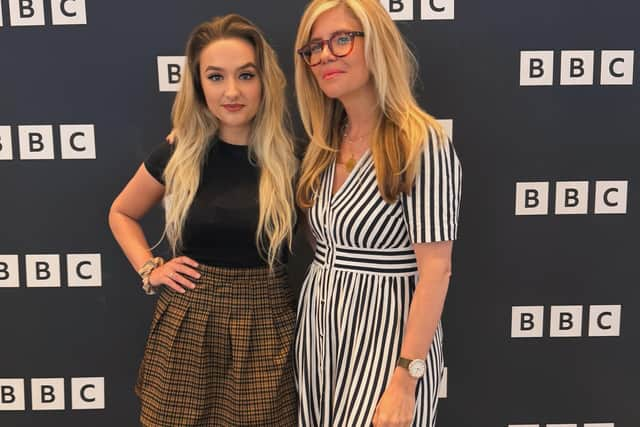
"You're in so much pain and you feel like you can’t communicate how it feels,” she says. “People think well you go to work or you do this, it can’t be that bad.
"It makes you very resilient but very angry at the same time because you have no option but to push through…You have to try to live a normal life.
“You feel like nobody believes how you feel or what’s going on. It’s so taxing. You have to push on but you feel like nobody gets it.
"In doing this documentary, I’ve had so many women of all ages contacting me about their experiences, and it’s good to feel you are part of a bit of a community.”
In the film, Ellie also meets Yorkshire-based scientist Dr Barbara Guinn, of the University of Hull.
Her research, backed by UKRI, could see the development of a game-changing urine test called EndoTect, designed to detect both deep and superficial endometriosis quickly by identifying specific protein changes in that are associated with the condition.
If successful, it could reduce diagnosis times from years to a matter of weeks. Earlier diagnosis could not only save women from years of suffering, Ellie says in the film, but also help prevent serious organ damage and reduce later strain on healthcare services.
Dr Guinn says: “Having endometriosis means you are four times more likely to have rheumatoid arthritis, and you’re four times more likely to have a cardiac event like a heart attack. The more I learn, the more I believe chronic inflammation is central to many of the symptoms, and we really need to do more research.”
Ellie wants to see that happen too. It is not yet known what causes endometriosis and there is currently no cure. Painkillers and hormones, such as the pill, can help with symptoms, and surgery is a potential treatment option too, though endometriosis lesions may still recur.
Overall, it is estimated that the condition costs the UK economy around £8.2bn a year - in treatment, loss of work and healthcare costs.
“We are only ever going to find a cure if we find out what causes the disease and what makes it grow,” Ellie says. “Only then can you create medicines to counteract that and cure it.”
"I hope by putting this film out there, raising awareness and being someone with a media presence known to have endometriosis, that I can push to get people to understand how we need to move forward.”
- Ellie’s film can be found by visiting youtube.com/@bbcideas