
Archaeologists discover 'unexpected' evidence of iron production in Yorkshire

Archaeologists digging near Pocklington in East Yorkshire have uncovered “unexpected” evidence of large-scale iron production some 2,400 years ago.
Investigations took place over 150 hectares at Thornton, as part of plans to develop a solar farm and battery energy storage system, which have since been built.
The developer, the state-owned Norwegian energy company Statkraft, paid for the excavations by Headland Archeology.
A report by Tim van Tongeren on the finds has now been published by Internet Archaeology.
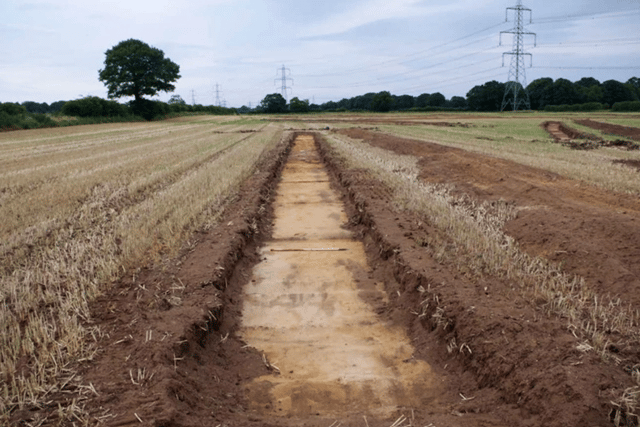

Radiocarbon dating showed that iron smelting at Thornton was “firmly established during the middle Iron Age (roughly 400 BC to 100 BC) with dates clustering in the fourth to second centuries BC and extending into the late Iron Age and early Roman period”.
Archaeologists dug 28 trenches, recovering 218kg of “archaeometallurgical residues”.
In one of the trenches they discovered a large furnace bottom, evidence that the workers were using an ancient smelting technique involving digging a pit into the ground and packing it with wood.
In this method, the molten waste slag does not flow out of an exterior tap-hole. Instead, it drips down into an underground pit packed with split green wood located beneath the furnace shaft. The wood slowly burns away, creating empty spaces that collect the cooling slag.
At the time the area around Thornton was a wetland environment containing freely available bog iron ore and lots of wood.
Bog iron is a type of iron ore that forms in wetlands, through the chemical precipitation of iron from water.
The report makes a connection between the iron smelting and the use of iron in some of the many chariot burials which have been discovered in the surrounding area.
The most stunning was a chariot, found buried with two horses at Pocklington in 2018, which had been positioned to look as if they were leaping upwards out of the grave.
The report says the majority of grave goods found in these burials were iron, for example iron tyres and these were likely to have been made at smithing sites in the lowlands of the Vale of York and surrounding areas.
Iron tools would have also been needed to do the woodwork for the chariots.
The report’s author says “the discoveries invoke intriguing parallels between Iron Age innovation and current moves to green energy in its rural setting”.