
Atkinson Grimshaw House: The home of Yorkshire painter famed for atmospheric streetscapes
On 6th September 1836 John Atkinson Grimshaw was born in a back-to-back house, long demolished, in Park Street on the southwest side of Leeds.
At the age of 20 he married his cousin while working as a railway clerk and four years later became a full-time artist.
At first he painted still life birds and fruit and had yet to specialise in the city streetscapes for which he would be come famous.
In 1866 he and his wife moved into this semi-detached house in the Woodhouse area of Leeds, which now bears a Leeds Civic Trust blue plaque stating that he lived there until 1870.
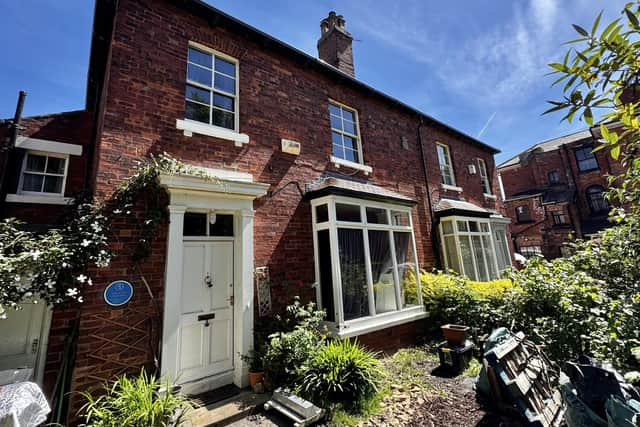

During his four years at the house in Cliff Road he moved away from his earlier style and discovered he had a talent for atmospheric urban landscapes described as “moonlit nocturnes”.
In this period he produced some notable works, including Whitby Harbour by Moonlight and Autumn Glory: The Old Mill.
As he became more successful he and his family moved from Woodhouse to Knostrop Old Hall (now demolished) in southeast Leeds and rented a second home in Scarborough.
Among his most famous works On Hampstead Hill is cited as being one of his best, and was painted when he took a studio in Chelsea during the 1880s.
Other notable paintings were Moonlight on the Lake, Roundhay Park and Tree Shadows on the Park Wall, Roundhay, all three of which are now exhibited in Leeds Art Gallery.
His most atmospheric were paintings of Glasgow Docks (1886) and a series depicting Liverpool dockland.
His Liverpool Quay by Moonlight (1887) is in the Tate Britain.
Atkinson Grimshaw died on 31st October 1893 and is buried in St. George’s Field, part of the Leeds University campus.
His paintings rarely come up for auction but when one did in 2006 it sold for £612,800.