
Bolton Castle: The Yorkshire castle which is ‘the fairest in all Richmondshire’ and was once burned down by Henry VIII
During the 1530s, the antiquary John Leland described Bolton Castle as ‘the fairest in all Richmondshire’, yet this fact did not stop agents of King Henry VIII setting fire to the building during a dispute with the 8th Baron Scrope at the time of the Dissolution of the Monasteries.
The Castle was subsequently restored and went on to survive an order or destruction following the English Civil War but was said to be in a state of ‘great dilapidation’ during the early 1880s.
The Scrope family came to prominence around the 13th and 14th centuries and had land across the country.
Richard le Scrope, 1st Baron Scrope of Bolton, held property at Wensleydale which originally featured a manor house and fortress.

Scrope became influential at the court of Richard II, rising from a Knight of the Shire to Lord High Treasurer, then Lord Chancellor.
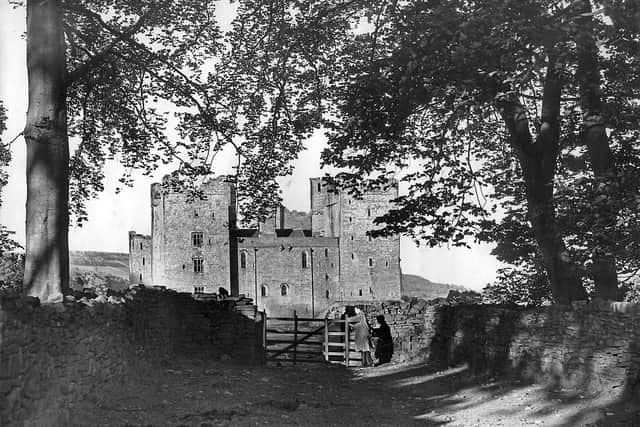
As a result of his position, Scrope was allowed to build a castle at Bolton, with work starting in 1378 and lasting around 20 years under the direction of master mason John Lewyn.
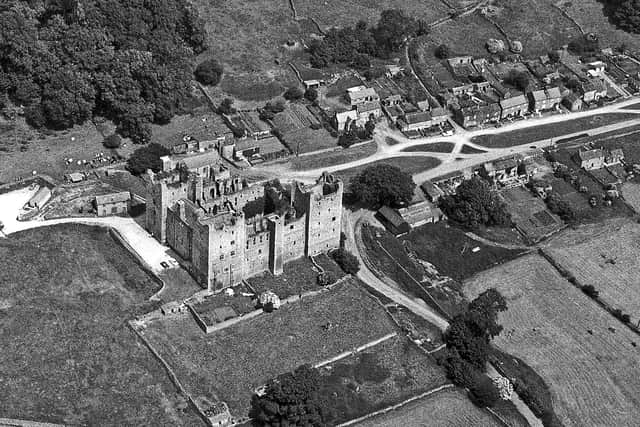
Taking the form of a quadrangle, the castle had uneven measurements, with the north side longer than the south, whilst the west wall was also longer than the east.
The main entrance was on the south side and defended by a portcullis.

For the next two centuries, the Scrope family continued to be involved with positions of authority in the North of England.
John Scrope, 8th Baron, almost lost this in the mid-1530s when he was drawn into a dispute with Henry VIII.
After the Pilgrimage of Grace, one of the leaders Adam Sedbar, Abbot of Jervaulx Abbey, took sanctuary at Bolton Castle, but on arrival of the King’s agents, both fled.
Sedbar was eventually captured and executed at Tyburn, though Scope was judged sufficiently innocent to return to Bolton Castle. The building had to be rebuilt as the agents set the castle on fire.
John’s son Henry, 9th Baron, succeeded to the title in 1549 and served Elizabeth I from 1562 as Warden of the West Marches and Captain of Carlisle. Overseeing security at the border with Scotland in these roles, Scrope took charge of Mary, Queen of Scots following the defeat of her forces at Langside in 1568.
Mary arrived at Bolton Castle on July 15, and she was accompanied by ‘six faithful ladies’, as well as 40 other persons in her retinue.
They used 43 horses and had four carriages. Greeted by Lady Margaret Scrope, Mary was given a room in the south west tower and furnishings were provided by Sir George Bowes of Streatlam Castle who had also accompanied the Queen from Scotland.
Queen Elizabeth sent kitchenware, herbs and a weekly supply of venison.
For six months, Mary was kept at Bolton Castle but during this time almost escaped back to Scotland when an attendant helped her out of a window using torn bedsheets.
As snow was on the ground, horses were led in the opposite direction to confuse anyone in pursuit. This did not work and she was recaptured on Layburn Shawl. The location is still known as Queen’s Gap.
During Mary’s confinement, Bolton Castle was the location for her meeting with the 4th Duke of Norfolk, Thomas Howard, who was also Lady Scrope’s brother.
Though outwardly Protestant, the Duke was really Catholic and sympathised with the Queen’s cause.
There were plans for the Duke to marry Queen Mary and overthrow Elizabeth to restore Catholicism to England.
The Duke was directly involved with the Ridolfi Plot and executed in 1572 following the collapse of the scheme.
The 11th Baron Scrope of Bolton was Emanuel and he proved to be the last of the legitimate male line. He lived from 1584 to 1630 and was also made 1st Earl of Sunderland in 1627.
Though he had four children with his wife, they all died at a young age and his estates passed to four illegitimate children from a mistress.
One was a son, John, who inherited Bolton Castle and served the Royalist cause as a Colonel in the English Civil War.
The castle was under siege from late 1644 to late 1645 when the Richmondshire Cavaliers eventually surrendered owing to the lack of food.
The defence force was given mercy and John Scrope was only fined, but in 1646 parliament ordered that the castle had to be ‘slighted’, though this was only partially carried out.
John died in the same year and left Bolton Castle to his oldest sister, Mary. After the death of her first husband, in 1655 she married Charles Paulet, who became 6th Marquess of Winchester in 1675.
Between 1656 and 1663, they had four children, including a boy, Charles. Mary died in 1680 and the Marquess was subsequently elevated to be Duke of Bolton in 1689.
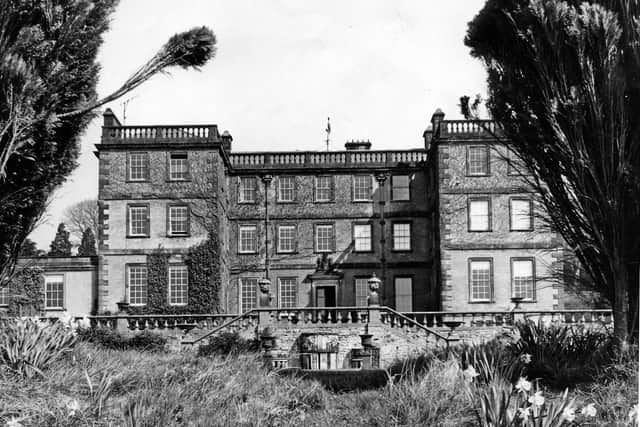
Before his wife’s death, Charles commissioned the construction of Bolton Hall, a few miles east of Bolton Castle.
The two represent the changing priorities in housebuilding for the nobility from defence to grand displays of wealth and status.
Bolton Hall was built with three storeys and a basement, a H floor plan, Welsh slate roof with balustrade and central doorway topped with the Duke’s coat of arms. The landscape was managed and a folly was later erected.
The Marquess of Winchester’s estates in the south kept successive Dukes of Bolton away from Bolton Hall and the property was used infrequently by them.
When the 6th Duke died in 1794, the title became extinct and the Bolton Hall estate passed to the illegitimate daughter, Jean, of the 5th Duke. She was married to politician Thomas Orde who added Powlett (a variation of Paulet) to his name and was elevated to Baron Bolton in 1797.
The brother of the 2nd Baron Bolton extended Bolton Hall with two wings to the east and west of the original structure in the early 19th century.
As the 2nd Baron died without a male heir, the title passed to his brother’s eldest son whose home was Bolton Hall.
The 4th Baron was faced with the daunting task of rebuilding Bolton Hall when fire completely destroyed the house on 15th October 1902.
The blaze was discovered in a maid’s room at 7 pm and the flames quickly took hold of the upper floors. Tenants in the district rushed to help save many items of valuable furniture and paintings, being mainly successful in rescuing many important items.
These included portraits of the Scropes, work by George Romney and a portrait of Lord Bolton’s mother which was removed forcibly with an axe as the painting was set in a wood panel.
Yet, a strong wind fanned the flames and the house was soon consumed.
Bolton Hall was restored in the following years and a newspaper report from 1929 noted that many of the treasures saved from the fire were on display for the Yorkshire Automobile Club which called for a visit.
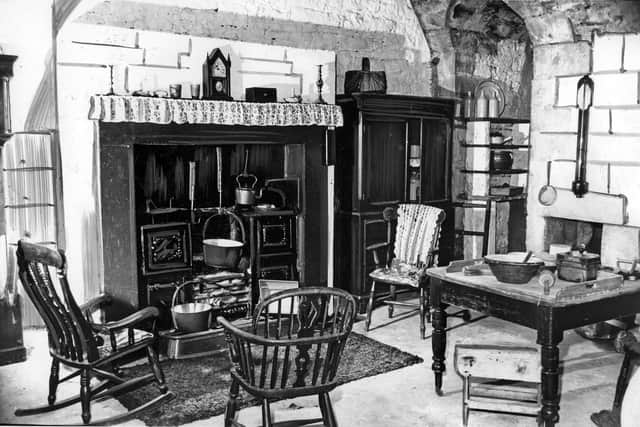
The early 20th century was a time of reconstruction for the 4th Baron as in 1901 a project to restore Bolton Castle began with renovations in the room Mary, Queen of Scots stayed.
Historical items found in the area during excavations were also on display, as were cannons used in defence of the castle during the Civil War.
The rebuilding of the hall perhaps took priority as the full reconstruction of Bolton Castle was left to the 8th Baron, Harry Orde-Powlett, who used much of his own funds to carry out the work which was completed in the 1990s.
The castle offers a variety of activities for visitors between March and November, whilst the hall still functions as a private residence for the 9th Baron.