
Britain's oldest pistachio dating back almost 2,000 years found in a Roman well in Yorkshire

Archaeological excavations across the North of England have uncovered rare evidence that communities in Roman Britain’s northern frontier were eating and trading in food imports – such as Britain's earliest known pistachio.
One of the northernmost finds of Spanish mackerel in Roman Britain has also been found, while broken storage jars recovered from excavations close to a Roman town in the East Riding of Yorkshire show evidence for the extent of traded goods reaching the area during the 1st to 4th centuries AD.
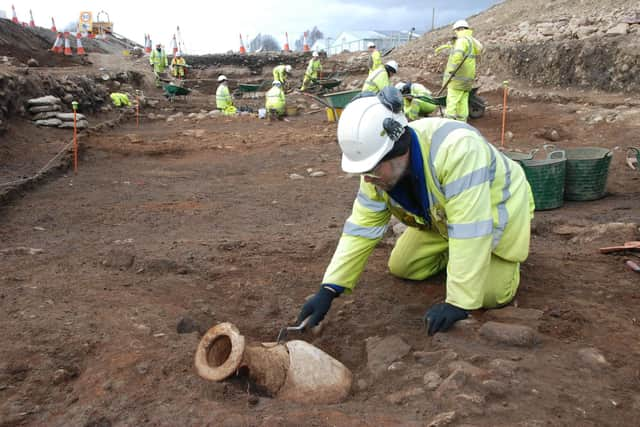
Excavations were carried out by archaeologists at Cura Terrae ahead of two projects in Yorkshire – a new Yorkshire Water pipeline near Stamford Bridge and the Highways England A1 Leeming to Barton motorway upgrade.
At Cataractonium, modern-day Catterick, a charred pistachio nut was recovered from a Roman well.

Stuart Ross, from Cura Terrae, said: "These three finds together reveal a great deal about supply networks reaching Rome's northern frontier, which were undoubtedly driven initially by the presence of the Roman military, made up of units from across the Empire.
"A single stamped handle names an actual amphora producer and represents the import of olive oil from Spain and other fragments would have contained wine.
"A pistachio, although unopened, must have been intentionally imported along trade routes that stretched across the Empire from the Middle East.
"These are the physical traces of the Roman dining table, with these goods carried along routes that reached the North of England from the edges of Empire.
"It's a stark reminder that far reaching supply chains aren’t just a modern phenomenon; Roman Britain was plugged into a Mediterranean economy, and Yorkshire, of all places, was in receipt of its delicious goods."