
Celebrating the women who established Wakefield's first school for blind people
There are 36 women named on blue plaques in Wakefield and the surrounding five towns of Castleford, Featherstone, Knottingley, Normanton and Pontefract. That number makes the district a leader in representing women on blue plaques across the country.
It is thanks largely to the efforts of those working on a grassroots project to unearth and honour stories of women from Wakefield’s past.
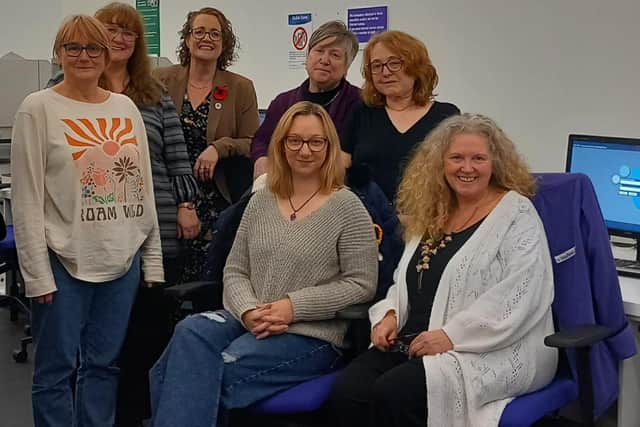
The Forgotten Women of Wakefield project is run by arts organisation Dream Time Creative CIC and the group has recently been awarded funds to celebrate the lives of the women who established the city’s first school for blind people.
The grant of £6,500 from Historic England will be used to engage the community in research and creative responses to school founders and pioneering advocates for blind people, Edith Wright and Emily Esther Fennell.

The research findings may be used to support an application by Dream Time Creative for a national blue plaque when Historic England opens public nominations again next year.
The national blue plaque scheme tells the stories of inspirational people – from all walks of life – who have made a significant contribution to human welfare or happiness, throughout history.
Sarah Cobham, CEO of Dream Time Creative, says: “This funding is real validation for the work we have already done at local, regional and national level and is an opportunity for us to submit our findings to Historic England.
"This may, in turn, lead to the women’s names and information about their legacy to be read, both in regular script, and braille, by everyone.”
The research project, entitled Beyond Braille, will be co-produced with Wakefield District Sight Aid.
Its chief executive, Hayley Grocock, says: “Wakefield District Sight Aid’s roots can be traced as far back as 1869, so we already know there is a long history of philanthropic support for blind and partially sighted people in Wakefield.
"We are really excited to be working with Dream Time Creative to add colour and detail to what we already know about our heritage, to be able to bring the stories of those women who came before us to life.”
Research skills will take place over eight sessions by Forgotten Women of Wakefield’s resident historian Helga Fox.
She has previously worked with Dream Time Creative to publish a book titled Clara Clarkson’s Merrie Wakefield.
It was during that project, and previous others, that the Society for the Blind first came to both her, and Sarah’s attention.
Audio recordings of those with sight loss and their lived experiences and creative engagement with the project will be available across various digital platforms alongside Braille sheets summarising the research outcomes.
For more information about the grassroots heritage work, visit forgottenwomenwake.com