
Charles Robinson Sykes: The Yorkshire artist who created Rolls-Royce's Spirit of Ecstasy
The most famous motoring mascot was created by a Yorkshireman whose 150th birthday was recently celebrated. Steve Teale reports.

Charles Robinson Sykes was a prolific artist from the little village of Brotton in North Yorkshire.
He is a familiar name among art enthusiasts but it is a piece of motoring sculpture which has earned him enduring affection among Rolls-Royce aficionados worldwide.
He created the best known motoring mascot in the world, the Spirit of Ecstasy which have adorned examples of these pre-eminent models for more than a century.
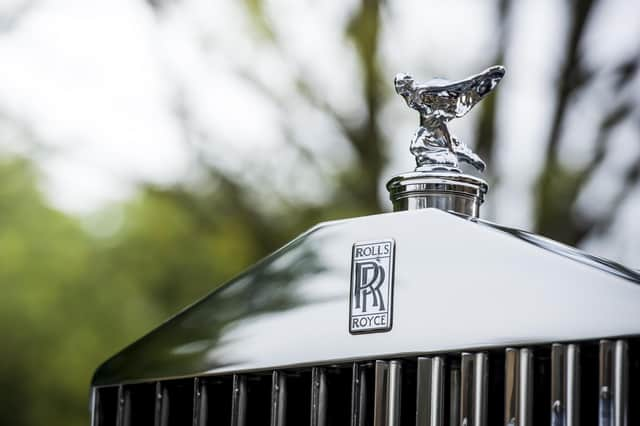

Now Rolls-Royce recently celebrated the 150th anniversary of Sykes' birthday with a fullsome tribute.
He was, say Rolls-Royce, the brand’s original creative soul, who introduced artistry as a defining element of these special motor cars.
The company says he is one of the most important individuals in the marque’s foundation story.
Charles Robinson Sykes was born on December 18, 1875 in Brotton, a mining village near Saltburn, in what is now North Yorkshire.

Encouraged by his father and uncle, he began his artistic training at Rutherford Art College in Newcastle. In 1898, he won a scholarship to the Royal College of Art in London.
His skill as a draughtsman is evident in the large collection of his drawings, paintings and cartoons held in the collection of the world-renowned V&A Museum, London.
These include designs for horse-racing trophies, vases and bowls, and atmospheric illustrations for magazine covers and advertisements, produced under the pseudonym Rilette.
In 1902, Sykes was commissioned by a magazine publisher to produce some sketches.
Unable to pay in cash, the client introduced him to John Montagu, later 2nd Baron Montagu of Beaulieu, who at that time was attempting to launch his own weekly magazine, The Car Illustrated.
With Sykes providing ‘Illustrated’ elements from cover artwork to fashion drawings, the magazine flourished.
Sykes’s artwork soon caught the attention of Claude Johnson, known as CJ, the first commercial managing director of Rolls-Royce.
He commissioned six original Sykes oils for the company’s 1910-11 Catalogue, depicting Rolls-Royce motor cars arriving at venues.
Soon afterwards, Sykes took on what would be his most famous and enduring commission: a Rolls-Royce mascot.
The company described the figurine as “a graceful little goddess”, in which Sykes captured “the spirit of ecstasy, who has selected road travel as her supreme delight and alighted on the prow of a Rolls-Royce car to revel in the freshness of the air, and the musical sound of her fluttering draperies”.
Charles Sykes died in 1950; though best remembered for his contribution to Rolls-Royce, he enjoyed a long, varied and successful artistic career.
Andrew Ball, Head of Corporate Relations at Rolls-Royce Motor Cars, said: “Best known as the sculptor who created the Spirit of Ecstasy, Charles Robinson Sykes was a multifaceted and prolific artist whose work is still held in high regard 150 years after his birth.
He was the first of the marque’s foundational figures to bring artistry and creativity to Rolls-Royce, a legacy that endures today in our ever more ambitious and elaborate Bespoke and Coachbuild work.”