
Colour photos show Sheffield's old trams before launch of Supertram
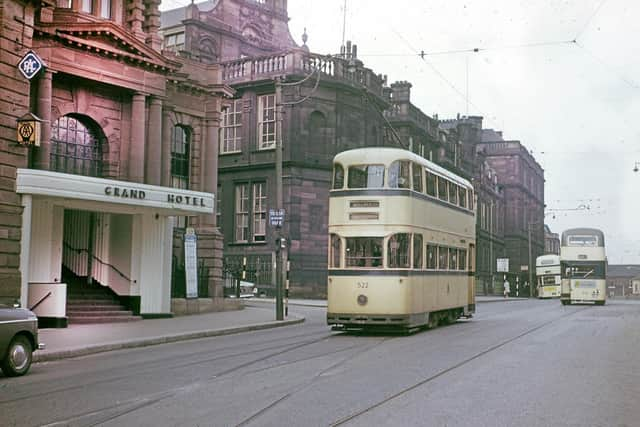
Self-styled rail/road photographer the late Geoff Warnes was fortunate enough to take photographs in colour of the last few years of the old Sheffield trams and the introduction of the Supertram in the city during the 1990s.
Sheffield began its relationship with this form of transport in 1873 when horse trams were introduced.
This was allowed by the Sheffield Tramways Act 1872 which empowered the Sheffield Tramways Company to operate five routes.
The first was from Lady’s Bridge to the Golden Ball, Attercliffe, later extended to Tinsley in 1874.

The STC was a private entity until the mid-1890s when Sheffield Corporation decided not to renew the lease and take over the system instead.
This included 44 tramcars, which were horse drawn (many needing two animals), and of this number 32 had double decks.
There were around nine miles of lines and the Corporation soon looked to expand, then switch to an electric system.
Before the end of the century, the Tinsley to Nether Edge route had been converted at a cost of nearly £75,000.
The last horse tram ran on November 11, 1902 and by this time many of the existing routes had been electrified, as well as several being added to the system.
A major connection was made in 1905, as the Rotherham Corporation system joined Sheffield’s at Tinsley.
In the 1930s, Sheffield’s tramways were at their height, with the Corporation operating 400 trams and 50 route miles.
Yet, during the First World War, there had been considerations on switching to trolley buses, or motor coaches, with a preference for the latter.
These were first introduced during 1913 for some areas where a tram route was not practical.
After the Second World War, Sheffield Corporation was in a position where tramway infrastructure and rolling stock required upgrades and replacements.
Estimates predicted the cost of this would amount to around £2 million over 15 years. The Corporation also looked into switching to diesel buses and found this would be cheaper by approx. £500,000.
During the early 1950s, the decision was made to change over to buses and the first route closure was the Malin Bridge to Fulwood section in January 1952.

There were protests over this and anger locally that the replacement bus service was not as convenient.
Several months elapsed before a suitable bus route was determined and no other closures occurred for two years.
A few services ceased in the mid-1950s but to the end of the decade there were two closures a year and the number of tramway vehicles reduced similarly quickly.
In light of these events, several interested groups organised tours of various sections before their demise.
Geoff Warnes was on some of these and managed to capture the special led by tram no. 536 on February 22, 1959. Seen at Woodseats, the tour travelled on the Abbey Lane and the Upwell Street, Brightside, routes.
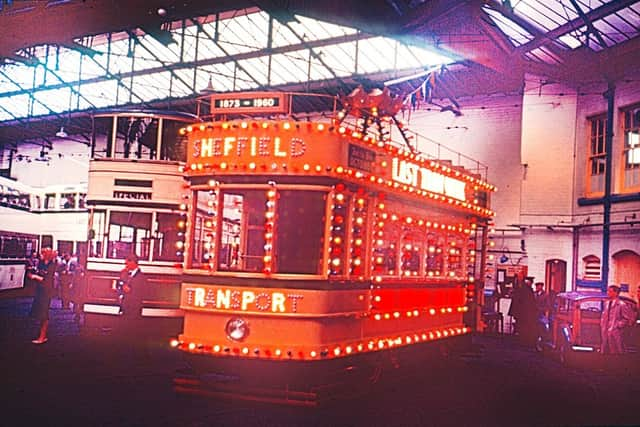
The last day of operation was October 8, 1960, with the route being between Beauchief and Tinsley via Vulcan Road.

There was great interest in the event from locals and enthusiasts. This meant the final procession of tramcars numbered 15 vehicles and some had a special livery.
Despite the end of trams in Sheffield, a group of people came together to celebrate their existence and history.
Six of the procession trams were donated to the Tramway Museum Society which had been formed in 1955 and secured a disused quarry at Crich, Derbyshire.
In the ensuing years, the enthusiasts worked hard to transform the site and one early volunteer was future Rolling Stones musician Brian Jones, who also attended the last day in Sheffield.
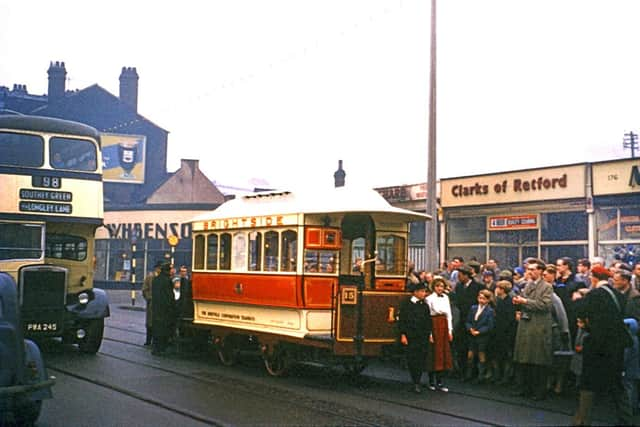
One of the society’s early restoration projects was Sheffield Corporation horse tram no. 15 which spent some time on display in the city.
The vehicle also operated on the Moor for a time and Geoff pictured no. 15 during an event on November 17, 1961.
Over the next two decades, developments with tramways on the continent brought them into fashion for British transport concerns.
Also, the Docklands Light Railway was instigated due to the high cost of providing links to existing Underground lines.
In the mid-1980s, the South Yorkshire Passenger Transport Executive was one of several transport bodies around the country that decided to develop a new tram system and the SYPTE chose Sheffield for the first network.
There were detractors to the idea and they stated that the size of trams was not suited to the city, or the noise created desirable, whilst some questioned the safety aspect.
A representative of the Light Rail Transit Association countered these in a letter to the Yorkshire Post in February 1986.
He provided figures from Germany showing trams to be the safest method of transport and stated noise levels were over ten decibels quieter for trams compared to buses.
The author also contended that many cities with streets narrower than Sheffield had trams running without greatly affecting other modes of transport.
Another reason for the introduction of the South Yorkshire (Sheffield) Supertram was the construction of the largest shopping centre in Western Europe at the time – Meadowhall.
The Principal Planning Officer for Sheffield Council commented that the Supertram would help keep the city centre attractive by reducing congestion and improving accessibility.
The ring road was also under development to draw through traffic away from the centre and keep the streets free. With a capacity of 250 passengers, one Supertram was hoped to take 150 cars out of Sheffield.
Costing around £240 million, Sheffield Supertram opened in stages starting in March 1994 with the line between Fitzalan Square to Meadowhall.
The last occurred during October 1995 for the Shalesmoor to Malin Bridge and Middlewood services. Geoff was present for the inaugural day on March 21, 1994 and pictured the new Supertrams in
The 25 Supertrams were obtained from Siemans-Duewag, Germany. These were tested in Düsseldorf before being shipped to Immingham.
The sets consisted of three carriages joined together and a special feature was low floors to improve access.
Also, to help work in some of the steep areas of Sheffield, all axles were motorised.
As part of the funding deal with the Government, the SYPTE had to offer the Supertram to the private sector and in 1997 Stagecoach won the operating contract.
This lasted until March 2024 when reverting to Government control under South Yorkshire Future Tram Ltd.
There has also been news of over £100m allocated for improvements to the track and other infrastructure, whilst the existing tram fleet should be augmented with new vehicles by the early 2030s.
Geoff visited Sheffield many times and often made a point of taking a picture of the Supertrams at various places.
He not only caught the changing liveries on the vehicles but a changing city with one foot in the past and the other in the future.
Thanks to Andrew, Rachel and Sue Warnes for help with this piece.