
'Exceptional heat' prompts changes to York walls wildflowers display

Changes are planned for a wildflower display by York’s bar walls following hot, dry weather last summer.
More drought-tolerant perennials are set to be sown in the Walls in Bloom display on the embankment in Station Rise in an effort to extend the summer flowering period.
A York Council report stated exceptional heat last summer affected later flowering species of plants and the floral mix would be adjusted to improve the display’s tolerance to drought conditions.
It added the area will be monitored for early growth next spring.
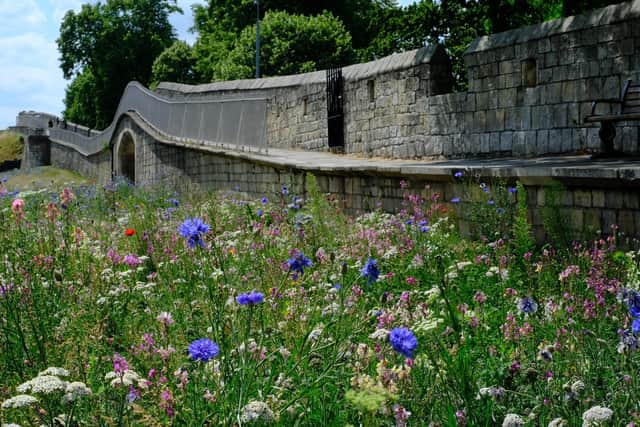

The update on the display comes after the expansion of wildflower displays on the embankment’s of York’s city walls was approved in January.
Officials were given the go ahead to look at other possible locations, with Lord Mayor’s Walk, Nunnery Lane and Station Avenue all put forward as potential candidates.
The Station Rise display was created in 2024 as part of efforts to boost biodiversity compared to traditional flower beds and reduce the frequency of grass cutting and costs.
Seeds were sown in September 2024 and the display bloomed for the first time the following spring and returned again this year.
It provoked a backlash in the run up to the start of the project as critics claimed the walls were being neglected.
Council officials said last year the display had flourished despite dry weather and had been well-received but added communications around the project could have been handled better.
The project was expanded to grass at the Red Tower, in Foss Islands Road, in April last year with the help of volunteers and the St Nicks environment charity.
Native wildflowers have also become established at the Fishergate Postern Tower following work from the Friends of York Walls and St Nicks.
An update on the project is set to go before a council meeting on today (Nov 3).
The council’s report on Walls in Bloom stated different sections of the walls required different maintenance regimes.
It stated: “Following on from the work in 2024 and 2025, the 2026 floral display bloomed between May and July, with the exceptional heat and drought affecting the later flowering species.
“In response, the floral mix will be adjusted to include more perennial natives.
“This should improve the drought tolerance, ecological value of the site and reduce the maintenance burden.”