
Exploring behind the scenes of Eurovision at Bradford's National Science and Medium Museum

The Eurovision Song Contest, the world's largest live music event, has seen its fair share of changes since it started in 1956.
Now, to mark its landmark anniversary, an exhibition opens in Yorkshire to shine a light on the techonology and innovations behind its broadcast.
From live voting to headsets allowing dancers to move, this is a competition that has been at the cutting-edge of advances through the years.
Setting the Stage opens at Bradford's National Science and Media Museum today (May 15) and runs until February as a temporary exhibition.
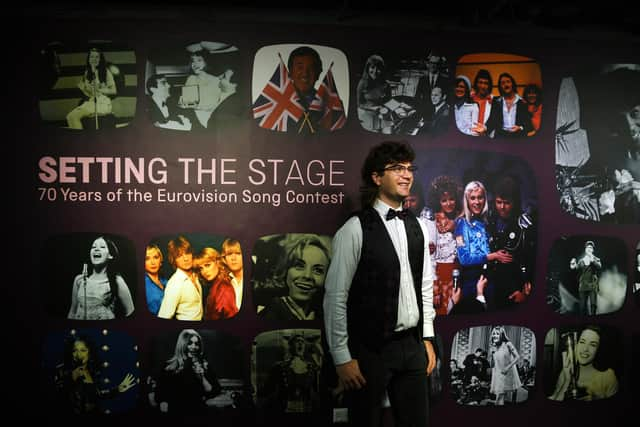

Museum director Jo Quinton-Tulloch said Eurovision is a competition that has shaped modern broadcasting as we know it today.
“For seven decades, the contest has consistently pushed the boundaries of what live television can achieve by embracing the most advanced technologies," she said.
"We can’t wait to welcome visitors behind the scenes of this extraordinary contest and see how technology brings the party to millions of homes worldwide.”
First staged in Switzerland in May 1956, the original Eurovision Song Contest featured just seven countries and was won by the home nation, with Lys Assia and the song Refrain.
It has since grown into the world's largest live music event, witnessing major changes from the advent of colour TV to ABBA's victory in 1974.
It was even hosted in Harrogate once – in 1982 – as Bucks Fizz won the rights to bring it to England’s shores having taking Dublin by storm in the previous competition.
Last year, the contest reached a global audience of 166m people, with more set to tune in for the final tomorrow in its 70th anniversary year.
Now the exhibition charts the evolution of the contest, from lighting to production, staging and the music itself, and how that has driven changes in the broadcasting world.

One area it looks at is televoting, transforming how audiences take part in live TV, while another examines the visual performances set to phenomenal scale.
The exhibition includes its own Nil Points Jukebox, while there is stage space to perform song contest hits.
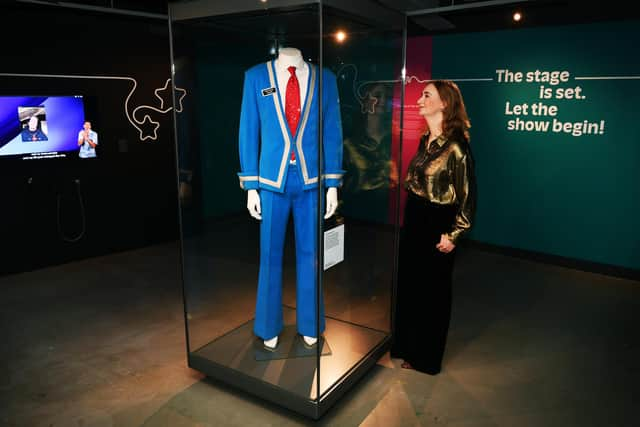
There is also outfits, camera heads and headsets, and fan-made ephemera, along with memorable moments caught on camera and now shared in archive footage.
Martin Green, director of the Eurovision Song Contest at the European Broadcasting Union, said this is an exhibition that "beautifully" captures a sense of the competition.
"The Eurovision Song Contest has always been about bringing people together—across borders, generations and cultures—and this exhibition offers a unique opportunity to explore how technology and talent have combined to make that possible," he said.
"We hope it inspires visitors to see the contest in a new light and to celebrate the many people who continue to make it such a powerful global event, united by music.”
Setting the Stage: 70 Years of the Eurovision Song Contest runs until February next year.