
Halifax Gibbet: Famous replica beheading blade to be repaired and refurbished
A replica of Halifax’s macabre beheading device will be getting its much-needed refurbishment.
The famous Gibbet once beheaded those found guilty of some offences, used as a capital punishment in Halifax between 1286 and the final executions in 1650.
One of the large axe blades can still be seen at Halifax’s Bankfield Museum.
The medieval method of execution gave its name to the town’s Gibbet Street, and a replica of the structure has stood on the spot nearby since 1974.
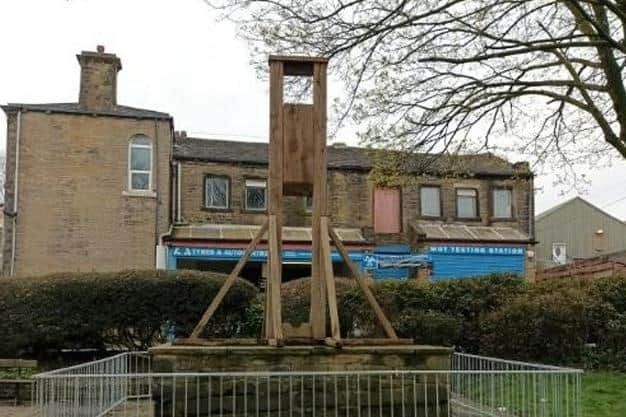

A plaque near the replica names more than 50 people who are known to have been executed by the blade.
But the replica’s wood is rotting and a carefully-crafted restoration is needed.
However, Calderdale Council planners note the remains of the Gibbet are a Grade II-listed monument, thought to date to the 17th century or earlier.
It has a raised square platform with stone retaining wall and steps to the west, topped by the wooden replica gibbet structure.
The latter needs repair and the planners have now granted the listed building consent needed to allow work to start.
The council says the look or purpose of the replica will not change: “The aim is to ensure this important – and grisly – part of Halifax’s history continues to be remembered for generations to come.”
The restoration will ensure the longer-term future of the Gibbet, which is an important part of Halifax’s social history, said the planners.
Restoration and replacement is supported by Halifax Civic Trust, and Halifax Antiquarian Society has the Gibbet on its emblem.
The replica is an old oak structure and minimal intervention using traditional methods and techniques will be deployed in the restoration.
Green, unseasoned oak will be used, the same material as it is replacing, modern materials will be avoided, and mostly glue or resin will be avoided too – “we will use traditional fixing methods and will use the existing fixing holes to fix the new structure,” says the council.
Twelve months after installation the green oak should have air dried and timber preservative can be applied, say supporting statements with the application.
The old structure will be removed top down, nuts and bolts re-used where practicable, and templates made from the existing sections at workshops.
Existing joint methods will be replicated including mortice, tenon and, on the base, half lap joints.
All stages of the replacement process will be photographed and recorded.