
Hannah Hauxwell: “If I haven’t money in my pocket it’s one thing no-one can rob me of”
Hannah Hauxwell went from the solitude of a remote farm in the north Pennines to a national celebrity and then back to the Dales. On the 100th anniversary of her birth, David Behrens tells her story.
Not quite 300 mourners squeezed into the compact Methodist chapel on the corner of Horse Market, with another 50 or so just outside.
More people than the young Hannah Hauxwell would have seen in a year. Some had travelled for hours to be at her funeral. Only a few had known her. Most just felt that they had.
The final journey of the first lady of the Dales took place in the early spring sunshine of Barnard Castle in February 2018.

At Hannah’s old farm, 10 miles down the road and 500 feet further into the clouds, it was still winter.
A snow had fallen the previous night, just as it had in 1973 when, as a Yorkshire Television film camera turned over, Hannah chipped away at the ice on the trough so her beasts could eat.
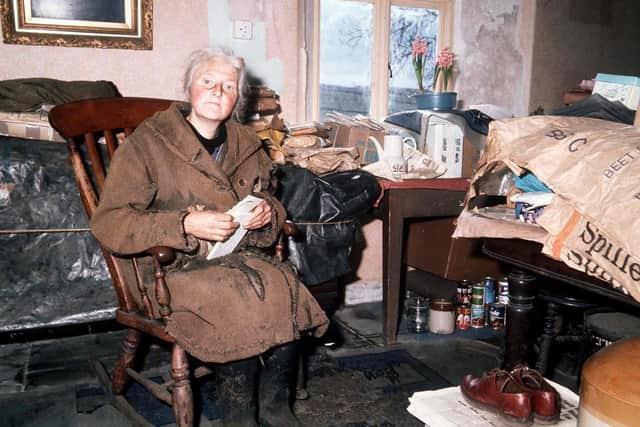
She had barely food herself and no power or water. She had lived there, at Low Birk Hatt farm, virtually all her life and it had changed scarcely at all.
She was the last survivor of an earlier generation of Dales farmers – a lone woman left to tend the land alone.
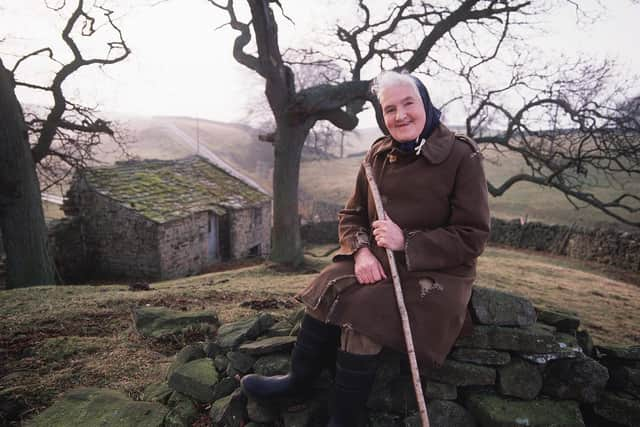
Without transport or agricultural machinery, ten of today’s miles were a hundred of hers. Her groceries had to be left by the roadside, an hour’s walk away.
Twice a year she allowed herself the extravagance of a chicken.
Her income was less than £300 a year at a time when the average working man was taking home around £2,000 and an average woman perhaps £900. Hannah was not average in that sense or any other.
She neither expected nor wanted anyone’s pity, but her plight – though she never saw it as such – cut through the depression of a country paralysed by strikes and power cuts.
At first there was shock, then charity, and finally celebration of a fellow countrywoman who seemed to have emerged from a bygone age, straight into the nation’s sitting rooms.
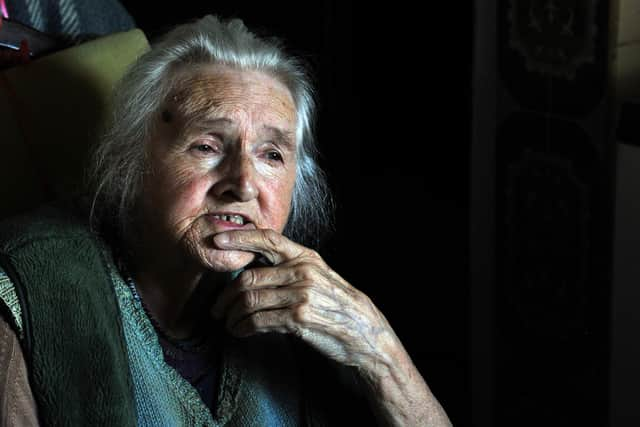
The woman they saw was not yet 50 but her weathered face and white hair betrayed her. Bowed but not beaten by the unforgiving north Pennine climate, she had already lived what would for most people have been two lifetimes when, overnight, she found herself a celebrity.
It was a mantle she wore uncomfortably and that was perhaps why, when death came, in that winter of 2018, she was once more a solitary figure.
They’d had to almost drag her from her old farmhouse to the little cottage in Cotherstone that was to be her retirement home.
“She was truly a Yorkshirewoman. She remained so even after they moved the border into County Durham,” said the Reverend Beverly Hollings, who conducted the funeral service according to her instructions: four hymns and a reading but no flowers.
It was typical of a woman who had never longed for worldly goods. Austerity was in her bones.
Baldersdale, the hamlet in which sat the 80 acres of Low Birk Hatt, was as remote as a farm could be.
Hannah was three when her family moved there from the old North Riding village of Sleetburn, about 30 miles away.
Her parents were William Hauxwell and the former Lydia Tallentire but William died three years later and, with no other children to farm the land, the job fell to Hannah’s Uncle Tommy.
Hannah left school at 14 to help him but when he and Lydia died within three years of each other, she was left to do the job alone. She was 34 and that was to be her life.
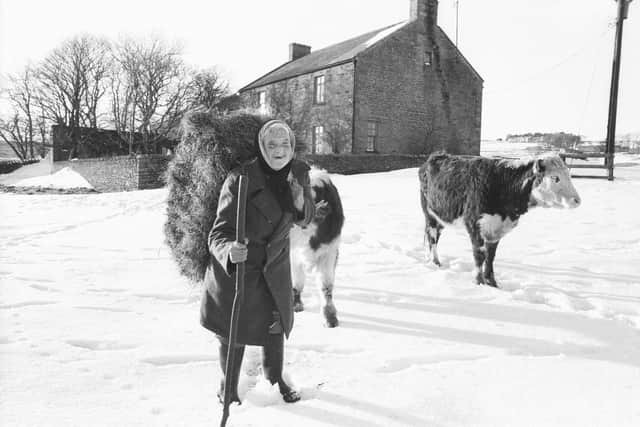
Alone in her farmhouse, with a cow pail for a bathtub and only a stream for water, she would dry her clothes on a boulder.
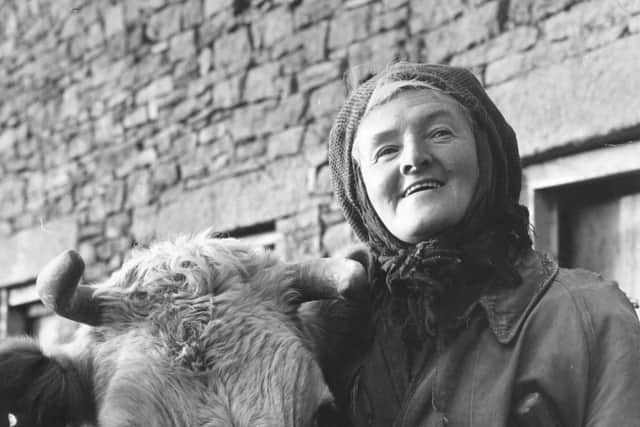
Her beasts were her company and the shimmering lights of the distant farmhouses she could glimpse from her kitchen, her connection to the outside world.
She never married nor expected to. Nor did she expect anything else from life.
“If I haven’t money in my pocket it’s one thing no-one can rob me of,” she philosophised to the camera in her distinctive Teesdale lilt.
The television critic Sean Day-Lewis spoke next day of her “extraordinary dignity, simplicity and acceptance” which, he said, “shone without a hint of acting or editorial manipulation”.
Hannah had been discovered by the media before, most notably in Alec Donaldson’s 1970 article in The Yorkshire Post, but it was Too Long A Winter, Barry Cockcroft’s elegiac film for YTV, that was her awakening.
A more prosaic production might not have had the same impact, but in Cockcroft’s hands her story became a symphony.
She was not in fact the only subject of the film but one of several north Pennine hill farmers surviving the hostile winter.
Hannah was not seen until the second half but such was the intimacy and richness of the direction and photography that it was a classic even before she appeared.
Hannah was not prepared for its impact. Coach trips and autograph hunters began to descend and Woolworths in Barnard Castle started selling postcards with her picture.
TV had not yet invented reality stars but even in the 1970s it couldn’t resist such a one-of-a-kind character. It gave her a season in the sun traversing Europe and America for a series of travelogues.
She shook hands with the Pope and played piano on the Orient Express. And at the Savoy she was feted at a Woman of the Year dinner.
And then there was the garden party at Buckingham Palace.
“It was all very dainty,” she said. “There were little pancakes and tiny cakes, which for the occasion, I suppose, was quite nice but if you’d been doing half a hard day’s work, it would have left quite a gap.”
But though she could enjoy the limelight, she preferred the peace and solitude of the Dales.
“Whatever I am, wherever I am, this is me. This is my life,” she had said in the original film.
“And if there’s a funny old person in years to come – a ghost walking up and down here – it’ll be me. A big part of me will be left here. There’s nowhere else. There’s nowhere like it.”
She never truly left her farm behind. When the removal people cleared out the piles of belongings she had stacked up to the rafters and left only a single chair, she went back inside and sat on it until she could be coaxed out.
At Cotherstone she could still sometimes be seen using the village green as a clothes horse. But at least the royalties from the books she had co-written with Cockcroft made her comfortable in her old age.
Her final years were in a care home in Barnard Castle and then a nursing establishment in West Auckland, 12 miles away. Her gift to posterity is Hannah’s Meadow, the nature reserve on her old pasture land at Low Birk Hatt.
But her real legacy is the extraordinary impact of her first appearance on viewers.
Alone in that cottage, stripped of the soft cushion of modern life, she shone from within: a beacon of humanity, a lesson for the ages.