
Hawes: History of picturesque town which is the cheese capital of the Yorkshire Dales
Peppering the history of Hawes, a picturesque town in Upper Wensleydale, are details about its cheesemaking, chapel of ease, new church, market charter, a mill, railway stations, a market hall, cattle market and a tragic accident.
A snapshot of Hawes appears in A History of the County of York North Riding: Volume 1 (1914) claiming, at that time, it was lying for the most part along one street at the foot of the next dale, close to the Ure.
The houses were small and built of rough stone and, although they were modern, two at least possessed old doorways which had been reset bearing the dates of 1668 and 1692 respectively.
It adds that there was a Wesleyan, as well as a Congregational chapel. Formerly, the Sandemanians had a chapel there. A small coal mine was also in existence.

Cheesemaking in the area may be traced to monks from France who first settled in Fors (near Hawes) around 1150 with sheep’s milk being used.
On the dales.org it is stated that the Fors monks (at their short-lived monastery) developed the earliest recipe for what would become world famous Wensleydale Cheese.
Later, the monks moved to Jervaulx Abbey.
The Wensleydale Creamery history notes that following the dissolution period the cheesemaking recipe was passed to the farmers’ wives.
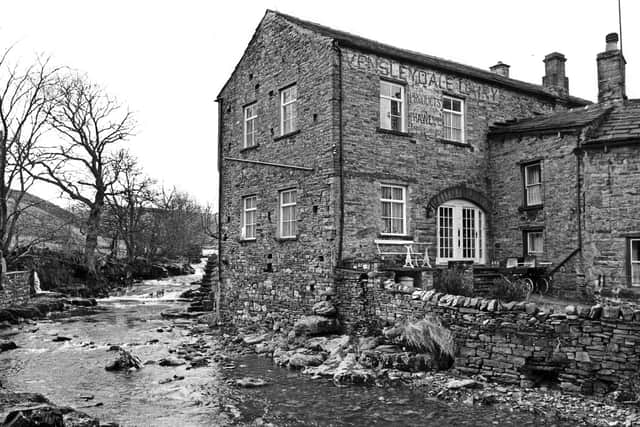
The first commercial creamery in Hawes was started in 1897 by Edward Chapman, a local corn and provision merchant. In time, he moved to a disused woollen mill.
The business found trading difficult in the 1930s and was rescued by Kit Calvert before the Milk Marketing Board took control in 1960. It traded under a subsidiary, Dairy Crest before closure in 1992.
A little later, ex-managers, together with a local businessman, completed a management buyout. Then, with the skilled help of the workforce, Wensleydale cheese was produced in time for Christmas of that year.
Presently, the business handcrafts more than 20 varieties of cheese with a workforce numbering over 200, making a significant contribution to the local community.
A chapel of ease was constructed at Hawes in 1480.
This allowed local people to worship without having to visit Aysgarth or Askrigg, though they still had to travel for baptisms, marriages or funerals until the late 17th century. At this time, Hawes gained parochial rights.
The chapel was replaced in 1851 when St Margaret’s Church (also known as Church of Saint Margaret of Antioch) was erected to the designs of the Wakefield architect A.B. Higham.
This was at a cost of over £2,000 and consecration, by the Bishop of Ripon, Rt Revd Charles Longley, took place on October 31, 1851 before a large crowd or people.
A report said the church was in the Decorated Gothic style of architecture and built of stone from the neighbouring hills, with rough walling and chiselled dressing to the buttresses, doors windows and piers, moulding and other ornamental work.
The structure was estimated to hold nearly 600.
Over the north door is a memorial to Rev. Charles Udal (d. 1782) salvaged from the earlier chapel. The pews date from the 1930s and are the work of Robert ‘Mouseman’ Thompson of Kilburn.
Hawes was granted its official market charter in 1700 by King William III and this allowed the town to establish a regular market.
A Lancaster University website detailing the work of Quaker George Fox states that Askrigg was the chief market town in Wensleydale until Hawes petitioned for the charter.
Upon being granted this, Askrigg’s trade and prestige was diminished. Prior to that time, Hawes was relatively unimportant.
The History of the County of York North Riding: Volume 1 (1914) claims from 1700 Hawes grew steadily.
The Gayle Mill website says the building was erected ‘at the start of the First Industrial Revolution in 1784’ and dramatically adds: ‘little did we know that the mill was to become the embodiment of the Industrial Evolution in this country.’
Initially, the structure was a cotton mill though by 1810 was converted to flax for sails and sacking. Further conversions took place in the 1820s, 1840s and by 1860 the building was a saw mill until closure in 1988.
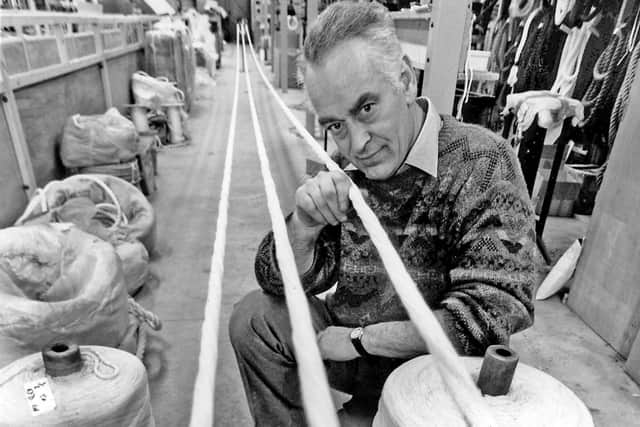
Ropemaking in Hawes was established by the Wharton family sometime before 1840 until taken over by the Outhwaite family in 1905. Seventeen years later the business moved to a single storey stone building.
The central feature was a 30m long path on which a motor twisted together twines fixed to a moving carriage.
In 1974, the last of the Outhwaites, Tom, sold the concern to Peter and Ruth Annison – former college lecturers.
In December 2022, the Yorkshire Post informed that one of the country’s last traditional ropemakers had closed its doors, and this brought to an end centuries of the craft in Hawes.
The area was connected to the UK’s burgeoning railway system when the Hawes Junction station was opened by the Midland Railway on August 1, 1876.
According to Quick (2001) it was renamed Hawes Junction & Garsdale, January 20, 1900 and Garsdale, September 1, 1932.
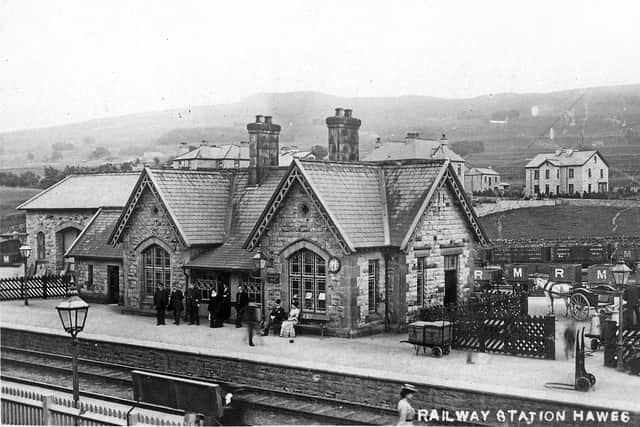
The Midland Railway and the North Eastern Railway opened another railway station, Hawes, in the centre of the village on June 1, 1878.
The Hawes station building was erected on the south side of the two running lines, with a waiting shelter being positioned on the north side.
Both structures were built with sandstone, the main one finished with blue slate.
The latter station closed to passengers on March 16, 1959, goods traffic continuing until April 1964. The station buildings presently form part of the Countryside Museum.
References state the idea of building the Hawes Market House began after Robert William Atkinson left a generous bequest for its construction.
Following a court case, the amount was reduced with the Parish Council making up the difference.
A Market House Charity was subsequently created. In late October 1897, Leeds architect J.P. Kay appealed to builders to submit tenders for the erection of the Hawes Market Hall.
The Cumberland and Westmoreland Herald of November 11, 1899 announced under the heading ‘Hawes Market House’: ‘The new public building is still standing, the walls almost a yard high, and building material piled all around, awaiting the order to proceed’.
Once completed, the Market Hall became noted for exhibitions, concerts and meetings and also housed a library. Presently the building’s website states the facility has been a centre of Dales life for many years.
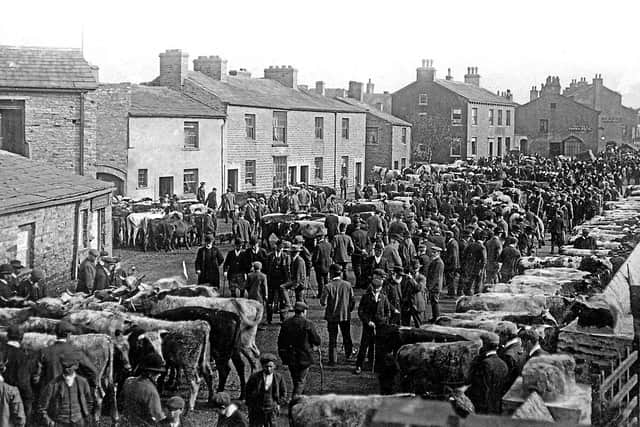
The Yorkshire Dales National Park website mentions that Hawes once had a well-established cattle market in the centre of the town.
But, from 1887 a separate market site was created on the Burtersett Road by a group of local farmers and traders who grouped together to found Hawes Farmers’ Auction Mart.
Yet, the town centre market continued until the First World War, albeit with a diminishing trade. The Farmers’ Mart was registered as a limited company in 1914, with local farmers being offered shares.
The 2002 Foot and Mouth crisis badly affected trade, though since then it is stated ‘plans for developing and diversifying the site have been put into place’.
On Christmas Eve, 1910 at 5.49am 12 people were killed in a railway crash at Hawes Junction.
This was due to a collision between a northbound ‘Scotch Express’ train travelling from London St Pancras to Glasgow and two light pilot engines.
The cause of the accident, which occurred just north of Lunds Viaduct between Hawes Junction and Aisgill on the steeply graded Settle and Carlisle main line, was attributed to an error by a signalman.
At the inquest, the coroner said it was not to be supposed the man who took charge of any duty whatever could bring absolute perfection to the work.
The jury, after 25 minutes’ consideration, returned a verdict of ‘accidental death’ for the victims.
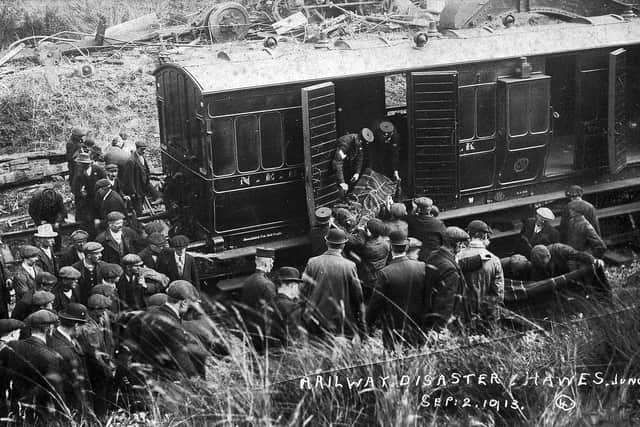
Another rail crash occurred at Ais Gill, Hawes Junction on September 2, 1913. An official report records 16 fatalities and 38 injured.
The primary cause was a ‘driver error’ and a ‘signal passed at danger’.