
Helmsley Castle: The historic Yorkshire site protected for our enjoyment
Many historical buildings and ruins are present in the British landscape.
During the early 20th century thoughts turned to transferring these from private individuals to the state for safekeeping.
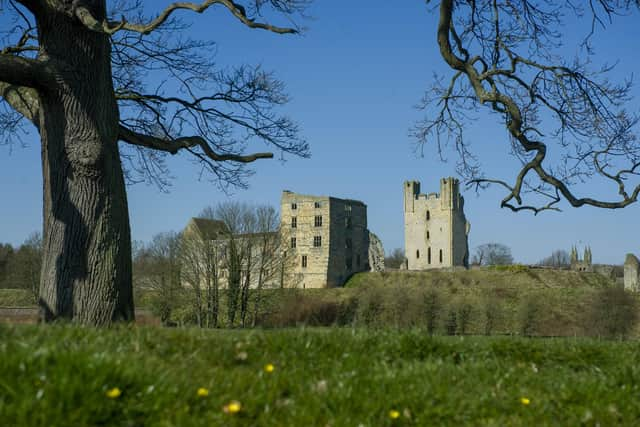
At this time a large group of castles, chapels and abbeys made the headlines for being taken into the care of the Office of Works. Amongst these was Helmsley Castle, in North Yorkshire.
Shortly before the First World War, Parliament passed the Ancient Monuments Consolidation and Amendment Act which made an official list of buildings, sites, etc, of national significance.

Also, the legislation provided a framework allowing structures to be handed over to the government or local authority for maintenance and provide access to the public whilst still remaining the property of the landowner.
Furthermore, ancient monuments could be given a protection order which obliged the owner to carry out repairs or maintenance to prevent deterioration.
The decision to transfer Helmsley Castle was perhaps influenced by the death of the 2nd Earl of Faversham, Lieutenant-Colonel Charles Duncombe, in September 1916.
This occurred at the Battle of Flers-Courcelette during the Battle of the Somme and he was commanding the 21st Battalion (Yeoman Rifles), King’s Royal Rifle Corps. The unit was formed at Helmsley in 1915.
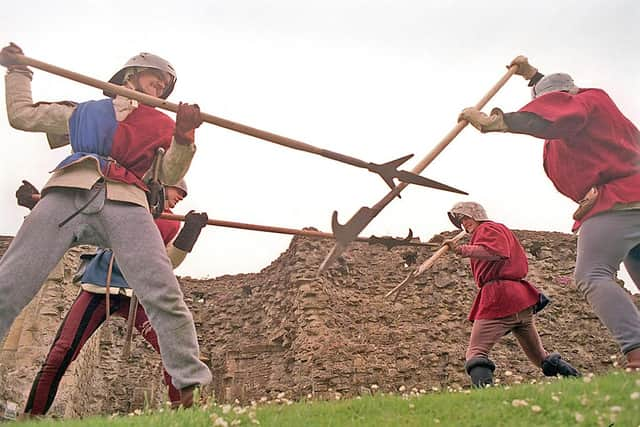
The heir to the title was Duncombe’s son, also Charles, aged just nine. The trustees of the estate of the 2nd Earl presented Helmsley Castle to the nation in March 1921 according to a report in the Yorkshire Post.
Fortifications at Helmsley are suspected to have been present in the 11th century and could have been in the form of a simple ditch and rampart enclosure, or a 'motte and bailey', an earth mound surmounted by a timber tower within a ditch and enclosure.
These features were located at Helmsley owing to the area’s importance dating back to pre-Roman times. Also, a church was established there before the Norman Conquest.
After that event, land at Helmsley was given to William the Conqueror’s half-brother Robert. In the early 12th century, the land was under the control of Walter Espec, whose father was a follower of William.
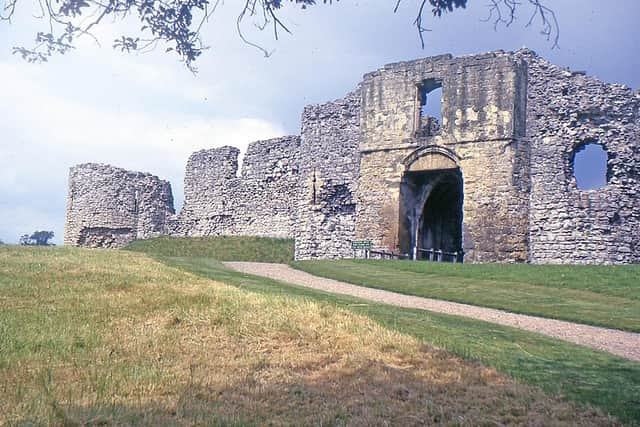
Espec was a powerful man in Northern England and established Helmsley Castle around 1120.
This was built using wood and rectangular in design, surrounded by double ditches which differed from contemporary practices. Espec also established Wark on Tweed Castle, Northumberland, and gave land to found Rievaulx Abbey, Kirkham Priory and Warden Abbey.
Espec died in the mid-1150s and left his estates to brother-in-law Peter de Roos and Helmsley Castle passed through this branch of the family – with the name changed to de Ros – for a number of generations.
Robert de Ros (c. 1182-c. 1227) started the construction of a stone castle at Helmsley and the work consisted of the round-cornered towers and southern gateway.
This was likely carried out owing to his importance in the area as Baron and agent of the King, particularly John (reigned 1199-1216). De Ros was also amongst 25 Barons that signed Magna Carta in 1215.
More building work was conducted by Robert’s son William who had a chapel erected and this was consecrated in 1246. William’s heir, Robert, undertook an ambitious construction programme during his tenure as Baron Helmsley between 1258 and 1285.
The de Ros family held the Castle until 1478 when Richard, Duke of Gloucester (subsequently Richard III) was granted the property by the crown.
Yet, just seven years later Edmund de Ros received Helmsley from the victorious Henry VII for the family’s support during the War of the Roses.
Without an heir, Edmund left his estates to a nephew, George Manners. This family was custodian of Helmsley until the 1630s.
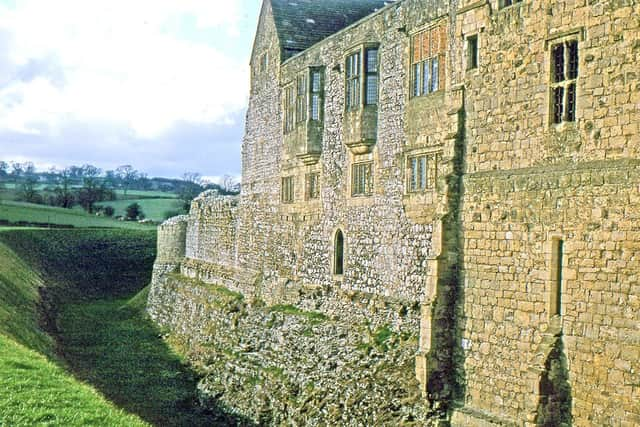
Under the Manners, the Castle was altered several times and Edward, 3rd Earl of Rutland, made significant changes.
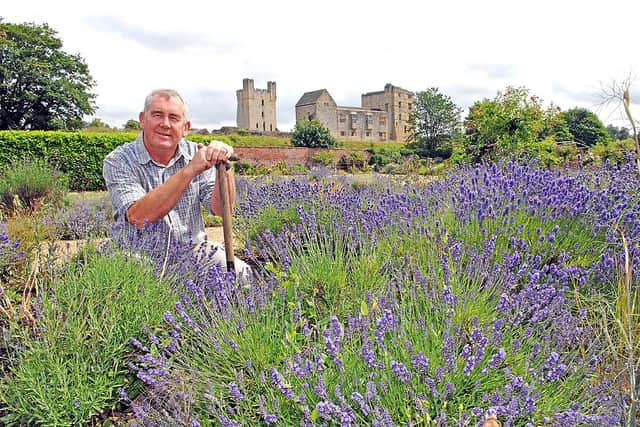
The northern hall was transformed into a mansion of Tudor style, whilst the southern hall – built in the 13th century – was demolished and the barbican made more habitable.
The chapel was also converted to a kitchen at this time.
Francis Manners, 6th Earl of Rutland, was the last of the Manners to hold the Helmsley Estate and on his death the lands went to grandson George Villiers, later 2nd Duke of Buckingham.
He was one of the notable rakes of the era and spent his childhood with Charles II and James II.
Fighting for the Royalists in the English Civil War, George was said to have defended himself against six Roundheads during a skirmish.
He was not on hand for the defence of Helmsley Castle and the Parliamentarian siege lasted from September to November 1644. This was the Castle's first and last experience of conflict.
When the Royalist force surrendered, the Parliamentary commander, Thomas Fairfax, born at Wharfedale, Yorkshire, in 1612, was instructed to ‘slight’ the castle and a certain amount of damage was inflicted.
However, the Tudor mansion remained intact. The castle, manor and borough of Helmsley, came into the possession of Fairfax and his heirs in 1650.
The Duke of Buckingham returned to England from exile in 1657 and quickly courted Fairfax’s daughter Mary, even though she was betrothed to the 2nd Earl of Chesterfield.
Following the restoration, the Duke was at the heart of national politics and had his estate at Helmsley, said to be worth over £25,000 annually, returned.
The Duke died at Helmsley during 1687 and left no heirs. The Barony went into abeyance until 1806 when claimed by Lady Charlotte FitzGerald and has since become the oldest Barony in the Peerage still active.
Helmsley was sold to London Banker and MP Charles Duncombe. Dying unmarried in 1711, the estate was left to his sister’s husband Thomas Brown (subsequently Duncombe) who established Duncombe Park with a new mansion in 1713.
The family was later ennobled as Baron Faversham, with an Earldom also in use for a time.
The present 7th Baron is Jasper Duncombe, whilst his brother Jake Duncombe maintains Duncombe Park as a private residence.
The grounds are open to the public between April and August and host several events annually.
Helmsley Castle was left in ruins as a Romantic feature visible to the north east from Duncombe Park’s grounds.
At the time of the handover in the early 1920s, the remains of the Castle were said to be blocked in by many trees and covered by ivy.
In the 1930s, further excavations were made by a group of unemployed men from the West Riding.
The Office of Works became the Ministry of Public Building and Works in 1962 and Department of the Environment in 1970.
During 1983, the management of historic buildings and monuments was given to a new commission with some independence from government and branded English Heritage.
The body is presently managing over 400 sites including Helmsley Castle, whilst there are nearly 500 others in the guardianship of Scottish and Welsh authorities.