
How railways created a golden age for the great British seaside holiday
DAY-trippers waiting for their trains home from Scarborough might find their attention caught by what is arguably Yorkshire’s quirkiest landmark.
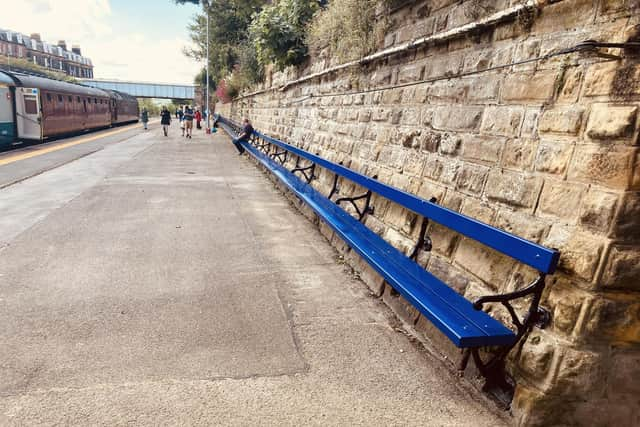
It is the world’s longest railway bench, stretching quarter of a mile along the platform, smart in its blue paint, capable of seating 230 people and a monument to a lost era when the railways transformed how Britain went on holiday.
It has been there since 1883, installed to help cater for the massive, and then still-growing, number of passengers pouring into the country’s pioneer seaside resort by train, the start of the mass tourist trade that continues to this day. In the years that followed, even a quarter-mile long bench wasn’t enough to accommodate even a fraction of the crowds catching the train. Such was the town’s popularity, a second railway station had to be built and an express service from London King’s Cross, the Scarborough Flyer, was introduced in 1927. Passenger numbers kept on rising, peaking in 1960 when 800,000 holidaymakers passed through the main station. This was the golden age of the railways taking people on holiday and its story is told in a new book from York-born author Andrew Martin, To the Sea by Train.
Andrew’s previous books include Steam Trains Today, exploring Britain’s heritage railways, and Yorkshire There and Back, from 2022, in which he reflects on his home county, as well as the acclaimed Jim Stringer series of historical crime novels featuring a railway detective from York. The era he evokes is one before car ownership was taken for granted and foreign travel became affordable, when strikingly colourful railway posters tempted crowds to an idealised, sun-soaked coast and legislation introducing paid holidays for the first time drove a boom in people being able to have a week away.
It wasn’t just Scarborough which benefited. Every town on the coast prospered because of the railways which arrived in the mid-19th century.
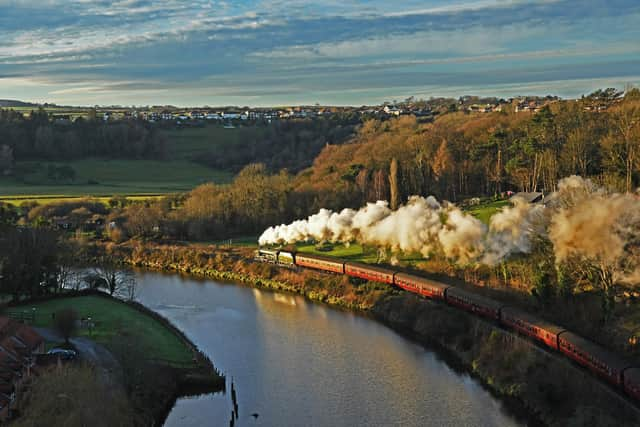

Saltburn was developed into a resort by railway company director Henry Pease, who ran a line right into the prestigious clifftop Zetland Hotel so guests didn’t have the inconvenience of walking a few yards from the station.
In Filey, the Butlin’s holiday camp that was a magnet for visitors from the end of the Second World War until closing in 1983 opened its own station off the main line between the town and Bridlington.
Andrew, 63, who lives in London, is just old enough to remember a time when catching the train to the seaside was part of the excitement of going on holiday. “It is more momentous to go on the train, even if you’re just doing it for the day, even if you’ve only decided to do it the night before. It’s more involved than just jumping in your car. It all involves this preamble, which increases the sense of occasion. You’ve had to plan it.
“I’m probably coming to the end of writing about British railways, and this is in a way is the book I should have written first because my chief memory of trains – and I spent a lot of time on trains because my dad worked for British Rail – was going to Scarborough, which we must have done half a dozen times a year. That’s what I think of whenever I’m in York station, I look to the platforms that they call Scarborough corner, and I still do get on a train to there at the drop of a hat.
“I still remember the seaside when you stayed overnight, whereas now it’s a place people go overwhelmingly for the day, but if you were going for the week, that added to the ritualistic aspect of it because you had to get your luggage onto the train, or you might need a porter, or you might send the luggage in advance.”
The railway companies at first did a hard sell to the new travelling public of the health benefits of going to the coast. A leaflet promoting Saltburn in 1865 declared its climate restorative to “unstrung men, languid women and weakly children”. A 1909 poster depicting a cherubic child skipping along a beach proclaimed “Scarborough braces you up. The air does it.” Later on, they focussed on the weather, with the London and North Eastern Railway, which served the Yorkshire coast, promoting it as “The drier side of Britain”.
“The posters are very evocative and often very beautiful. The east coast joys posters could be Mediterranean scenes because the people are the colour of terracotta and the sea is turquoise,” says Andrew. “You still see those in any café that’s near the seaside. They’re almost as good as having the sun shining. You’d have seen them in the stations all year round, so they were reminding you of the seaside. And then there was the ridiculous weather boasting and what the LNER would say about Yorkshire is that’s the drier side of Britain. There was a poster showing a big black cloud over Lancashire and then it becoming sunny east of the Pennines.”
The publicity worked. Holidaymakers flocked to the coast in their millions, boosted by legislation in 1938 introducing paid holidays, though its effects took time to be felt. “The war intervened, so nobody was going on holiday,” says Andrew. “The benefits were only felt after the war, so the golden age came in the ‘50s if you weren’t that well off. Richer people had a golden age before then, maybe in the ‘20s and ‘30s.”
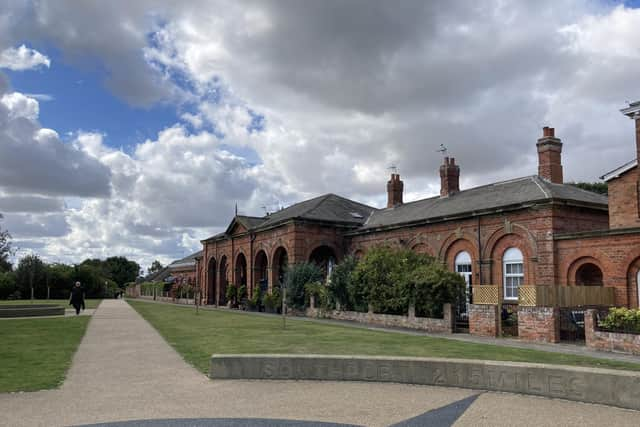
It wasn’t to last. A villainous presence hovers over Andrew’s story of the seaside railways. It is Dr Richard Beeching, the businessman appointed by the government in the early 1960s to run the network and cut costs. In 1963, he recommended closing more than half of Britain’s stations and 5,000 miles of track. Yorkshire’s coast suffered at his hands. Hornsea and Withernsea lost their railways and Whitby, which once had four lines into it, was left with only one, along the Esk Valley from Middlesbrough.
The 18 miles of the North Yorkshire Moors Railway between Pickering and Grosmont are what remains of the town’s direct link to York. The heritage railway’s trains “Beeching closed many seaside lines because they were economically marginal and I think a lot of places never really recovered. And Beeching coincided with the beginning of foreign holidays and with the end of steam, so there were three things going on at once that undermined the seaside and removed a lot of the romance from travel in Britain. t’s so poignant because it was a pre-globalised world, and it’s nice to write a book about that.”
To the Sea by Train, by Andrew Martin, is published by Profile Books £18.99.