
Hull's hidden architectural gems revealed in new walking tour celebrating city's post-war history
Hull’s post-war modernist architecture is being celebrated as part of a new walking tour that could bring many tourists to the city.
The news means Hull has become only the eighth UK city to feature as a walking tour on the Modernist.
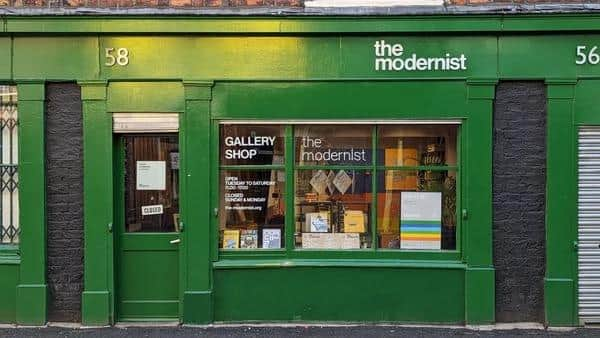
The Modernist app is a free architectural guide produced by the Modernist Society, putting the city’s twentieth-century built heritage into the palms of residents and visitors alike. The newly launched self-guided walking tour has been researched, written, and photographed by Hull creative historian Charlotte Tomlinson.
The tour invites users to explore Hull’s distinctive modernist and post-war landmarks. Tracing a route from Telephone House to the iconic Three Ships mural, the digital guide uncovers the histories, architects, and artists behind everyday structures that residents and visitors often walk past without a second glance.

Hull’s story: ‘rebuilt with real ambition’
Hull’s story is one of reimagination and rebuilding, said Charlotte Tomlinson, who created and photographed the Hull tour. “Hull’s modernist buildings tell the story of a city that picked itself up and rebuilt with real ambition. I wanted these tours to help people stop, look more closely, and appreciate the craft and optimism in buildings that are too often taken for granted, and to show visitors a side of Hull they won’t find in the usual guidebooks.”
Few British cities experienced the dramatic physical transformation that Hull underwent during the twentieth century. Following devastating bomb damage during the Second World War, the city embarked on an ambitious decades-long programme of reconstruction.
That post-war era left behind a rich, albeit frequently overlooked, legacy of bold civic buildings, modernist designs, and striking public artworks. The new digital guide brings these scattered pieces of history together into a single cohesive narrative, pairing original photography with concise, accessible commentary around Hull.

‘A tremendous heritage’ – set to attract new tourists
The new walking tour could inspire people to ‘look up’ and see the city in a new light, according to Hull City Council leader, Cllr Mike Ross. “It is great to see this tour launching in Hull. The city is one of the most historic in the country and the architecture of the place is very much part of the reason why. Something like this app, which encourages people, whether long term residents or first time visitors, to look up at the beautiful buildings is fantastic,” he said.
“One of the benefits of a city where the buildings are generally not very high is that you don’t need to look up too far either to enjoy them! It is also a great sign that Hull is one of the first ten cities to be on the app. Hull’s buildings help tell the story of the city and while we know what a tremendous heritage that is, I do hope this helps encourage more visitors to the city to see it for themselves.”
Along the route, walkers will encounter some of Hull’s best-known mid-century landmarks, including the Cecil Cinema, the former Hammonds Department Store, and the celebrated Three Ships mural. Beyond the headline attractions, the tour also shines a spotlight on lesser-known architectural gems and tucked-away back-street details. Even lifelong Hull families are likely to discover overlooked features and forgotten stories hidden in plain sight across the city centre.
Hull joins a growing map of Modernist tours. Since launching with tours of Manchester in 2024, the Modernist app has grown to include Glasgow, Sheffield, Huddersfield, Bristol and Liverpool. Hull has become the eighth city on the app.
Interactive location-based map technology
Designed for ease of use, the Modernist app relies on interactive, location-based maps to navigate users seamlessly from one building to the next. Each stop features high-resolution photographs alongside historical background notes.
A complete walking tour takes roughly 90 minutes on foot, though the platform is built so every route can also be browsed remotely – allowing architecture enthusiasts anywhere in the world to explore Hull’s post-war streetscape from the comfort of their sofa. Dr Robb Robinson, honorary research fellow at the University of Hull said anyone exploring Hull’s architecture for the first time was in for a pleasant surprise.
“The rebuilding of Hull after the destruction by bombing during the Second World War is significant because it has given us so much of the city centre we are familiar with today,” he explained. The buildings that went up between the late 1940s and 1970s are now part and parcel of the history of Hull. Not all, of course, have stood the test of time but my favourite building to emerge from the era is the Danish Church which seems almost timeless today.”
Historic twentieth century design
The local historical expertise, research and imagery showcase just how much the city offers fans of twentieth-century design. And because the app remains completely free to use, anyone can tap into the tours on their own schedule which should be ideal for time-pressed visitors who might only be in Hull for a weekend according to Jack Hale, of the Modernist Society.
He added: “We’re delighted to welcome Hull to the Modernist app. Charlotte’s tours and photographs capture just how much the city has to offer anyone interested in twentieth-century architecture, and because the app is free, anyone can enjoy them, whenever they like.”
The Modernist Society is a not-for-profit Community Interest Company founded in Manchester in 2009. It celebrates twentieth-century architecture and design through publishing, exhibitions, events, and the free Modernist app.
The app was built by digital agency Fablr with funding from the Greater Manchester Combined Authority. It is available on the Apple App Store and Google Play.