
Aladdin's Cave, Leeds: 'I wanted to be a journalist - now I'm running the family antique jewellery business'
Antique jewellery can reveal touching tales of love, loss and remembrance. Louisa Gregson visits a Leeds family business where every piece has a story to tell, and they love to uncover a piece’s history.
Nestled in Leeds’ Queens Arcade, its window display glittering with splendour, is the oldest shop there – a stunning antique jewellery store called Aladdin’s Cave.
The shop was started 45 years ago by Sheila and Peter Isaacs. When they retired, their daughter Roberta and Tony Spencer bought the shop, but tragedy struck when Tony died in 2002 after having a heart attack in the shop following an altercation with a customer.
Their daughter Jessica Spencer, at the time a budding journalist, was drafted in and took over from him in the shop and has been running it with her mum ever since.
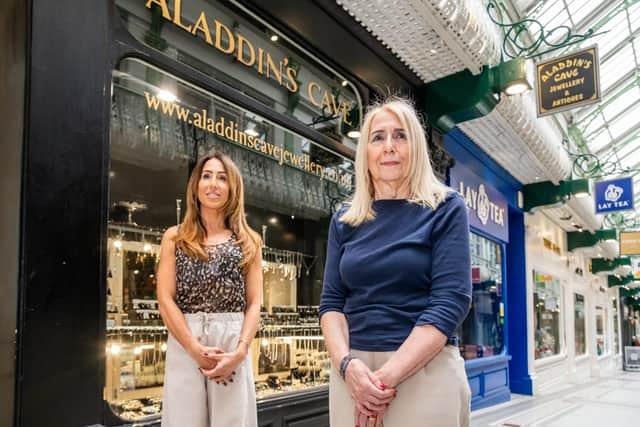

The mum of two, who lives in Leeds with her partner Warren and two daughters, Arielle, ten, and Halle, five, says she is a ‘born and bred’ Yorkshire woman who loves how antique jewellery can connect its owners to events and people from the past.
“One of the things I find most fascinating about antique jewellery is that it was very often about much more than decoration.
"Jewellery could communicate love, remembrance, loyalty, friendship, grief and hope, and some of those meanings have become almost forgotten today.
“Working with antique jewellery every day, we often come across pieces where a tiny detail completely changes the way you look at them.
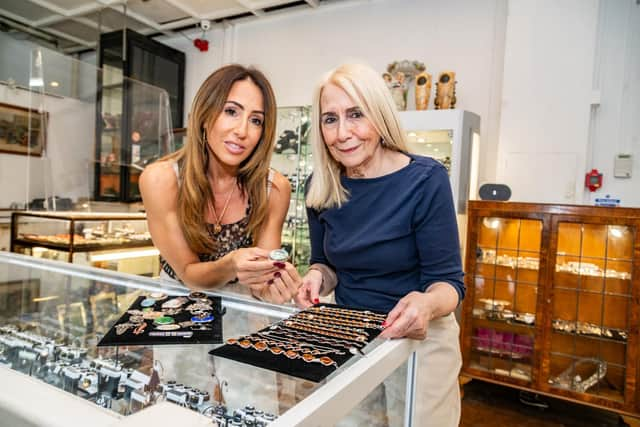
"An inscription, a particular gemstone, a motif or even the material itself can give you a glimpse into why that piece was originally bought and who might have worn it.
“One of my favourite examples is MIZPAH jewellery, which became particularly popular during the Victorian period.
“MIZPAH comes from Genesis and the phrase, ‘The Lord watch between me and thee, when we are absent one from another.’
“The word appeared on rings, brooches and other sentimental jewellery and became associated with people who were separated from one another.
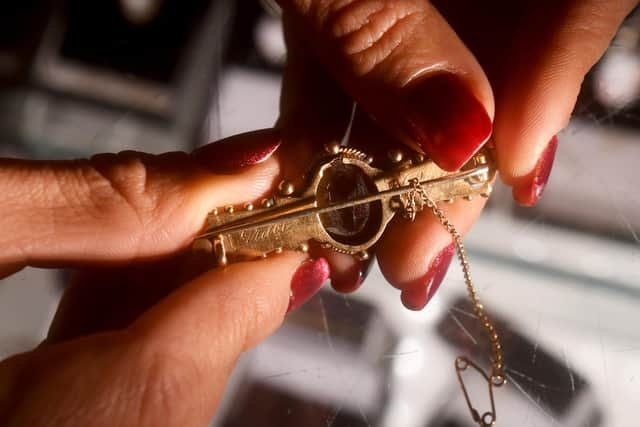
"These pieces could be given between sweethearts, friends or family members as a way of saying, essentially, ‘May we be watched over while we’re apart.’”
Jessica explains: “Today, somebody might initially see an attractive Victorian ring with an unusual word across it.
"Once you know what MIZPAH meant to the person who gave it, it becomes something completely different. That’s the part of antique jewellery I love.
“Snake jewellery is another wonderful example of how our interpretation of a symbol can change.
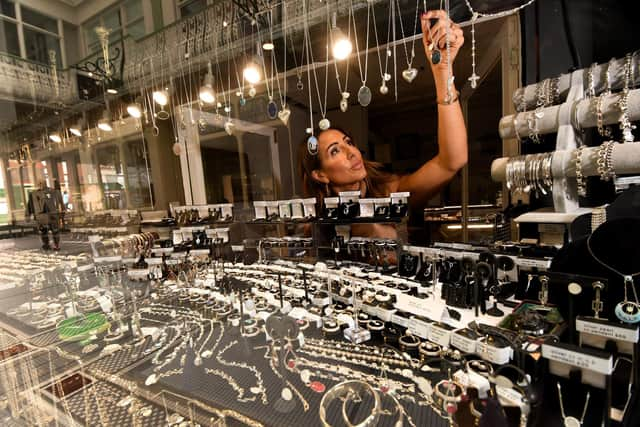
"Today, people can associate snakes with danger or something sinister, but in Victorian jewellery the snake could represent eternity and everlasting love, with its coiled or circular form suggesting something without an end.”
Queen Victoria’s engagement ring from Prince Albert was famously in the form of a snake, which helped make snake jewellery particularly fashionable during the Victorian period.
“We still see beautiful antique snake rings, bracelets and brooches. Once you understand the symbolism, what initially looks like an unusual Victorian design becomes an incredibly romantic piece of jewellery.”
Becoming on trend again, according to Jessica, is mourning jewellery – one way of keeping somebody close after they died. Death was much more visible in Victorian life than it generally is today, and there were elaborate customs surrounding mourning.
“We see lockets and brooches containing woven hair, jewellery made from black materials such as jet, and pieces carrying names, initials or dates of death.
“Hair jewellery can seem slightly macabre to modern eyes at first, but I think when you understand its purpose, it becomes incredibly touching.
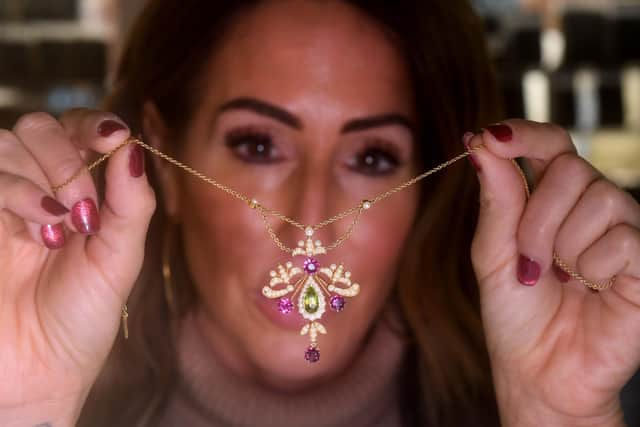
"Photography wasn’t something everybody carried around in their pocket. A lock of someone’s hair was a physical part of the person you had lost, and incorporating it into jewellery allowed you to carry that person with you.
“These are some of the pieces that really stop me in my tracks because the history isn’t abstract. You know that somebody genuinely grieved for the person commemorated in that object.”
A proud Yorkshire woman, Jessica likes to sell jewellery containing Whitby jet – an organic material formed from fossilised wood.
The jet found around the Whitby coastline became internationally renowned for jewellery.
“It was already being used long before the Victorian period, but black jet jewellery became particularly associated with Victorian mourning.
"Following the death of Prince Albert in 1861, Queen Victoria’s prolonged mourning had an enormous influence on mourning fashions, and Whitby jet became highly desirable.”
At its height, the Whitby jet industry supported a substantial local trade of craftsmen producing intricately carved necklaces, brooches, bracelets and earrings.
“We still handle genuine antique Whitby jet in the shop today. I love the fact that a piece can connect so many different strands of history: Yorkshire geology, local craftsmanship, Victorian fashion and the personal story of the person who originally wore it.
"And as mentioned, we have this incredible artisan jeweller who converts original Whitby jet into wonderful pieces.”
Sentiment and love can often be the charming hidden details that Jessica loves to uncover the charming hidden details of sentiment and love, often finding initials, dates and messages engraved inside rings and lockets. Occasionally she finds an inscription that allows her to begin researching the people involved.
“Sometimes the hidden meaning isn’t a recognised symbol at all. It can be something intended for only two people to understand.
"These tiny details are one of the reasons I always encourage people to look beyond the front of a piece of antique jewellery. Turn it over. Look inside it. Look at the hallmarks. Look for an inscription.
“The back of a brooch can sometimes tell you more than the front. Hallmarks can help establish when and where something was made.
"Maker’s marks can lead you towards a particular jeweller or workshop. Construction techniques can give clues to age.
"Inscriptions can provide names and dates, while the style of the piece and the way gemstones have been cut can add further evidence.
“You start with an object and gradually build up its story. Occasionally you can trace a piece back to a particular person or family.
"Other times you only uncover fragments, but even those fragments make the jewellery feel much more human.
“One of the changes we’ve noticed in the shop is how interested customers have become in this side of jewellery.
"Of course, people still care about beautiful gemstones and precious metals, but increasingly we find people asking about age, provenance, symbolism and craftsmanship.”
After more than 45 years of the family dealing in antique and vintage jewellery in Leeds, Jessica says she has seen tastes change enormously. But she says the emotional reasons people buy jewellery haven’t really changed very much.
She explains: “People still give rings to represent love. They still buy jewellery to remember important people and moments. They still hand pieces down through families.
“The difference is that when you’re holding a Victorian ring or an Edwardian brooch, you realise people were doing exactly the same thing 100 or 150 years ago.
“That’s what I find so compelling about antique jewellery. You’re not simply looking at an old object. You’re looking at a tiny piece of somebody’s life which connects us to a past which was so different from our reality now.”