
'I invested my pension to buy and restore £10m Marske Hall Estate in Yorkshire'
Ian Morton invested his own pension to rescue a crumbling estate in North Yorkshire, and now he wants to mentor other developers looking to save heritage buildings. Catherine Scott meets him.

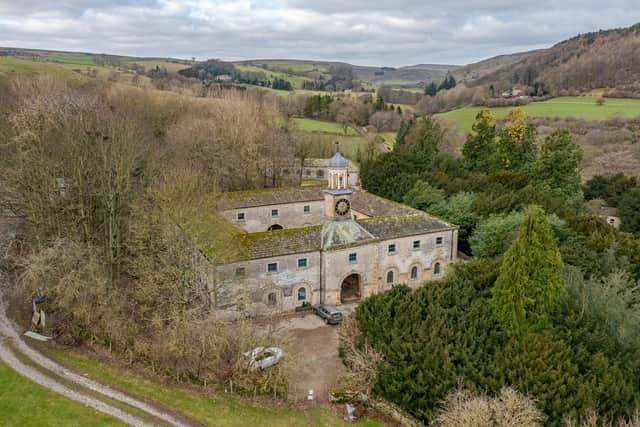
Marske Hall Estate, in the Yorkshire Dales, was in a state of disrepair. The 400-year-old stable blocks, hall and saw mill needed someone to bring them back to life and restore their heritage.
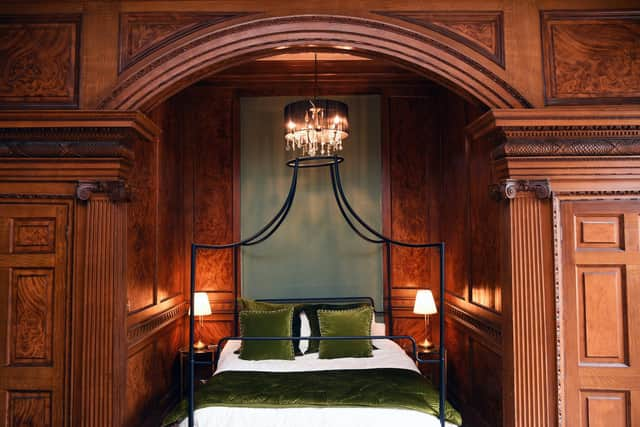
Experienced property developer Ian Morton has spent the last seven years turning the historic Georgian site into ten luxury cottages and restoring the hall into a space to be used by the public once again.
“Since being a young child I was always fascinated by historic buildings,” says Morton. “I remember going to York and seeing the castles and Clifford’s Tower and wanting to learn about history.”
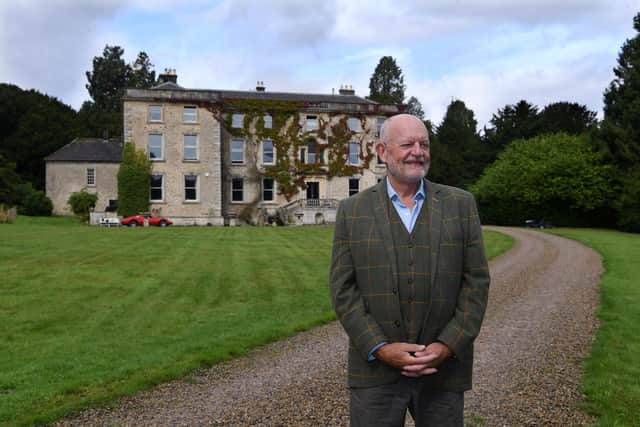

He worked as an interior designer, but his first love was always historic buildings. “For almost 50 years I have combined my love of art and design and history.
"My vision has always been about transformation and bringing back the use of heritage buildings.
“I didn’t choose to go into heritage or listed buildings, but I was just drawn to them – it's not necessarily about the money; I love regeneration.
"Taking something that’s rundown or derelict and transforming it into something else that gives pleasure to others.”
Most of his previous projects have been in Leeds, converting schools, a church and an office.
“Any building I like that may have lost its purpose, I love transforming into something more useful for now and the future – bringing them back to life.”
He had also worked on a project to convert the former home of the Yorkshire Archaeological Society and the Thoresby Society in Leeds into the Claremont aparthotel.
“I was coming back from London on the train with my partner from the Claremont project, who said he’d found a stable block for sale online, and thought we should go and look at it.
“I’d never even heard of the Marske estate,” says Morton, who hails from the Otley area.
“I was quite surprised when I came here at just how beautiful it was. But initially I decided against it, as it had been derelict for 70 years.”
Marske, in the Yorkshire Dales National Park, was built in the late 1500s by the archbishop of York.
It has a rich history, including the Huttons, who were partly responsible for the abolition of slavery, and the horse Marske, which gave birth to Eclipse, which is considered one of the greatest race horses of all time.
But by the 19th century the male Hutton line had died out, and it passed to the D’Arcy Huttons through the marriage of a daughter. They used it mainly as a shooting lodge, hosting extravagant parties.
When the last of the family, John Timothy D’Arcy Hutton, died in 1957, there was an auction of the Marske estate, and most of the buildings were purchased in separate lots.
The house had been occupied by evacuated Scarborough College pupils during the war years and was bought by a local builder, George Shaw, who originally planned to demolish it.
Instead, he turned it into ten flats, one of which became his family home. In 2011 his granddaughter Elizabeth sold the house.
The stables also had a period of residential use, meaning the stalls for horses were removed, and the upper floor was the village hall for a time.
Morton eventually changed his mind after another property developer had started the work to convert the stables and sawmill into holiday lets.
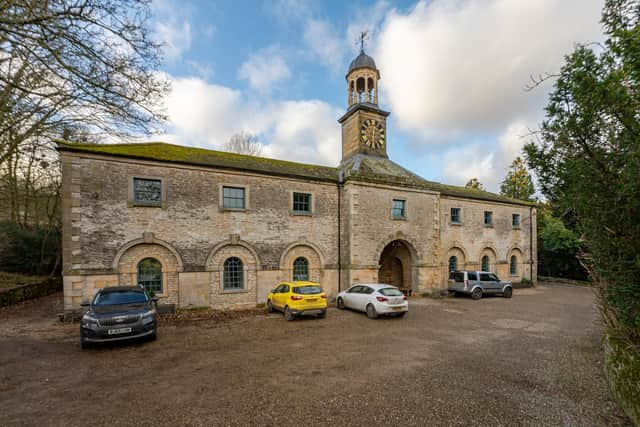
It was in three parts – the stables, the sawmill and the hall.
“Both the stables and sawmill were in an appalling condition when we bought them, suffering from major structural issues, years of neglect and serious infestations,” he says.
The restoration proved considerably more complicated than a standard renovation.
Working on listed buildings uncovered hidden structural problems, while conservation rules required specialist materials and craftsmen, adding months to the project and significantly increasing cost.
“It was very difficult to finance. We had to find some new ways of funding,” says Morton, who turned to crowd-funding and even invested some of his pension to complete the stable block project, which is now trading successfully as high-end holiday lets.
His attention then turned to the sawmill.
“The sawmill had never been lived in, and there were trees growing through the roof, and there were hundreds of rats running around inside. It was horrendous. I was the hardest job of the entire estate.”
The problems were exacerbated by Brexit and Covid, which saw the prices of material increase.
The final stage was to buy the Grade II* listed Hall, which had been occupied in the seventies and eighties, so it wasn’t in as bad a condition as the other two parts of the development.
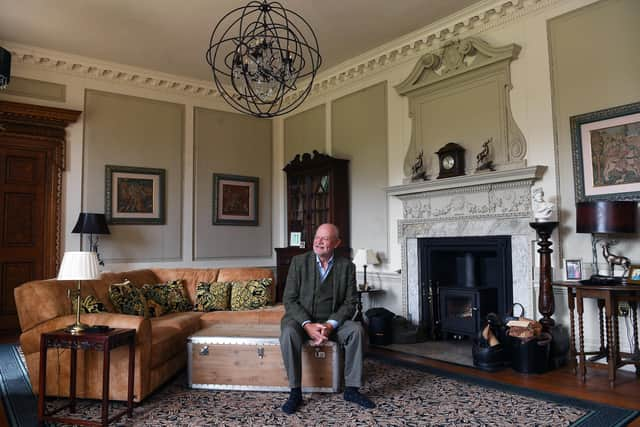
“It had been cared for by Elizabeth Shaw, which meant the roof was in amazing condition. It is like a time capsule of a Georgian house; all the original features are still intact, and then there are some Elizabethan arts to it as well.
“A lot of people thought I was mad and wouldn’t be able to do it. It’s good to prove them wrong.” Already split into ten apartments, he’d initially thought of renovating them to sell individually but then decided to run them as holiday lets.
But it wasn’t just the financial and building challenges that Morton had to overcome. Locals and planners objected to some of his ideas for the estate, which nearly put the entire plan in jeopardy.
“Marske has probably taught me more about property, business and people than almost anything else I’ve done,” he says.
“Not every lesson in business comes from success. Some of the most valuable lessons come from the things that go wrong. You can either allow adversity to define you, or you can turn what you’ve learned into something useful.”
He says while the financial returns matter, the greatest reward has been seeing three buildings that were once derelict become places that thousands of people can now enjoy.
“For me, the return has never been measured purely in financial terms. It is also about creating something lasting for future generations.”
Having spent seven years developing Marske Hall Morton, 64, is now planning to step back from property development but wants to pass on his knowledge to others and is launching the Elite Mentoring Guild in December.
“Success isn’t simply what you accumulate. At some point it becomes about what you pass on. That’s really where the Elite Mentoring Guild came from.
"I didn’t want to create another generic property training business. I wanted to create somewhere genuine experience could be preserved and passed on.
“Guilds existed because experienced people passed their craft and knowledge to the next generation. We’re taking that very old idea and making it relevant to the modern world.
"The Guild isn’t about one person pretending to have all the answers. It’s about bringing together people who have actually done things.
“There are an estimated 300,000 heritage buildings in the UK falling into disrepair,” says Morton. “Heritage doesn’t have to mean a stately home.
"It can be a mill, an office, a shop, a workshop or almost any building that has been part of a community.”