
'I'd lived right on top of this history' - Yorkshire author explores birth of the railways
Trains, for many years, were very much part of the fabric of daily working life for Neil McGoohan, as they are for thousands of commuters. Yet it was only later down the line that he came to fully appreciate the connection between the railway network he relied upon and the corner of the country where Neil had grown up.

Now passionate about railway history, the North Yorkshire-based author has published a book celebrating the ground-breaking launch of the Stockton and Darlington Railway in 1825. Mixing historical fact and fiction, The Iron Horse is an account of how the first steam-powered public passenger railway in the world was funded and built. "Somehow I'd lived right on top of this history without ever understanding what it meant,” says Neil, who was born in Leeds in 1967 and grew up in Teesside.
Neil spent over a decade living and working in London, building a career in IT that took him through some of the UK's most prominent media organisations, including BBC Worldwide, Channel 4 and Sky. He was a frequent rail commuter throughout those years and later worked for three railway companies, when he became interested in the launch of the Stockton and Darlington Railway.
"The more I researched, the more I realised this wasn't just an engineering story - it was a human story. About families caught in transformation. About how ordinary people survive when everything changes. About secrets and choices and the cost of progress,” he reflects.
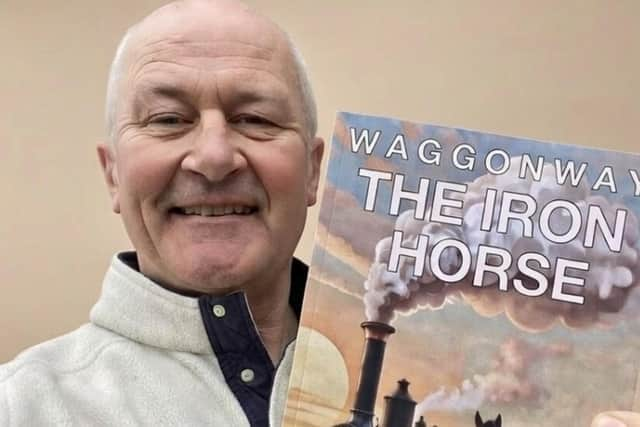

He felt it was a story that needed telling. "The Quakers of Darlington, especially Edward Pease and his family who funded the Stockton to Darlington railway, were key to this story, as was George Stephenson, the brilliant engineer who built the engine which powered the first train...The Pease family took a huge risk and their legacy provides a reminder that to innovate for public benefit, it often requires private risk to be undertaken. What the Pease family stood for and delivered across the two generations within this story is based on intelligence, physics, and, perhaps most importantly, a level of kindness not often shown in large business decisions."
Neil sees huge similarities between the birth of the railways 200 years ago and the rapid growth of AI today. "To me the introduction of the railways was a significant paradigm shift. We can all view the impact of the train in our own experiences of today. We can see its roll out. The 19th Century was a gargantuan change of opportunity, social and economic growth. The train was front and centre for so much of this change.
"We are at a similar pivotal point with AI in 2026. Technology can always be used for good and bad, but one key aspect that should always prevail is the potential positive change that should encourage us to be more optimistic than pessimistic. The heroes of my story proved that."
The Iron Horse is the first of four books in Neil's Waggonway series and is available now from Amazon.