
"It's been a seven-year labour of love but worth it," says Newby owner Lucinda Compton about the restoration of the 100 year old alpine rock garden
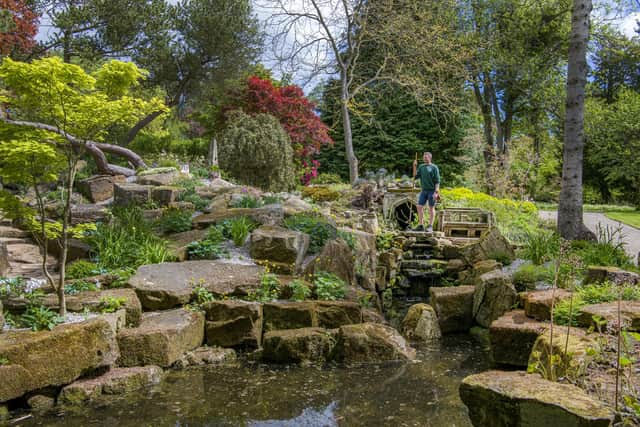
When Lucinda Compton set about restoring Newby Hall’s Edwardian rock garden, she didn’t quite appreciate that she was revealing such a hidden gem or that it would take seven years to complete.

“When the Edwardians were able to travel by train to Switzerland they were so inspired by alpines that they wanted to recreate that landscape at home in the form of rock gardens,” explains Lucinda, Curator of the Gardens and wife of Newby Hall owner Richard Compton.
Completed just before the outbreak of the First World War, Newby’s alpine rock garden is one of the largest and most ambitious of its kind in the UK.
“We aren’t exactly sure when they stated work on it but we do know is that the water in the rock garden was turned on in August 1914 just as we declared war.”

Although no plans survive from this period, Ellen Willmott, an eccentric horticulturist and friend of Robert Charles de Grey Vyner, great-great grandfather of the current owner, was involved with its construction.
Ellen Willmott had first-hand experience of making rock gardens as there was one at her family home in Essex which was built in 1880s by James Backhouse of York.
“We don’t think Backhouse designed this garden as we have been through their records but we are fairly convinced that Ellen Willmott basically designed the rock garden at Newby along with Robert Vyner who was very interested in gardening,” says Lucinda.
“Ellen Willmott and Robert Vyner were next door neighbours in the south of France and she became a great family friend. She was the most incredible gardener and had her own rock garden in Warley Place in Essex and was very influential in Edwardian times, but she ended up spending all her money on her gardens and ended up bankrupt.” Sadly Willmott’s Warley Place rock garden is a lost garden consumed within woodland. And a similar fate could have befallen the one at Newby Hall if it hadn’t been for Lucinda and her team of gardeners.
For Lucinda the transformation of the rock garden has been a personal labour of love over the last seven years and her passion for it is clear.
“It was really the last place in the garden that had been rather left to its own devices. It was still lovely but it was completely overgrown and not at all clear what it really was.”
What it was was a great example of an alpine rock garden so loved by the Edwardians inspired by trips to Switzerland.
Restoration of the three quarter of an acres garden was led by Lucinda and head gardener Lawrence Wright after it had become overgrown with many of the plants disappearing due to the lack of light.
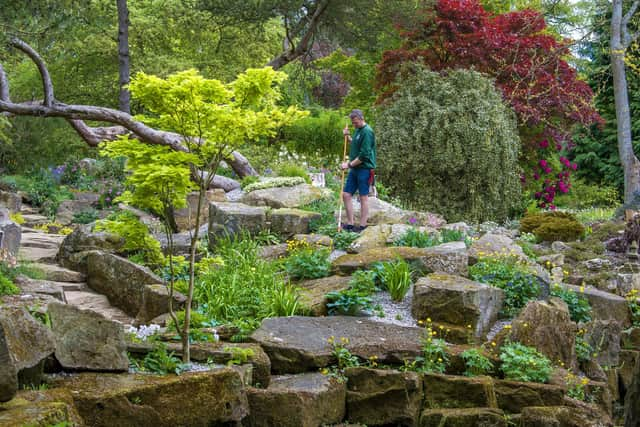
Aiming to recapture the original drama and romance of the rock garden, while conserving it for future generations, hundreds of tonnes of soil have been excavated revealing the massive rocks almost hidden beneath the soil and vegetation.
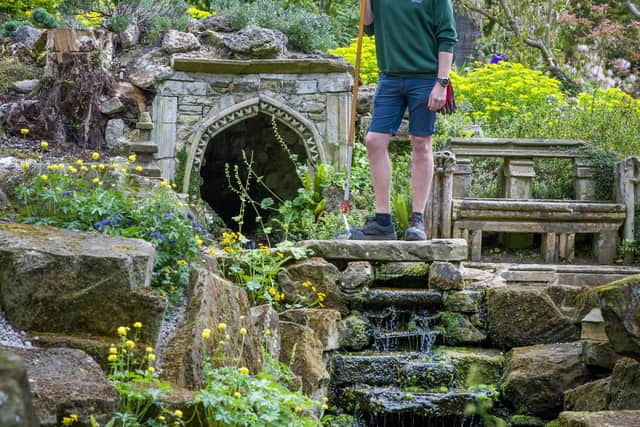
“They designed the garden on a huge scale – you can still see the holes in the rocks where they must have winched them into place,” says Lucinda.
“We believe they took them on the train from Pately to Ripon and then went onto a barge on the river from Ripon to Newby,” says Lawrence.
Between the wars the garden had something of a resurgence when Edward Compton inherited the estate.
"He was a passionate gardener – that’s all he did,” says Lucinda. “But then the Second World War happened and all the gardeners went off to war and although he was a passionate gardener he will have struggled to maintain it. But he lived here until he was 87 so by the time my father in law took over all of the gardens were beginning to decline and the house.”
Lucinda moved to Newby Hall in 1979 just after her in laws had moved in. “When my father in law retired he threw himself into restoring the house and the garden. They built the restaurant and the shop and the playground but the rock garden was rather forgotten. It was at the end of the garden and it did look quite pretty overgrown woodland garden.” She had already taken on restoring and replanting Newby’s flower border and removing some shelter breaks.
"But I realised the rock garden needed doing but we were rather under manpowered and we realised it would be a big undertaking.” But then she met Stella and David Rankin who owned Kevock nursery in Scotland and specialised in alpine plants.
"I met them several years running at the Harrogate Flower Show and after about five years they said they would call in and take a look at our garden and when they did they couldn’t believe it. They said it was one of the biggest and most interesting rock landscapes that they had seen and if we decided to restore it they they would love to help us. That was the start of a collaboration that would even see them take Lucinda and Lawrence to the Himalayas.”
The first job was to remove 35 mature trees that had become overgrown in the 100 years since they were planted and were stopping the alpine plants from flourishing.
“When the Edwardian craze for rock gardens happened there was a lot of pine tree cultivation and also taking pine species out of the wild and there was a belief that they would be dwarf – which didn’t happen,” says Lawrence. “When they were planted they would have thought they would have grown to be in scale with the rocks but that didn’t happen.” They have left some of the mature trees to maintain the canopy of the garden.
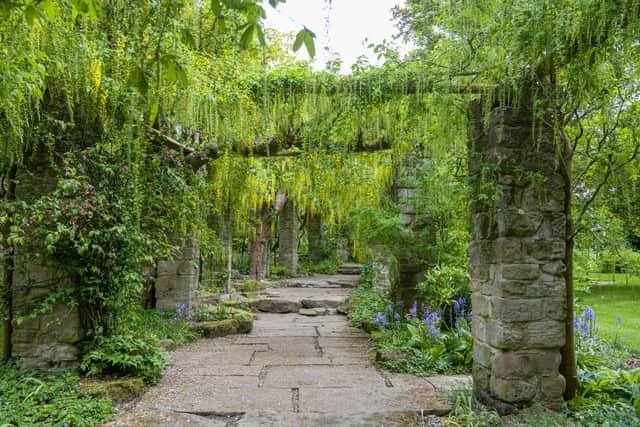
They also set about the huge task of mapping the rock garden.
"All the beds were given letters of the alphabet,” explains Lawrence. “Work started at the top with A and has worked its way down to T.”
They also had to identify the areas that flood in the winter when the River Ure bursts its banks which is does a few times a year to ensure the plants could withstand it.
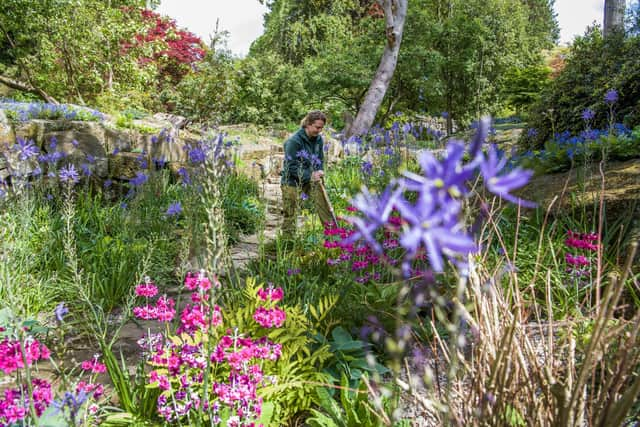
Very few of the original plants had survived and so once the painstaking work of removing all the weeds had been completed, working with the Rankins, Lawrence chose which plants should be included.
"We wanted things that we didn’t have in the rest of the garden,” says Lucinda.
“We do refer to it as a restoration,” says Lawrence, “but we haven’t actually taken it back to the way Robert and Ellen wanted it to look – that would have meant removing all of the canopy of trees which has become part of the fabric of the garden and also gives us the ability to grow a huge range of things. In there time it would have been completely and an alpine landscape whereas now we are able to combine some shady woodland areas.”
In the end more than 10,000 plants, bulbs, trees and shrubs were planted and the waterfall and aqueduct bridge restored. "It’s been a real balance.”
It has been a real labour of love for Lucinda, Lawrence and the gardening team at Newby Hall.
“It is very painstaking labour intensive work,” says Lucinda. “You can’t get any machinery in, it all needed to be done by hand.”
And it all had to be done alongside maintain the 24 acres of gardens at Newby Hall.
And on Thursday the rock garden will be officially opened by Gyles Brandreth who donated his collection of teddy bears to Newby Hall ten years ago and both Lucinda and Lawrence hope it will attract an entirely new visitor to the 140,000 that visit the hall and gardens every year.