
'I've been Castle Howard's chimney sweep for 25 years - every fire has its own quirk'
Sweeping the chimneys at Castle Howard isn't a simple job, and it takes someone with experience to do it properly.

Which is probably why Louise Bumby has been coming to the stately pile in North Yorkshire for 25 years now.
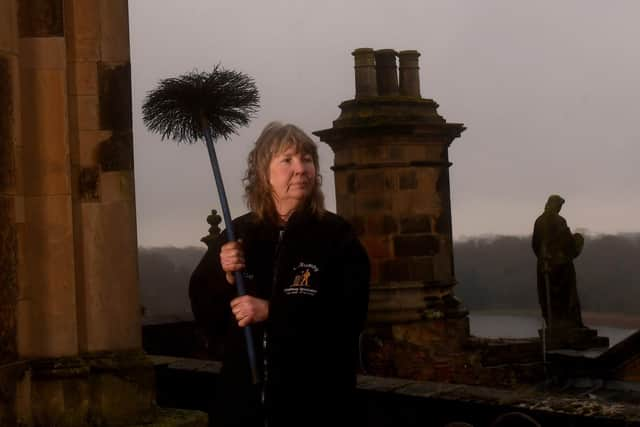
Louise, from Thirsk, is the latest in a long line of sweeps to look after the chimneys – though these days she has an electric vac to catch the soot and the rods made from fibre-glass not cane.
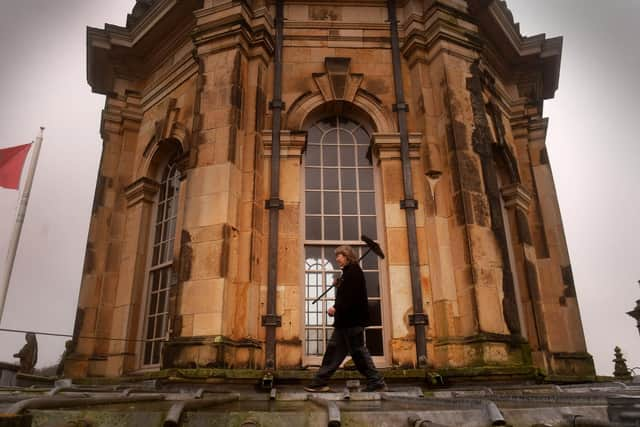
To finish off the tallest chimney, she nips through a little side door and up a spiral staircase to the roof of the Great Hall to put the final rods up to sweep the sootbox.

She got into sweeping by accident. Husband Paul, now retired, started after milk quotas crippled dairy farming in the 1980s.
She started helping out, doing the fetching and carrying and cleaning. She recalls: "One day I said I’m fed up of this – show me what to do.”
She and sons Aron and Chris now have a family business. Louise says she loves the job, travelling the length and breadth of North Yorkshire.
“I did Rise Hall for Sarah Beeny – that was a challenge. I’ve been going to some people for 30 years, you get to know them a bit, they give me my dinner.
"There’s lots of lovely people. Most of the open fires are different, they have their own little quirks.”
Castle Howard’s archives contain an official sweeps register and record of regular quarterly payments for cleaning the chimneys back in the day when fires were lit from dawn till dusk in the 145-room mansion.
"This Christmas we didn’t have as many lit fires, but just because you don’t use a chimney, that’s not to say it’s not blocked in some way,” said head curator Chris Ridgway.
“You may not have a deposit of soot but you may have a pesky bird who has made a nest.”
Chris, who is writing a new book “Ablaze: A History of Fires in Country Houses” has a record of 2,000 UK country house fires since 1700.
In 2015 a fire at Clandon Park destroyed some 95 per cent of the 18th-century Surrey mansion.
Later, investigators said the fire was probably caused by an electrical fault.
“There isn’t a year which has gone by without a country house fire of some sort,” he says.
Birds nests – jackdaws are notoriously fond of nesting in chimneys – contractors lighting fires to warm rooms in more “laissez-faire” days and the introduction of new technologies like electricity have all led to fires.
There were fires at Castle Howard in the 1860s and 1930s before the devastating blaze of 1940, caused by a chimney fire, which destroyed the iconic dome and more than 20 rooms.
One was the Tapestry Drawing Room, which only reopened last year after an extensive restoration.
“The South East wing is still a shell,” says Chris. “It is a long, slow expensive process. Since the fire we have fully restored five rooms, areas of roof, you have to do it incrementally.”