
Kilner Jars: The Yorkshire brothers behind the famous jars
Two of South Yorkshire’s early industrial developments were located at Conisbrough and Denaby – situated between Doncaster and Rotherham.
These were the Kilner Brothers’ Glass Bottle Works and the Denaby Main Colliery. Both former sites have been redeveloped beyond recognition.
The Kilner Bros’ Jubilee publication of 1894 mentions that John Kilner was born at Wooldale about 1792.
In 1829, he, with four others, left Hunslet for Whitwood Mere where they started making glass bottles. This lasted for a few years until 1844 when Kilner began manufacturing bottles on his own account.


Initially, this was at Dewsbury then at Thornhill Lees in a building which became known as the Providence Glass Works.
The Jubilee publication continues: ‘Here Mr Kilner and his sons Caleb, George, William and John worked themselves as bottle makers, each devoting himself to a particular department of the business…’
The 1851 Census notes John Kilner living in Thornhill Lees, a glass bottle manufacturer employing 114 men. In 1859, John passed away, and from that time his sons carried on the business.
In 1863, finding that that the works at Thornhill Lees were insufficient to meet the demands of their rapidly increasing trade, Kilner Bros, decided to erect an additional factory at Conisbrough (but the area is now shown as Denaby Main).
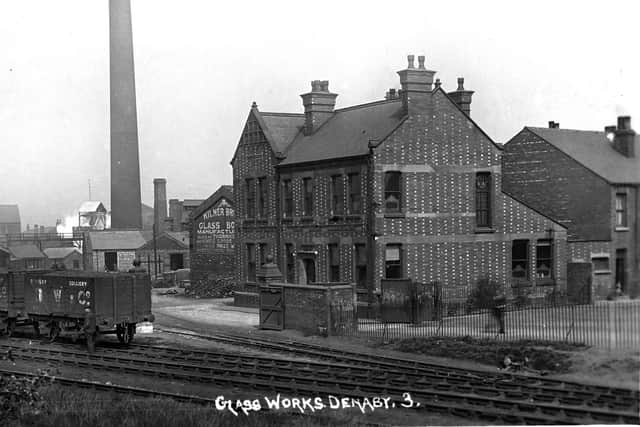
It was close to the South Yorkshire coalfields, railways and the River Don. The works covered an area of 11 acres.
They had a private wharf and railway siding with several branches enabling the raw materials to be economically and readily brought in, and the finished product transported.
An article from the South Yorkshire Times of June 5, 1920 and headed ‘The Romance of Kilner’s’ says that in 1864, George Kilner (born 1823), one of the four brothers founded the Conisbrough branch of the undertaking.
He, however, subsequently returned to Thornhill Lees, and his son Caleb Kilner (born Castleford 1843) took his place.

The article went on to say that from time to time, as the need arose, extensions and improvements were carried out.
By 1866, the Kilner brothers were carrying on business in Thornhill Lees, Conisbrough and Brook’s Wharf Middlesex.
Grace’s Guide, the leading source of historical information on industry and manufacturing in Britain, notes that in 1894, Kilner’s ‘employed as many as 400 hands.
Of course, Kilners became noted for the much-celebrated Kilner Jars for preserving fruits and vegetables.
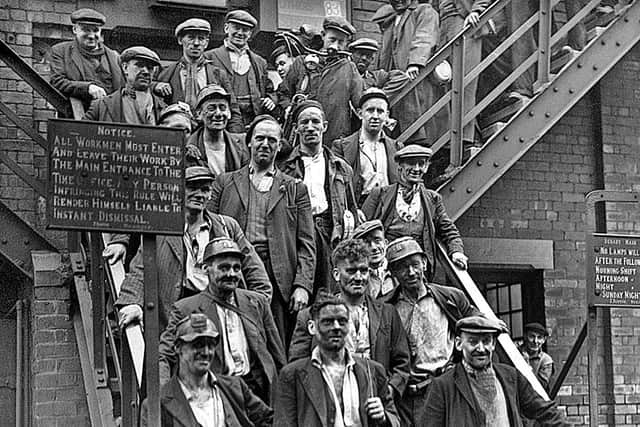
Caleb Kilner was proud of his Conisbrough workforce and always had best relations with them, which were rather those of a colleague than of a master.
He served on the Committee of the National Glass Bottle Manufacturers Association and was a devoted Wesleyan. He was said to have ‘supported that body with the utmost liberality’. He died in 1920.
The Kilner business survived in Conisbrough until 1938.
A reference from January of the same year said that for about two and a half years the company had been in charge of a receiver ‘but it was understood that production was to cease’.
Until about two years previously more than 450 people were engaged. A large number of men had enjoyed lengthy periods of employment.
A newspaper noted on December 30, 1938 that the Kilner glass bottle works was ‘in the hands of the building wreckers’.
The original business at Thornhill Lees was closed about 1926. Photographs have survived of the Kilner family members posing for the camera at a house in Denaby Main and Conisbrough.
The vast area where the glass bottle factory existed has recently been covered with housing. Yet the two houses are extant.
Denaby Main Colliery was initially considered a high-risk venture, according to Alan Hill in The South Yorkshire Coalfield (2001). This was because the workings were beneath the magnesian limestone.
Previously, mining engineers thought the coalfield terminated where the line of limestone began. Until that time, no other coal owners had wanted to take the same risk.
In October 1867, a number of national newspapers announced that the Barnsley Seam of coal had been reached at Denaby.
The colliery was the property of Pope & Pearson and was well situated for carriage by canal and railway.
It was estimated when fully opened it would give employment to around 500. The colliery was situated just a few hundred yards west of the Kilner glass bottle operation.
Denaby colliery, and other service industries which sprang up, drew a large number of workers to the area. However, living conditions were far from satisfactory.
A proportion of the housing was built at 49 to the acre, and in some instances 10 people were living in a four-roomed house. On average, each property cost about £45.
None of the houses had bathrooms, water closets or hot or cold running water.
Night soil men emptied the earth closets and middens weekly. Disease was prevalent and there were many outbreaks of typhoid, scarlet fever, smallpox and measles.
A bitter conflict between the miners and the Colliery company started in June 1902 and was known as the ‘Bag Muck’ strike.
The cause of the strike was over the payment for removing ‘bag muck’ – an uneven layer of rock running through the Barnsley Seam.
By the end of the year, the strike was still continuing and many institutions ran soup kitchens to aid the starving miners and their families.
On January 6, 1903, the Colliery company began evicting 750 of its tenants. On March 22, 1903, most of the men had returned to work, dejected and betrayed.
But as one miner put it: ‘Better to have strived and lost than not to have strived at all.’
By July 1958, half of Denaby’s output was being wound at nearby Cadeby Colliery. A year later coal winding had ceased at the former pit.
Denaby Colliery, came to the official end after the night shift on Friday, May 31, 1968.
From then, its merger with its neighbour, Cadeby Colliery, was complete and no more men would ride the Denaby shaft.
Three hundred men would continue to work South West 3’s face at Denaby after the Whitsuntide holiday but they were to work it from Cadeby. A year earlier the Denaby pit had 1,500 men.
On August 22, 1985, it was revealed that a £450,000 project to fill two shafts at Denaby Main had been officially launched, marking the final stage of South Yorkshire County Council’s (SYCC) reclamation scheme.
A conveyor belt, which would fill the shafts with 28,000 tonnes of colliery spoil, was switched on by a councillor and an NCB official.
Earlier in 1977, the SYCC had launched a reclamation scheme to turn the 170-acre site into a bird park and leisure centre.
The scheme was carried out in several phases.
First land between the River Don and the Canal was restored to forestry and grazing at a cost of £117,000, funded by Department of the Environment grants.
The largest project cost more than £400,000 and reclaimed the Dearne Valley tip, situated between the canal and River Dearne.
In 1985, at a cost of £50,000 the county engineer’s direct labour organisation cleared old structures and foundations from the site.
Once the shafts were filled, shaft head buildings were demolished.